- calendar_today August 7, 2025
Game Studios Slam Lack of US Support for Manufacturing
A tight-knit community with innovators, creatives, and thin margins, the board game industry is reeling from a surprise financial hit that many fear could spell the end for some publishers. Designer Jamey Stegmaier, best known for games like Scythe and Wingspan, shared his shock earlier this week over an unexpected 54 percent tariff on games made in China and imported to the United States.
“I mostly just found myself staring blankly at the enormity of the newly announced 54 percent tariff,” Stegmaier wrote in a blog post, before detailing his attempts to work on a new game before bed the night before. “It’s really hard to create something for the future when that future looks so grim.” For the designer of some of the world’s most popular board games, it was a rare and personal post – and one that speaks to the worries many in the industry are feeling.
A Common Production Model, But Turned Upside Down
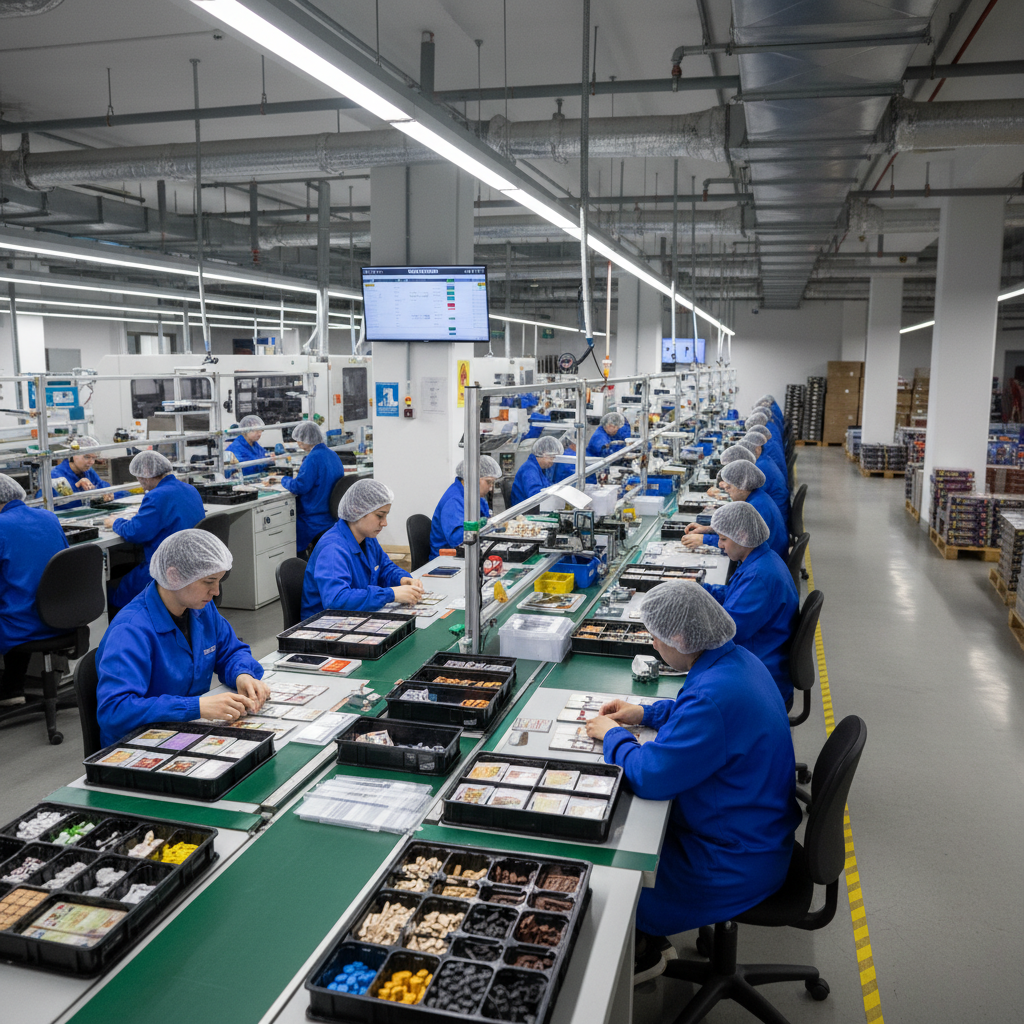
Gamers, it’s important to understand, are not the only ones making these games. The US board game market, like most of the world’s, outsources nearly all of its physical production to China. Yes, Germany has board game factories too – Germany, for those unaware, is the spiritual homeland of modern tabletop gaming. But like many before it, Germany exports most of its manufacturing needs for comprehensive production.
That means, when a publisher is getting components for a new game, the “printed cards” they’re ordering from China could also include custom plastic miniatures, wooden tokens, die-cut boards, and specialty dice. Finding and creating all of that in-house domestically is entirely possible. But no one does it. When Stegmaier was quoted $10 by a domestic manufacturer, that $10 was just for an empty game box with nothing inside, not the full manufacturing and packaging costs that same $10 would cover in China.
That’s what makes the new tariff so earth-shattering. Most board game publishers in the US – and that’s especially true of the many small-to-medium-sized companies that keep the medium fresh and interesting – operate on extremely slim margins. To have that changed overnight, with no lead time or warning for budgetary adjustments, is throwing the proverbial tablecloth out from underneath the entire industry.
Publisher Perspective: Beyond Stegmaier
Several other designers and publishers have reached out to share their perspectives over the last few days, in forums and interviews, and private messages. Meredith Placko, CEO of Steve Jackson Games, owner of Munchkin and one of the larger, more visible board game publishers, reached out to offer her thoughts, and they sound remarkably similar to Stegmaier’s.
“Some people ask, ‘Why not manufacture in the US?’ I wish we could,” she wrote in a recent blog post. “But the infrastructure to support full-scale boardgame production – specialty dice making, die-cutting, custom plastic and wood components – doesn’t meaningfully exist here yet. I’ve gotten quotes. I’ve talked to factories. Even when the willingness is there, the equipment, labor, and timelines simply aren’t.”
But for Placko, as with Stegmaier, this is more than just a challenge in logistics. “This is not just a policy change,” Placko wrote in another recent post. “It is a seismic shift.”
Longtime designer Rob Daviau, co-founder of Restoration Games and designer of the successful Pandemic Legacy game series, has also been speaking out. Daviau has been vocal on social media for months now, with almost every business meeting characterized as “an existential crisis about our industry.” In a recent interview with BoardGameWire, Daviau was more prescient, warning that “if these tariffs were to ever actually happen, we will see a great collapse in the hobby gaming market in the US.”
Gamers Will Feel The Hit, Too
Of course, it won’t just be publishers and designers who feel the sting of this change. Gamers will likely soon feel it as well. New games from favored publishers will have higher retail costs, for one. Companies will either have to cut costs to retain existing prices (affecting the quality and durability of their games) or cut back entirely on new releases.
Local game stores may suffer as well. Already struggling against online retailers, brick and mortar shops face the reality of many gamers turning to their existing backlogs first (many a gamer has a “shelves of shame” of unplayed games at home) or simply buying new titles online for a better price.
“Within a few months, US companies will lose a lot of money and/or go out of business,” Stegmaier wrote. “And US citizens will suffer from extreme inflation.”
Workarounds? Not Much, If Any
There are options, at least some. Publishers may be able to route their shipments through distributors outside the United States to skirt the tariff – European retailers and distributors are less impacted by the trade war, for example – but as Stegmaier points out in a follow-up post, that’s a non-solution. “We ship primarily to US retailers and sell primarily to US customers. So 65% of our sales are now subject to this added tax.”
There’s also a practical issue with timing. Games that have yet to start production, or are in the early stages, can shift budgets. Games that have already been manufactured and shipped from China have no such luxuries. “I have 8,000 games leaving a factory in China this week and now need to scramble to cover the import bill,” Chris Solis, head of California-based Solis Game Studio, told me over email.
As with any new business in the United States, gaming companies have a finite runway for operating costs and investment before they’re expected to turn a profit, get acquired by a larger company, or shut down. Time – and not having an investment to burn through – could be the most significant change for many of these companies, able to last several months but no longer.
Appeals and Industry Effort
The Game Manufacturers Association (GAMA), an advocacy group for board game publishers, has spent the last several days making contact with trade representatives and anyone who will listen on the issue. “I have been messaging congressional offices myself in the last few days,” Michael Tencara, executive director of GAMA, told me. “We are getting as loud as we can as quickly as we can.”
So far, however, that effort has not made a dent. The broader political fight continues, and while GAMA is hopeful a compromise can be reached, for the time being, the tariffs are in place and effective immediately. Even if the tariffs are lifted, Tencara is concerned about the broader message to the industry.
“A repeal of these tariffs would certainly be great, and would provide some reprieve to an industry that’s been rocked by this action, but the fact that we have these tariffs on in the first place means that everyone has to take a deep breath and recalibrate,” he says. “So I think in the short term the message to the industry is to make sure that you’ve got 54% breathing room, because you never know when you’re going to see a threat like this again.”
Challenges Beyond China
Of course, it’s not just Chinese-made goods being hit with tariffs. A number of other Asian countries and European nations have found themselves in the crosshairs of a trade war that has few, if any, safe harbors. But as with board games, the reality is that the broader effects on this new, interconnected, globalized economy are only beginning to be understood.
The US board game industry represents just one segment of a much broader cultural moment, in which everything from consumer tech to fashion to even the everyday, practical tools of modern office life are being upended by the increased politicization of global trade. As each new product faces increased taxes, cost-cutting, and layoffs from an industry under siege becomes an expectation.
We’ve seen similar responses from a wide range of businesses that manufacture products globally. Netflix, a huge streaming service with revenue north of $15 billion a year, had to send a message to employees this week warning them not to expect the sort of regular, even raises the company has historically offered, for example.
The shift is too dramatic and immediate, Netflix CEO Reed Hastings said, to simply be absorbed in normal operations. One of the best-known and most accessible of media companies, Hastings is already warning of cutbacks and layoffs if the company cannot absorb the costs without raising prices to customers.
The exact details, the business models, and the manufacturing methods of individual companies and industries can vary dramatically. The fact that a board game company can outsource its box printing to the same company that also makes the game’s custom plastic miniatures, while a consumer electronics company can never dream of sourcing those components outside of established supply chains, is a function of both the nature of the industries themselves and the unique business pressures and operations of each.
The fact that both are facing a sudden and brutal reality check is not.