
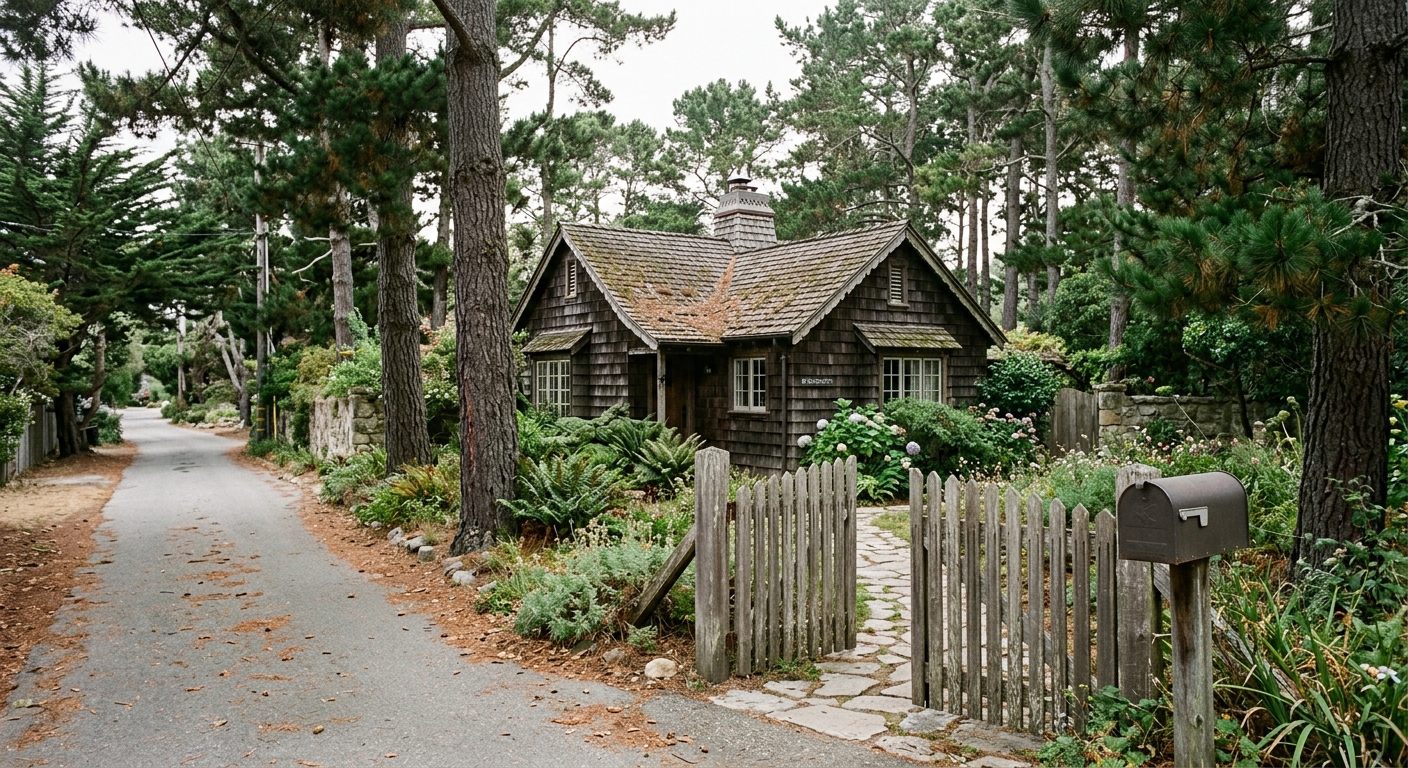
AI-generated illustration; not a photograph of the reported event.
- calendar_today October 9, 2026
Introduction of Street Addresses in Carmel-by-the-Sea
Carmel-by-the-Sea, known for its unique village character and absence of numbered street addresses for over a century, recently assigned official street addresses to every residence, business, and government building. This significant change comes after decades of debate and culminated in postcards sent to residents in September, notifying them of their assigned addresses.
Voter Confusion Follows Address Assignments
The rollout of Carmel by the Sea addresses led to confusion among voters just before the November 3 midterm election. The Monterey County elections office sent postcards urging all residents to update their voter registration with the new physical addresses. The mailer, which included dramatic language such as “ACTION REQUIRED,” caused some citizens to believe their voter registration had been automatically invalidated.
Mayor Dale Byrne acknowledged the confusion, stating, “We’re at our wit’s end.” The city responded by sending notifications clarifying that residents could still vote in the current election without re-registering immediately.
Background: A Town Unique in Its Ways
Since its founding in 1916, Carmel-by-the-Sea used only directional descriptors, rather than numbers, to locate buildings. Residents affectionately named their homes, with monikers such as Sea Urchin and Surf Song, while relying on landmarks and post office boxes for locating addresses. The lack of street addresses was fiercely protected as part of the community’s identity, leading even to threats of secession when numbering was first suggested.
The town’s population of about 3,200 has long enjoyed these quirks, including no streetlights or sidewalks in residential areas, and a reliance on the local post office for mail delivery. However, growing challenges—including missed deliveries, issues with utilities and banking, and fears for emergency response—prompted a reconsideration.
Legal and Public Safety Considerations
While many valued tradition, others cited safety and practicality. The California Fire Code requires that buildings display street addresses, putting the town out of compliance. Mayor Byrne recounted personal experiences where the lack of an address hampered efforts to direct first responders during emergencies.
Ultimately, the city issued firm address display requirements: numbers must be at least 4 inches tall, 0.5 inches wide, in a contrasting color, and visible from the street. Residents in wildfire-prone areas must use reflective numbers. While the new numbers are now required to be displayed, residents continue to collect mail from their long-established PO boxes, preserving part of the town’s tradition.
Mixed Community Response
The introduction of addresses has divided the community. Opponents argue it erodes the town’s character and fosters unwanted modernity. Local preservationist Karyl Hall criticized the change, saying it reflects "the total degradation of all our historic places." Some residents, like Hans Lehmann, expressed confusion over the registration notices but were ultimately comforted by the city’s reassurances and continued familiar mail routines.
Supporters, like Mayor Byrne, emphasize public safety and the practical needs of residents and visitors. "‘Old’ is not a strategy," he said. "Public safety should take precedence over thinking it’s cute to not have addresses." City outreach efforts, including dedicated FAQs and digital communications, have aimed to clarify the process and quell concerns.
Mail Delivery and Voting Move Forward
Monterey County Registrar Gina Martinez confirmed that residents can vote as usual using their existing voter registration, either by mail or in person, and can update their addresses at any time. While the rollout has sparked debate, the city and county continue to provide guidance, working to balance tradition with modern public safety and legal requirements.
Source: latimes.com.
Recent Posts

Hot Categories

132
Business

71
Events

172
News
81
Sports

105
Technology
