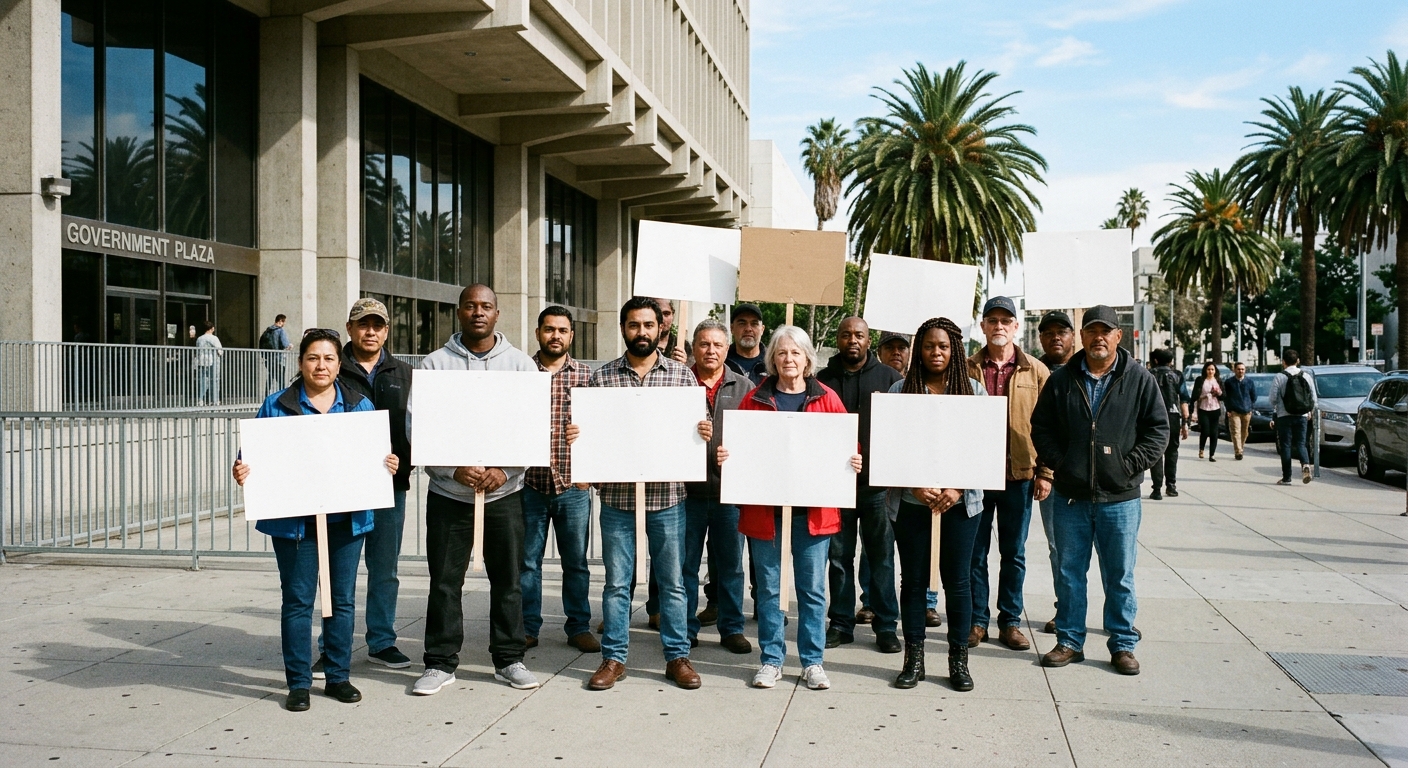
AI-generated illustration; not a photograph of the reported event.
- calendar_today October 21, 2026
SEIU Local 1000 Stages First-Ever Strike
For the first time in its history, SEIU Local 1000, which represents over 100,000 California state employees, initiated a strike on Wednesday, October 21, 2026. Thousands of state workers joined picket lines across Sacramento and additional sites statewide, participating in a one-day work stoppage to protest alleged unfair labor practices and stalled labor negotiations with the administration of Governor Gavin Newsom.
Reasons Behind the Strike
The seiu local 1000 strike centers on claims by the union that the state is not bargaining in good faith over issues such as state worker pay, healthcare contributions, and telework policies. The union has cited frustration with the Newsom administration's approach to labor negotiations, particularly as contract talks stalled and complaints over working conditions grew.
Details of the Strike Authorization Process
Over the previous month, SEIU Local 1000 held an internal strike authorization vote among its members. More than 96% voted to authorize leaders to call a strike if negotiations with the state failed to yield progress. The successful vote reflected widespread discontent over pay, benefit contributions, and return to office policies, giving union leaders the mandate to proceed with the October work stoppage.
Return-to-Office Policies and Contract Expiration
The union's contract with the state expired June 30, 2026. Since July 1, a new state-imposed return to office mandate has required workers to be in their offices four days each week, reducing the number of remote workdays from three to one. This significant shift from the state's post-pandemic telework policies has been a major point of contention in ongoing labor negotiations, fueling further unrest among california state workers.
Union Demands and Administration Response
SEIU Local 1000 is prioritizing a 20% salary increase over three years and higher state contributions to employee healthcare. Anica Walls, the union's president, criticized the state for its bargaining position and called on the governor's administration to return to negotiations in good faith. Walls emphasized that striking was a last resort: “Striking is not an action we take lightly. It’s an action we are taking because state workers have no other choice.”
In response, the California Department of Human Resources (CalHR) stated that it was willing to return to the bargaining table “anytime.” The department maintains that it is committed to achieving a fair and responsible agreement while ensuring the continuity of critical public services. CalHR also indicated that it had coordinated with union leadership and prepared contingency plans to minimize disruption during the strike.
Legal and Operational Context
While a few members of the public sector union were prohibited from striking, the majority of SEIU Local 1000 members participated. The Public Employment Relations Board (PERB) denied a state request to halt the work stoppage, allowing the event to proceed with only essential employees required to work. The union previously filed an Unfair Labor Practice charge on July 22, alleging the state failed to bargain fairly, which SEIU described as a key motivation behind the strike authorization and subsequent action.
Worker Rally and Next Steps
The day’s actions included a planned worker rally at noon in front of CalHR headquarters in Sacramento, highlighting continued tensions over state worker pay and labor policy. Just a handful of union members were designated essential and exempt from participating in the strike. As of publication, there were no reports of a resolution, and both sides indicated openness to further negotiations.
Source: kron4.com.
Recent Posts

Hot Categories

131
Business

70
Events

170
News
81
Sports

103
Technology