
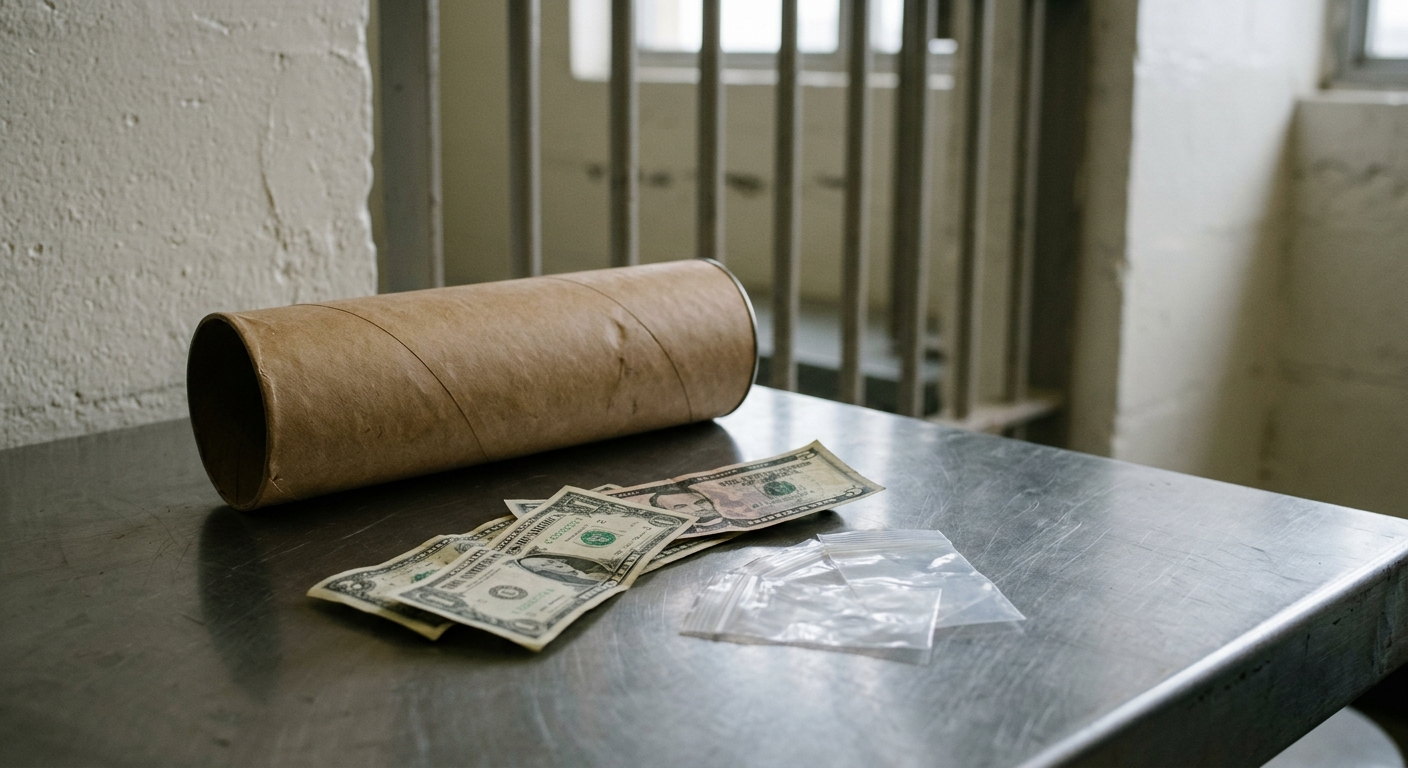
AI-generated illustration; not a photograph of the reported event.
- calendar_today November 6, 2026
Former Sheriff’s Deputy Sentenced for Heroin Smuggling Scheme
Michael Meiser, a 40-year-old former Los Angeles County sheriff’s deputy, has been sentenced to 67 months in federal prison after admitting to attempting to smuggle more than one pound of heroin into a jail in the Santa Clarita Valley. The heroin was concealed in Pringles potato chip cans, and Meiser pleaded guilty in July 2025 to one count of possession with intent to distribute heroin.
Background of the Drug Smuggling Case
Meiser’s role involved working in an intelligence and investigative unit at the North County Correctional Facility in Castaic, approximately 40 miles northwest of downtown Los Angeles. According to prosecutors, he attempted to smuggle the narcotics into the jail for inmates in exchange for financial payment, including $1,500 sent via Cash App to a relative and $15,000 in cash.
Details of the Heroin Delivery
The illicit exchange took place at a Chevron station in Valencia. Authorities detailed how Meiser collected a grocery bag from a woman associated with an inmate, containing two Pringles canisters filled with approximately 1.1 pounds of heroin and two envelopes holding $15,000 in cash. The heroin, which could be resold inside the jail in small portions known as "papers," was valued at about $226,000 by sheriff’s officials.
Meiser placed the items into a green backpack and subsequently hid the drug-laden canisters in the trunk of a sheriff’s patrol car upon arriving at work. He and another deputy were stopped by investigators when leaving the jail, leading to the discovery of the cash and heroin.
Internal Affairs Investigation and Gang Influence Concerns
The scheme prompted significant scrutiny of Meiser’s unit and its relationship with influential inmates and gang leaders. An internal report by the Sheriff’s Department’s Internal Criminal Investigations Bureau, conducted with the FBI, described a work environment where some deputies acknowledged the powerful authority gang shot callers held over inmate populations. Deputy Jose Mungui, Meiser’s partner, recounted to internal affairs that they coordinated with inmate leaders to manage issues such as overdoses and violence, believing they had little direct control over such incidents. This approach centered on maintaining order by asking gang leaders to limit violence and disciplinary actions against other inmates or staff.
Discovery and Surveillance Leading to Arrest
The full extent of Meiser’s rapport with inmates became evident after a series of suspicious jail phone calls in February 2024. These involved Jose Rodriguez, an alleged gang shot caller, and his lieutenant Jackie Triplett, who discussed coded transactions for methamphetamine and heroin. Surveillance footage subsequently captured Meiser handing Triplett a bag and a bedroll, after which Triplett contacted associates to confirm the delivery. Further investigation uncovered coded requests for Pringles, leading detectives to track Meiser’s movements and ultimately observe his acquisition of the heroin-filled cans.
No Further Deputies Implicated
Authorities have stated that no other deputies have been implicated in the drug smuggling operation, though the incident raised wider concerns about internal oversight and the influence exerted by gang leaders over jail operations. The case highlights the complexities and vulnerabilities within the correctional system regarding contraband trafficking and collaboration between law enforcement personnel and inmates.
Source: latimes.com.
Recent Posts

Hot Categories

142
Business
72
Events

188
News

82
Sports

111
Technology
