- calendar_today August 7, 2025
From Charlotte suburbs to coastal Beaufort and Asheville to Columbia, homeowners in both North and South Carolina are discovering a troubling trend: insurance deductibles—once modest and manageable—are climbing sharply. Many policies now calculate deductibles as a percentage of home value rather than a flat amount. For families in homes valued at $300,000, a 2% deductible translates to $6,000 upfront—an expense many hadn’t planned for.
Across the region, residents are finding themselves footing thousands of dollars in repair costs before insurance ever kicks in. That makes every roof shingle, every flooded basement story more consequential.
Weather Events Reshape Coverage Expectations
The Carolinas face a wide range of weather hazards—hurricanes along the coast, tornadoes in central regions, hailstorms in the Piedmont, and flooding across vulnerable river valleys. As such events become more frequent and more destructive, insurance companies are calibrating policies to spread risk.
Deductibles tied to named storm events, wind damage, and flood claims are becoming standard—and sometimes reach 5% of the home’s value. In Myrtle Beach, homeowners say they face a separate hurricane deductible; in Raleigh, many have seen wind or hail deductibles double in their renewal notices.
Homeowners Feel the Financial Pinch
Take the case of the Jernigan family in Wilmington, N.C. A storm surge in 2023 pushed water into their ground‑level living space. Their estimate topped $15,000—and although they carried flood insurance, their deductible alone was $7,500.
“It felt like our policy failed us,” said Mr. Jernigan. “Even after insurance, we still had to come up with a lot of cash—and fast.”
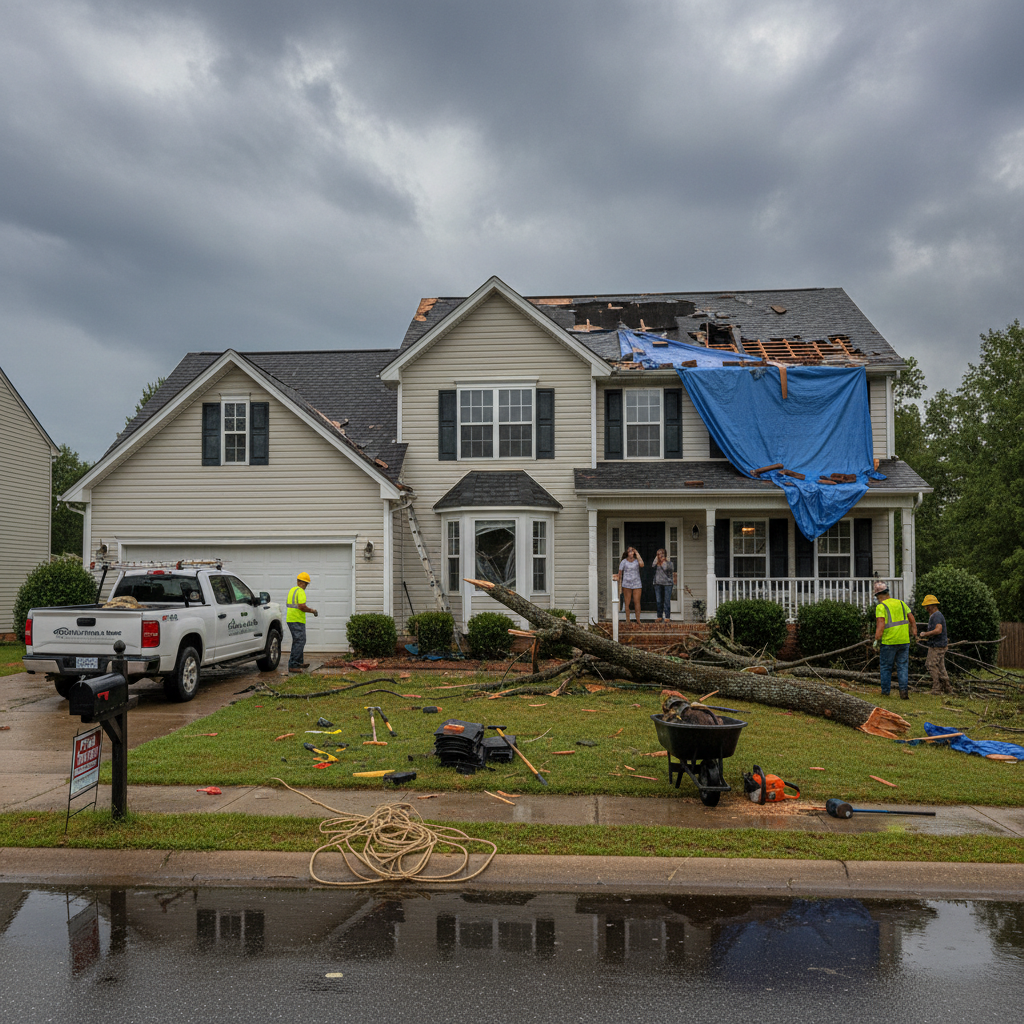
Similarly, in Greenville, S.C., a homeowner reported paying $5,000 out of pocket to patch a roof after hail damage. His insurance would have covered the cost—if only his deductible hadn’t been higher than the quote.
Repair Costs and Inflation Worsen the Situation
Beyond deductibles, repair costs themselves have shot upward. Shortages of skilled trades and rising prices for roofing materials, drywall, electrical components, and labor mean that even small jobs easily reach five-digit figures.
In Charlotte, contractors report quoting $12,000 or more for mid-range roof replacements. In rural South Carolina, longer waits for service have pushed costs higher as contractors penalize delayed timelines.
Adapting Strategies: How Carolinians Are Coping
Homeowners across both states are taking steps to navigate this terrain. Many now treat deductibles like utilities, budgeting monthly to prepare for potential repairs. Some set aside “claim savings” specifically for up-front costs.
At renewal, insurance agents report more clients asking about deductible structures, policy tiers, exclusions, and whether wind, hail, or named-storm events trigger a separate deductible. Some residents are willing to pay slightly higher premiums if it means a fixed, affordable deductible cap.
Local homeowner associations, from Charleston to Asheville, have started hosting “insurance readiness” workshops. These sessions walk attendees through policy documents and explain how to get ahead of policy changes.
Insurers Cite Risk Management Needs
Insurance companies argue that rising deductibles reflect the dire financial pressures they face. Frequent storm claims, catastrophic payouts, and rising reinsurance costs force them to shift more risk onto policyholders.
A regional insurer spokesperson explained, “By raising deductibles, especially for high-risk events like hurricanes or floods, we can continue offering coverage in vulnerable areas. It’s a necessary balance to maintain availability across the region.”
Regulatory and Consumer Pressure Intensifies
Consumer advocates in both Carolinas are pressing for greater transparency. Legislation has been proposed to limit how widely deductibles can increase upon renewal or require clear notices in bold print rather than fine print.
The North Carolina Department of Insurance recently issued guidance urging insurers to provide advance warning—by at least 60 days—when deductibles will increase by more than 20%. Meanwhile, homeowner groups in South Carolina are lobbying for similar protections.
Preparing for Next Storm Season
Residents are urged to prepare now. That means inspecting roofs, sealing windows, cleaning gutters, reinforcing doors, and documenting home improvements for claims. Video logs and receipts can smooth the path during backup later.
Experts also recommend that homeowners in coastal counties or flood-prone areas keep both standard and flood policies active—or consider wind/hail endorsements—so that damage isn’t left uncovered.
Budgeting Beyond Premiums
Many now view homeowners insurance as a multi-part financial mechanism, with premiums, deductibles, and maintenance costs all factored in. Families are revising budgets accordingly—putting aside amounts at premium times and reinvesting in preventative upgrades to reduce future claim risk.
For some, that may mean adding storm shutters, reinforcing roofing straps, or strengthening HVAC enclosures before policy renewals.
Facing a New Normal in the Carolinas
As climate change and economic forces reshape property risk, homeowners in North and South Carolina face a critical choice: adapt or be vulnerable. Policies will continue growing complex—tying deductibles to home values and event types. But consumers who study their options, budget proactively, and act early will find themselves better protected than those who assume policies will simply pay out.
In short: homeownership in the Carolinas now requires a blend of fiscal awareness, insurance literacy, and preparedness.