- calendar_today August 9, 2025
The Carolinas—long known for textile heritage, booming tech hubs, and advanced manufacturing—now face a new test in 2025. The intensifying U.S.–China trade tensions are rattling supply chains, disrupting agricultural exports, and challenging investors across North and South Carolina.
But the region’s business and political leadership isn’t sitting idle. From Charlotte’s fintech sector to Greenville’s auto parts production, both states are doubling down on innovation, domestic sourcing, and digital infrastructure to weather the global economic storm.
How the Trade Conflict Hits Home in the Carolinas
In April 2025, with Washington D.C. escalating tariffs on Chinese goods and Beijing retaliating, businesses in the Carolinas are feeling the pressure.
Key Impacts on North & South Carolina:
- Semiconductor Shortages affecting electronic equipment and clean tech manufacturers in Research Triangle Park, NC
(Source: Carolina Tech Trends, May 2025) - Tariff Strain on Auto Parts—BMW’s plant in Spartanburg, SC, the largest U.S. auto exporter, faces rising costs and potential delivery delays
(Source: The State News, South Carolina) - Drop in Cotton and Soybean Exports—China’s 34% tariffs have pushed Carolinian farmers to seek alternative buyers in Southeast Asia and Europe
(Source: USDA Southern Report, Q2 2025)
Regional Sector Response: Adapting for Opportunity
Advanced Manufacturing: Onshoring with AI and Robotics
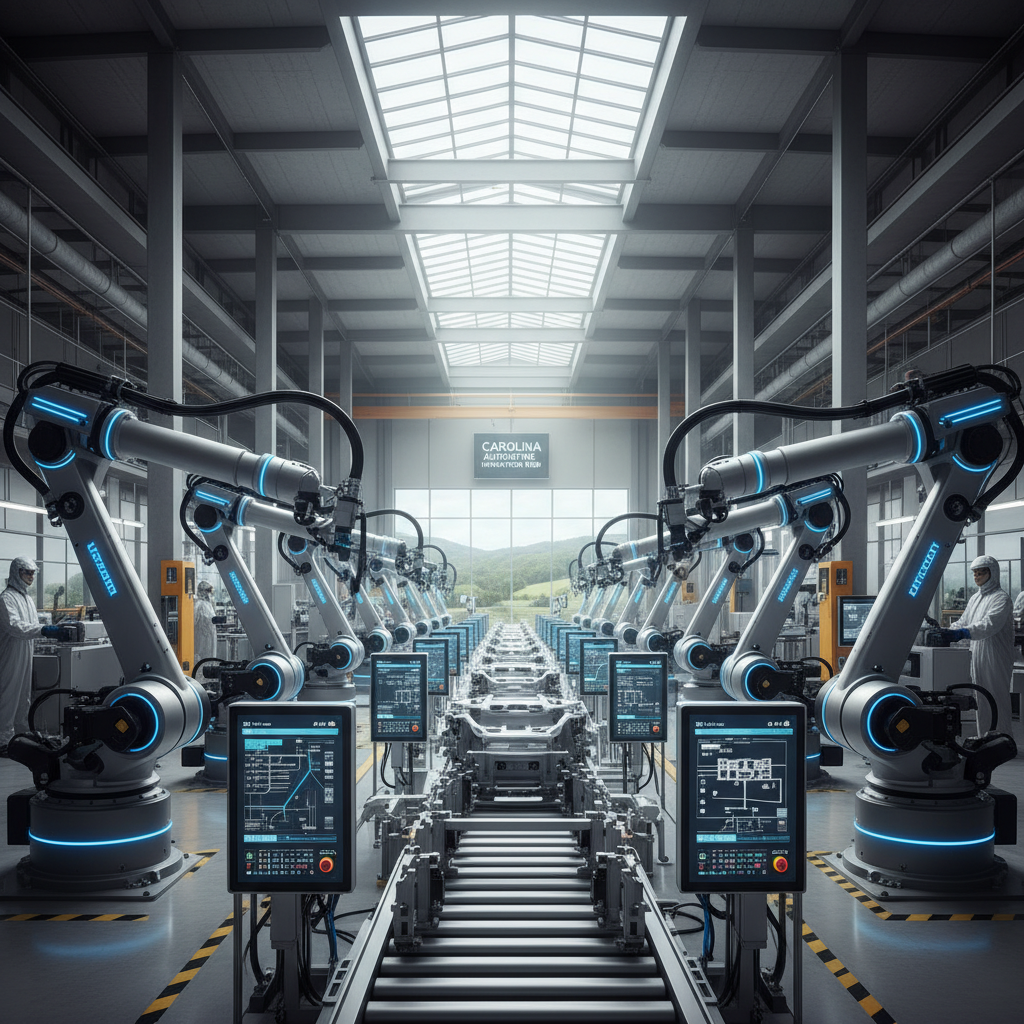
Both Carolinas are manufacturing leaders, with sectors ranging from automobiles and aerospace to furniture and electronics. To offset Chinese import costs and reduce future risk, companies like Volvo Cars in Charleston and Honeywell in Charlotte are adopting AI-powered robotics and securing alternative component sources in Vietnam, Mexico, and India.
Agri-Pivot: From Export Reliance to Regional Supply
Farmers in both states are reducing dependence on volatile international markets by diversifying crops, entering local food co-ops, and leaning into regenerative farming. There’s also been a surge in indoor agriculture startups across the Piedmont and Lowcountry regions, enabling year-round production for domestic consumption.
Tech and Logistics: Triangle & Port Expansion
North Carolina’s Research Triangle (Raleigh–Durham–Chapel Hill) continues to attract biotech and semiconductor startups thanks to public-private research incentives. Meanwhile, Charleston’s port is undergoing a $400 million expansion to better handle rerouted international shipments and improve shipping agility for U.S. producers.
Key Investor Opportunities in the Carolinas (2025)
- Smart Logistics and Port Tech
Investment in shipping software, inland port connectivity (e.g., Greer Inland Port), and last-mile distribution infrastructure is climbing. - Renewable Energy and Battery Storage
North Carolina’s solar sector and South Carolina’s battery startups are both surging due to reduced Chinese imports and growing energy independence. - Localized Agribusiness REITs
Agritech-backed real estate and farm modernization investments are gaining ground as Carolinian farmers shift toward value-added local markets. - U.S. Manufacturing ETFs
Carolinian-based producers are featured heavily in reshoring and defense-focused exchange-traded funds benefiting from new federal incentives.
The Carolinas’ Trade-Era Transformation
North and South Carolina are not just reacting to trade tensions—they are transforming. By investing in digital infrastructure, smarter factories, and cleaner energy, the region is becoming a model for how to turn global disruption into regional resilience.
For investors, this is a moment to watch closely. Amid rising volatility, the Carolinas offer a stable base for forward-thinking capital. With diversified sector strength and a growing tech culture, the states stand poised not only to survive—but to lead.