- calendar_today August 9, 2025
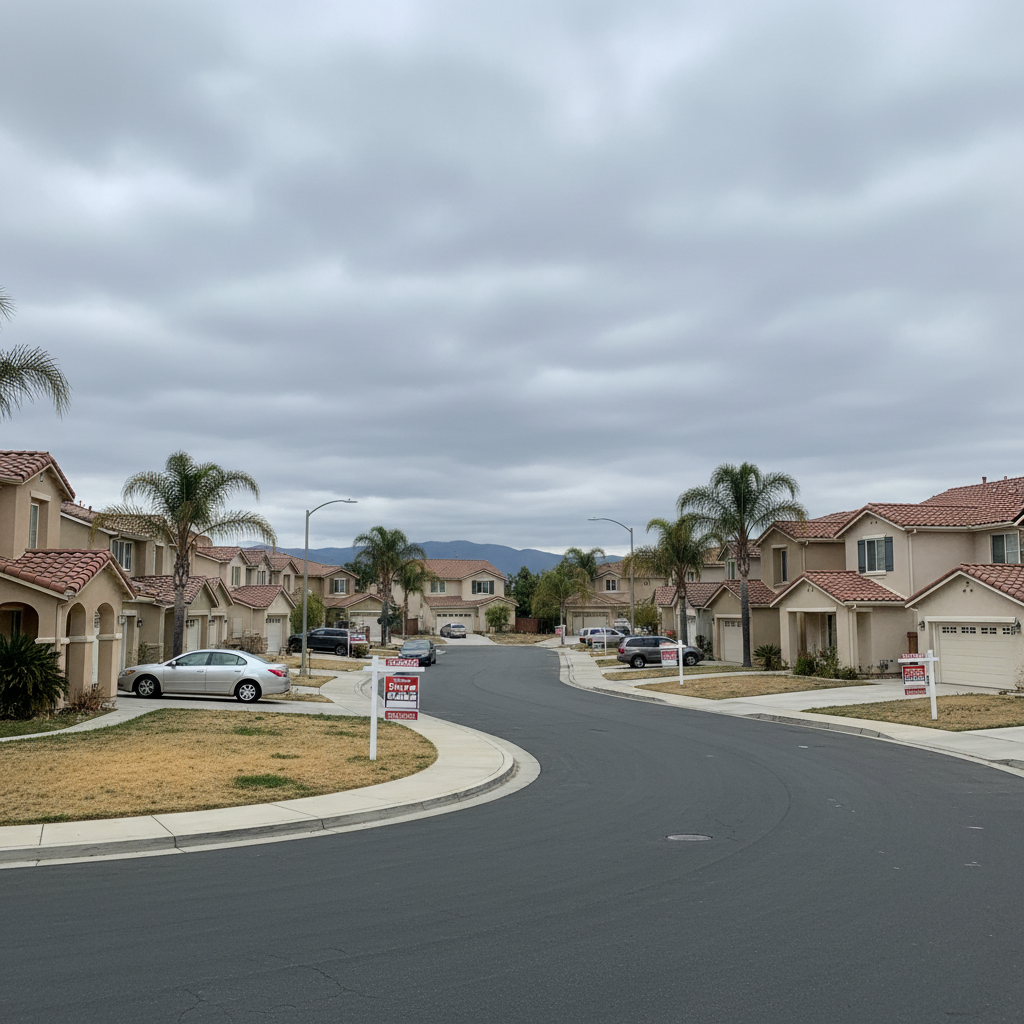
In 2025, California’s once red-hot housing market is experiencing an unexpected cooldown. The combination of elevated mortgage rates, steep home prices, and regulatory bottlenecks has frozen activity from Los Angeles to Sacramento. What was once a race to buy property is now a cautious wait-and-see period for both buyers and sellers.
According to recent data from the California Association of Realtors (CAR), home sales are down nearly 18% year-over-year as of mid-2025, and active listings have dropped by more than 12% statewide. Although prices remain high—especially in coastal markets—growth has stalled or reversed in many suburban and rural areas.
Interest Rates: The Ice Beneath the Surface
One of the most significant culprits behind California’s housing market stagnation is the sustained high interest rate environment. After the Federal Reserve hiked rates aggressively between 2022 and 2024 to combat inflation, many California buyers are now locked out of the market.
The average 30-year fixed mortgage rate in the state hovers around 7.1%—a stark contrast to the sub-4% rates that fueled the post-pandemic housing boom. With higher monthly payments, prospective homeowners are reevaluating whether they can afford to buy in California at all.
“Sellers aren’t listing because they’re holding low interest rates, and buyers are backing off because they can’t afford the new ones,” said Diana Gutierrez, a broker based in San Jose. “We’re at a standoff.”
Affordability Crisis Deepens
California has long been at the epicenter of the nation’s housing affordability crisis, but 2025 has exacerbated the issue.
According to a 2025 UCLA housing report, the median home price in California is still over $760,000. In coastal areas like San Francisco and San Diego, that number can top $1.2 million. Paired with current interest rates, the average monthly mortgage payment has surpassed $4,200—unmanageable for most middle-class families.
Even rental markets are tightening. In Los Angeles, rents have climbed 9% year-over-year due to a lack of new inventory and strong demand from would-be buyers stuck in limbo.
“People are trapped,” said Dr. Arjun Patel, an urban planning professor at UCLA. “They can’t afford to buy, and they’re competing with each other to rent. That puts enormous pressure on lower-income communities.”
Policy Bottlenecks and Slow Construction
Although state lawmakers have pushed housing reform in recent years—such as SB 9, which allows lot splits and additional units on single-family properties—the impact has been limited in 2025.
Zoning restrictions, local resistance, and bureaucratic red tape have slowed construction, particularly in suburban counties where demand is growing. California added fewer than 90,000 new units in 2024, well below the state’s annual goal of 180,000.
Cities like San Diego and Oakland are seeing stalled projects due to rising material costs and financing challenges. Meanwhile, large-scale development in places like Riverside County has failed to offset the urban core’s decline.
Regional Snapshots: A State of Contrasts
California’s 2025 housing market isn’t collapsing—but it’s not climbing either.
- Bay Area: San Francisco and San Jose are facing price drops of 3–5%, but affordability remains a major hurdle. High-income tech workers are still buying, but middle-income families are priced out.
- Los Angeles & Orange County: High property taxes and stricter building codes are keeping inventory low. The result is stagnant sales despite strong demand.
- Central Valley: Cities like Fresno and Bakersfield saw rapid growth during the pandemic but are now experiencing higher delinquencies as job markets cool.
- Inland Empire: This former boom area is one of the first to show signs of market correction. Home prices fell 4% in Q2 2025 as demand waned.
The Psychological Freeze: Caution Replaces FOMO
Unlike the frenzy of 2021–2022, fear of missing out (FOMO) is no longer driving California real estate. Instead, both buyers and sellers are hesitating.
Homeowners who locked in low mortgage rates are reluctant to list and trade up. First-time buyers are postponing decisions, hoping prices will fall or interest rates will drop. This psychological gridlock further reduces inventory and transaction volume.
“There’s a lot of waiting and watching,” said Michelle Wu, a Pasadena-based real estate agent. “Everyone’s trying to time the bottom, but no one’s sure where it is.”
Investor Activity Pulls Back
Institutional investors and real estate funds that once poured money into California’s housing market have pulled back sharply. With higher financing costs and uncertain ROI, investor purchases are down nearly 30% in 2025 compared to two years ago.
Short-term rental operators are also exiting the market, particularly in places like Lake Tahoe and Santa Barbara, where new regulations and shrinking tourism revenue are squeezing profits.
Migration Patterns Reinforce the Freeze
Domestic outmigration continues to shape California’s housing market. Many middle-income families are relocating to states like Arizona, Texas, and Nevada, where housing is more affordable and job growth is stronger.
This has left some inland and suburban markets with a surplus of homes and fewer qualified buyers—another contributor to the slowdown.
What Could Thaw the Market?
Economists and real estate experts point to three key factors that could defrost California’s frozen housing sector:
- Interest Rate Cuts: If the Federal Reserve begins easing monetary policy by late 2025 or early 2026, mortgage rates could fall, sparking new buyer interest.
- Policy Reform: Faster permitting, zoning flexibility, and incentives for affordable housing construction could gradually unlock new supply.
- Economic Stability: Job growth, especially in tech and clean energy sectors, could revitalize demand in key metros like San Diego, Sacramento, and San Jose.
Until then, the market remains cautious.
Final Takeaway
With affordability strained, interest rates elevated, and uncertainty looming, real estate across the state has entered a deep freeze. Buyers, sellers, and policymakers alike are searching for a thaw, but until the underlying structural and economic factors shift, the Golden State’s real estate recovery may take longer than expected.