- calendar_today August 15, 2025
.
Erik Menendez was denied parole this week, more than 30 years after he and his brother Lyle murdered their parents in a 1989 crime that captivated the country. A California parole board said Erik Menendez, who is now in his 50s, continues to pose “an unreasonable risk to public safety.”
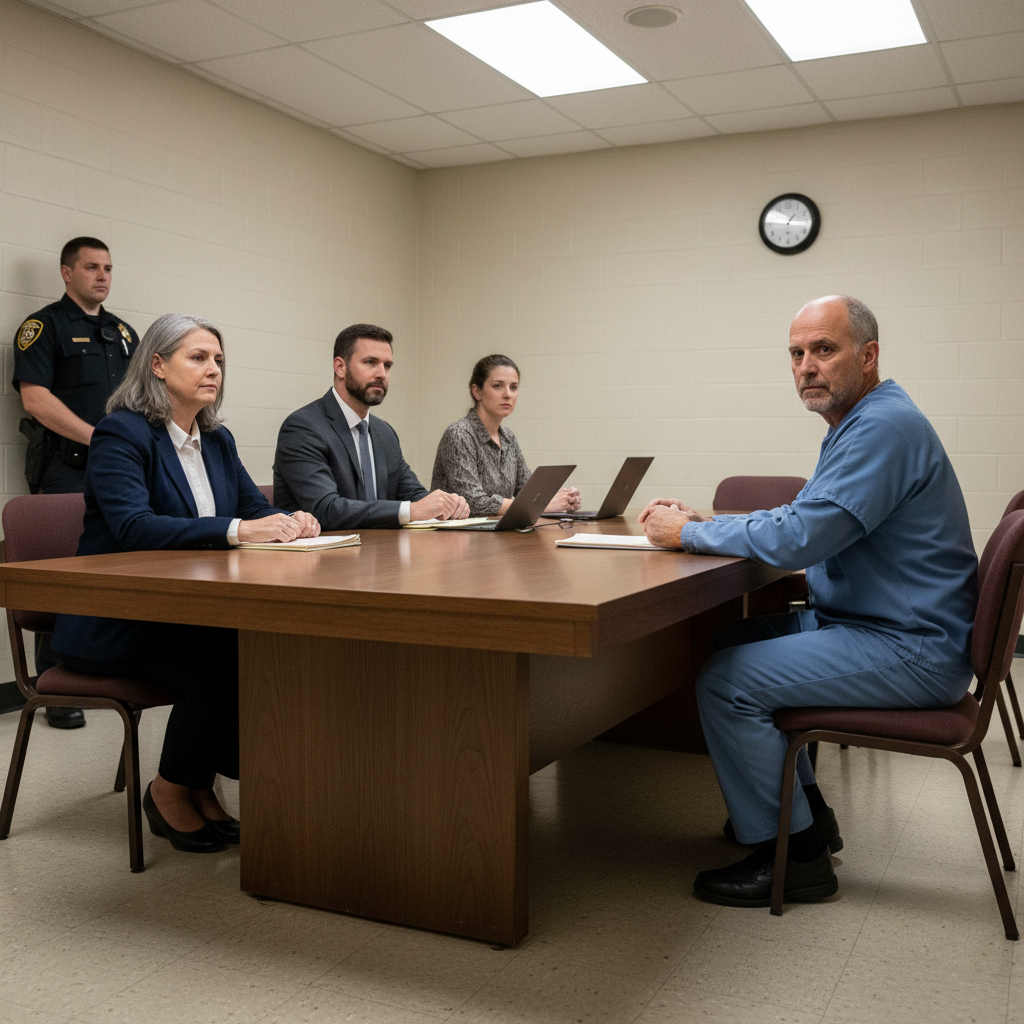
During a nearly 10-hour hearing, the parole board discussed Erik’s rehabilitation, prison conduct, and the case for and against his release. L.A. County prosecutors recommended the board deny his request, and a group of more than a dozen family members spoke in his favor. The board agreed with prosecutors that Erik’s criminal history as a teenager, the heinous nature of the murders, and “serious violations” in prison made him a poor candidate for release.
Erik is now 50 years old and will be eligible to request parole once more in three years. Parole Commissioner Robert Barton said the decision was based on more than just the severity of the murders, but also his conduct while in prison.
“One can be a risk to public safety in many ways, through several types of criminal conduct, including the ones you were guilty of in prison,” Barton said in an interview with Erik. He said Erik should take greater advantage of his “great support network” to avoid committing further infractions.
Erik’s disciplinary record is relatively spotty. He has had nine rule violations since being sent to prison, most of them for contraband or drug possession. Erik has possessed drugs, a cell phone, and a lighter and refused to participate in rehabilitation programs, among other violations. The parole board is also factoring in evidence that Erik did not tell his therapist about his violations, a separate issue prosecutors raised in their testimony.
Correctional officers who worked with Erik in prison have vouched for him in character references as a “model inmate.” But Barton asked if Erik still fit that label in light of the violations, and Erik said he began to think release was possible only a year ago. His “consequential thinking” had changed, he said.
A number of tearful family members have spoken on Erik’s behalf. They say that the pain of the murders has reverberated for more than three decades. “To say that our family has experienced pain does not quite capture what the last 35 years have been like,” said Tiffani Lucero-Pastor, the great-niece of the brothers’ mother, Kitty. “It has divided us. It has caused us panic and anxiety.”
Some family members say Kitty’s inaction in the home over the alleged abuse contributed to the brothers’ fear. Karen Mae Vandermolen-Copley, Kitty’s niece, said her aunt’s “absence of protection deepened their fear and confusion.” Kitty’s brother, Milton Andersen, the only relative known to be opposed to Erik’s parole, died earlier this year.
In a statement after the ruling, the family said they were “saddened but respectful” of the parole board’s decision and “hope and pray that Erik will have another opportunity.” The statement added, “Our belief in Erik remains unwavering. His remorse, his growth, and the positive impact he’s had on others speak for themselves. We will continue to stand by him and hold to the hope he can return home soon.”
Lyle Menendez to Face Parole Hearing, Governor Holds Final Say
Erik’s older brother, Lyle Menendez, will also go before the parole board. Lyle’s hearing will take place on Friday, where the board will review his rehabilitation record and conduct in prison. Although Lyle’s disciplinary record is slightly better than Erik’s, his conduct during the murders may be a hurdle.
At the original 1993 trial, Lyle testified he shot both parents multiple times at close range with a shotgun. He also shot a neighbor after the murders in an attempt to destroy evidence, for which he received a life sentence without parole. On Wednesday, Barton called the manner of his mother’s death “devoid of human compassion.”
Lyle has also faced problems over inconsistencies in his story about abuse from their father. At one point, prosecutors say he even asked a girlfriend to lie and say his father drugged and raped her. Those elements, as well as his actions after the crime, could be an obstacle to parole even with family support.
The parole board’s decisions follow the brothers’ resentencing in May from life without parole to a sentence of 50 years to life. They are now parole-eligible for the first time. The murder trial became one of California’s most high-profile in history due in large part to their claims of fear and abuse, though prosecutors have said the killings were motivated by greed over their father’s wealth.
Governor Gavin Newsom has the final say over the brothers’ parole. Under a 1988 California law, governors may affirm, reject, or modify parole board decisions for any person convicted of murder and sentenced to indeterminate terms like Erik and Lyle. The board’s decisions will be sent for internal review for up to 120 days. After the review, the governor has 30 days to make a decision.
Erik will remain in prison for now, and his next opportunity for parole is at least three years away. Lyle will learn shortly if he will be granted a path toward freedom or if he must continue the life sentences that he and his brother began more than 30 years ago.