- calendar_today August 20, 2025
The Carolinas are emerging as critical hubs in the U.S. electric vehicle (EV) and battery manufacturing ecosystem. With North Carolina’s surge in clean tech jobs and South Carolina’s expanding EV production footprint, the region is attracting billions in green investment and reshaping its industrial identity. For investors in Charlotte, Raleigh, Greenville, and Charleston, the future of Fisker Inc. (NYSE: FSR) presents a compelling, if uncertain, case.
Fisker, once heralded for its sleek Ocean SUV and sustainability-driven mission, entered the second half of 2025 under pressure. Ongoing production delays, financial concerns, and a steep decline in market cap have tempered initial enthusiasm. Yet, for Carolinas-based investors closely watching regional EV momentum, the company’s long-term potential—especially if it pivots toward domestic manufacturing—remains on the radar.
A 2025 Crossroads for Fisker
Despite early accolades for design and eco-conscious features, Fisker’s manufacturing struggles have stalled growth. As of mid-2025, its market capitalization had fallen below $1.3 billion, a sharp contrast to its 2021 peak above $7 billion during the EV stock rally.
For investors in the Carolinas—home to legacy manufacturing, growing tech sectors, and clean energy investments—Fisker’s reliance on overseas production via Magna Steyr in Austria raises key concerns. The company does not currently qualify for U.S. federal tax incentives tied to domestic EV assembly, reducing its competitive edge in price-sensitive markets across the Southeast.
Forecasting Fisker’s 2030 Price Path
Fisker’s stock price over the next five years remains speculative, but analysts project three broad scenarios:
Bull Case: If Fisker scales up Ocean production, successfully launches the Pear and Alaska models, and expands into new markets, it could reach over 200,000 vehicle sales annually. This output could translate to $6–$8 billion in revenue, lifting the stock to $25–$30. In the Carolinas, where auto manufacturing is on the rise, such growth would appeal to investors aligned with the region’s clean transportation ambitions.
Base Case: More modest growth—75,000 to 100,000 units sold annually—could yield $3–$4 billion in revenue, resulting in a stock price between $8 and $12. For Carolina investors seeking speculative but calculated exposure to clean tech, this would be a balanced scenario.
Bear Case: If operational and financial issues persist, Fisker may stagnate with limited sales and eroding market confidence. In this scenario, stock prices could settle in the $3–$5 range, less attractive to conservative investors in retirement-focused cities like Wilmington or Spartanburg.
Industry Context: The Carolinas’ EV Growth and Competitive Landscape
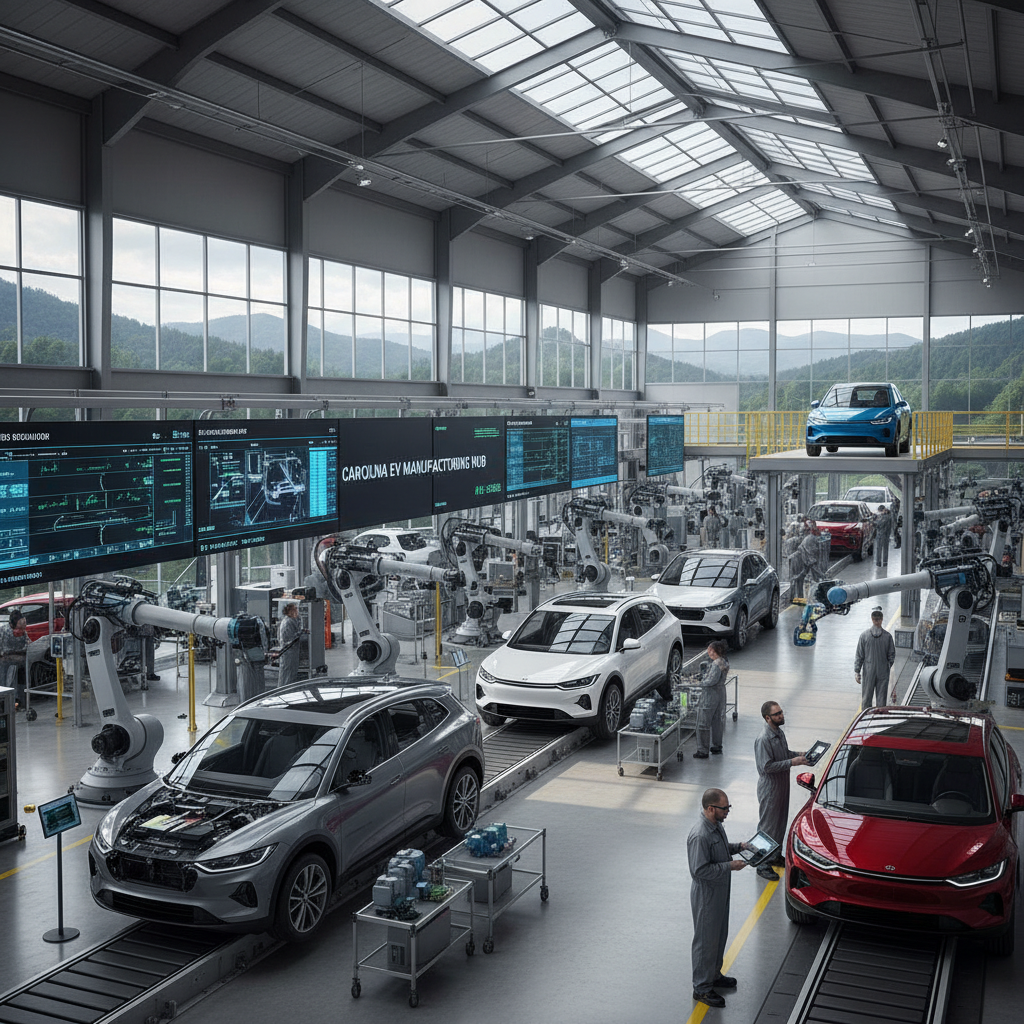
The Carolinas are at the forefront of America’s energy and transportation transition. North Carolina has attracted major battery and semiconductor investments, including VinFast’s EV facility in Chatham County and Wolfspeed’s silicon carbide plant in Siler City. South Carolina, home to a deep bench of auto manufacturers like BMW, Volvo, and Mercedes-Benz Vans, is expanding EV production capacity and supplier networks across the state.
These developments give the region a strong stake in the future of electric mobility. Local and state governments are offering generous incentives, and the Southeast’s strategic access to ports, highways, and a skilled labor force makes it a desirable manufacturing destination.
Fisker, however, has yet to establish a manufacturing footprint in the Carolinas or the broader Southeast. Without a domestic facility, it remains ineligible for many Inflation Reduction Act (IRA) tax credits, a key concern for consumers and investors alike. Should Fisker seek a U.S. production partner, the Carolinas—with their rapid EV sector expansion—could become a natural fit.
Investor Sentiment and Financial Landscape in the Carolinas
Institutional sentiment toward Fisker cooled considerably in early 2025 due to liquidity issues and missed milestones. However, ESG-focused investment remains strong in the Carolinas, particularly in innovation-driven areas like Research Triangle Park in North Carolina and the Charleston tech corridor.
Young retail investors and sustainable fund managers in these regions remain cautiously optimistic about Fisker’s long-term vision, especially if the company can demonstrate operational improvement, deliver the Pear model on time in 2026, and establish U.S.-based production ties.
Looking Ahead: The Road to 2030
The Carolinas are transforming into a clean energy and advanced manufacturing hub. From battery production and EV assembly to solar expansion and grid modernization, the region is positioned to lead the next generation of transportation innovation.
For investors in North and South Carolina, Fisker presents a high-risk, high-reward opportunity. The brand’s sustainability-driven image and innovative vehicle lineup still resonate. But to become a serious long-term play, Fisker must overcome production roadblocks, secure financial stability, and realign operations to tap into domestic policy incentives—potentially right in the Carolinas.
Until then, it remains a speculative stock that demands close attention from regional investors attuned to the fast-changing EV economy and the Southeast’s rising industrial momentum.