- calendar_today August 24, 2025
.
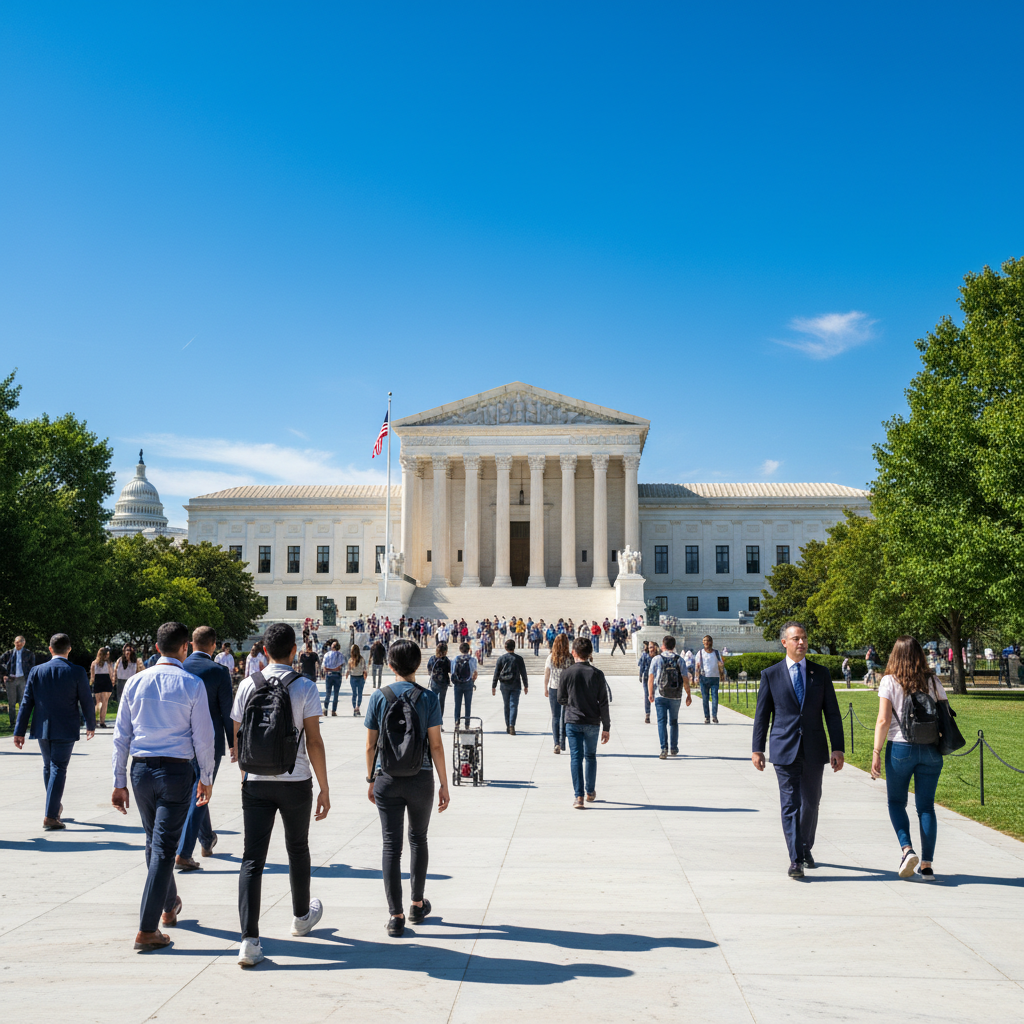
On Tuesday night, lawyers for the Trump administration asked the Supreme Court to temporarily let it block billions in foreign aid spending that Congress had already set aside. The filing takes the U.S. Agency for International Development (USAID) funding dispute back to the high court for the second time in six months.
The question now before the Supreme Court is whether the Trump administration can prevent nearly $12 billion in aid that had been set aside for USAID from being disbursed before the fiscal year ends on September 30.
President Donald Trump quickly moved to stop foreign aid payments as soon as he returned to office in January, issuing an executive order on his first day back that instructed the federal government to pause the vast majority of its foreign aid disbursements. He said the move was necessary to prevent “waste, fraud, and abuse” in foreign spending.
That order was met with immediate legal challenges and, in February, U.S. District Judge Amir Ali in Washington, D.C. blocked the administration’s freeze on funding. He ruled that the White House must continue releasing the money for projects that Congress had already approved in spending bills. Ali’s decision, in effect, required the Trump administration to restart payments on billions of dollars in USAID grants.
The Trump administration appealed, with the U.S. Court of Appeals for the D.C. Circuit taking up the case earlier this month. In a 2-1 ruling, the court vacated Ali’s injunction. In the majority opinion, Judge Karen L. Henderson, an appointee of George H.W. Bush, wrote that the plaintiffs in the case – a collection of foreign aid groups that have sought to restore their grant payments – do not have a sufficient legal basis to sue the Trump administration.
Judge Henderson wrote in her opinion that the groups, foreign aid nonprofits, lacked a proper “cause of action” under what is known as the doctrine of impoundment.
The appeals court ruling was a big win for Trump, but so far, the court has not issued a mandate to force the administration to comply with that ruling. That delay has left Ali’s order – and the payment schedule he put in place – technically still in place. The Trump administration is now trying to stop the clock before it is forced to release the full $12 billion before the fiscal year ends at the end of September.
On Tuesday, U.S. Solicitor General D. John Sauer, who filed the emergency request with the Supreme Court, wrote that unless the high court intervenes, the government will be forced to “rapidly obligate some $12 billion in foreign-aid funds” by the September 30 deadline.
U.S. Solicitor General D. John Sauer argued in the filing that the fight over foreign aid spending should not be decided by the federal courts but, instead, the political branches of government. “Congress did not upset the delicate interbranch balance by allowing for unlimited, unconstrained private suits,” Sauer wrote.
“The executive should not be forced to turn over vast sums, without more, to NGOs that have suffered no cognizable injury,” he continued. “If the President seeks to rescind those funds before they expire, any lingering dispute about the proper disposition of those funds should be left to the political branches, not effectively prejudged by the district court.”
The plaintiffs in the case, the foreign aid groups that rely on USAID for grant money to fund projects, argue otherwise. They argue that the president does not have the power to withhold money that Congress has already approved to be spent. The plaintiffs cite the Impoundment Control Act (ICA), a 1970s law meant to check the executive branch, and the Administrative Procedure Act as the key laws underpinning their claims.
The Supreme Court has heard a similar dispute in the past, issuing a narrow 5-4 ruling earlier this year. The justices could be asked to weigh in on the latest version of the case, with the fiscal year deadline rapidly approaching and billions of dollars in spending on the line.
For Trump, the case is the next front in a battle to fundamentally change U.S. spending priorities and gain more control over foreign assistance programs. For aid organizations, the case could mean the difference between being able to fully staff projects overseas or cutting back their work or, in the worst case, shutting down entirely.