- calendar_today August 25, 2025
Germany, France and the United Kingdom are preparing to activate the reimplementation of U.N. sanctions against Iran, three European officials told CNN Wednesday. Known as a “snapback” mechanism, the move could be announced as early as Thursday under the terms of the 2015 Iran nuclear deal.
The snapback process takes 30 days, but European leaders are hoping in that time Tehran will reenter into substantive negotiations with the international community, open its facilities to inspections and make a good-faith effort to comply with its nuclear obligations.
Iran has threatened severe retaliation if sanctions are reinstalled, increasing the risk of further instability in a region already roiled by recent conflict.
Snapback’s expiration looming
The snapback clause in the 2015 Joint Comprehensive Plan of Action allows member states to reimpose U.N. sanctions in the event of Iranian non-compliance with the terms of the deal. European leaders are working to trigger the snapback before the authority to do so expires in October.
Iran has since expanded its nuclear program well beyond the limits agreed to in the JCPOA after former President Donald Trump unilaterally withdrew the United States from the deal. Tehran says the program remains peaceful, but international inspectors and independent analysts say its ability to enrich uranium is fast approaching weapons-grade levels.
“Going back to the original JCPOA would be almost impossible,” International Atomic Energy Agency (IAEA) head Rafael Grossi told reporters Wednesday.
European officials have been working to find a diplomatic solution to avoid snapback with Iran and Grossi. U.S. Secretary of State Marco Rubio said he coordinated this week with his European counterparts as the possibility of snapback nears.
Rubio said the move “is actually a very powerful piece of leverage on the Iranian regime.”
Iran’s parliament passed legislation in July that would stop international inspectors from visiting its facilities. The IAEA has since been able to send inspectors back into Iran.
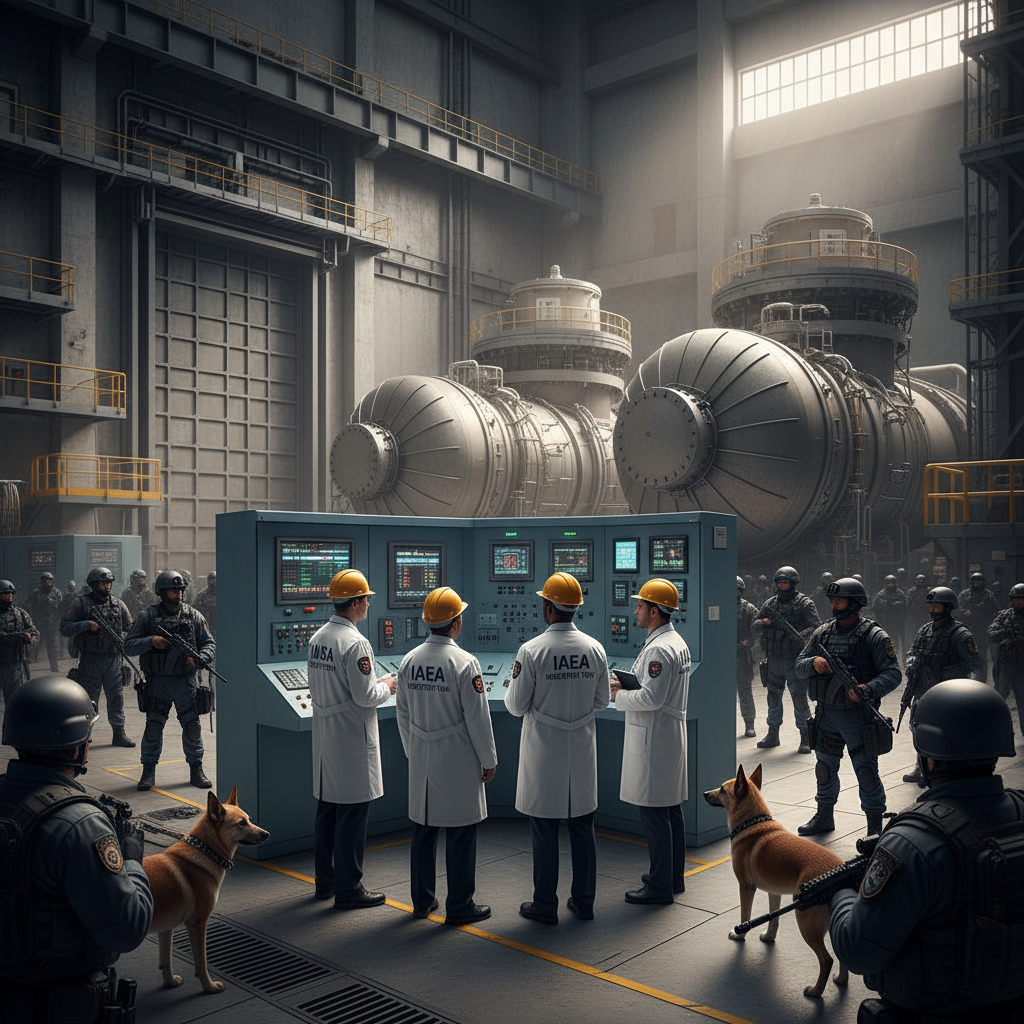
Inspections were confirmed at the Bushehr nuclear power plant on Wednesday. Grossi said IAEA teams were present at the site, which was previously damaged by an explosion in June.
“Today we are inspecting Bushehr,” Grossi told reporters in Washington. “We are continuing the conversation so that we can go to all places, including the facilities that have been attacked.”
The IAEA’s inspection and safeguards activities are rooted in the Nuclear Non-Proliferation Treaty, or NPT. Iran is a signatory to the NPT, but could theoretically consider leaving the treaty if sanctions are reimposed, something Iranian officials have reportedly discussed.
Iranian Foreign Minister Abbas Araghchi said inspectors were able to return to Bushehr after Supreme National Security Council decision to allow them to monitor fuel replacement.
Inspectors were there, he said, “but they didn’t see any new cooperation on our part.”
Araghchi, however, denied Iranian officials had agreed to new cooperation with inspectors in any broader sense.
Israel struck Iran’s nuclear facilities in June, beginning 12 days of conflict that saw Iranian retaliatory missile strikes against Israeli cities and U.S. forces entering the fray in the conflict’s final days with strikes against three Iranian sites.
The IAEA removed its inspectors from Iran in July after claiming there were no longer any operating nuclear facilities for it to monitor due to the wartime conditions. Satellite images taken in the weeks since showed there was damage to entrances to Iran’s Isfahan Nuclear Technology Research Center.
Tehran in turn accused the IAEA of giving Israel a pretext for its strikes by publicizing Iranian violations of the IAEA’s safeguard rules.
Iranian divisions
Allowing the IAEA inspectors back into some of its nuclear facilities in the country has drawn criticism inside Iran. Parliamentary member Kamran Ghazanfari, who is a member of the parliamentary board of control and supervision, criticized the remarks of Speaker Mohammad Bagher Ghalibaf for what he viewed as an “explicit violation” of the law that suspended cooperation with the IAEA.
Iran’s parliament passed legislation that month, after the fighting, in a move it said was to protect against foreign aggression and an IAEA director who it claimed “acts according to the political and security goals of foreign governments.”