- calendar_today August 27, 2025
The explosion of artificial intelligence (AI) is not just a technological innovation—it’s a revolution that’s redefining how we live, work, and learn. Artificial intelligence and automation are predicted to displace 50% of jobs globally by 2030, the World Economic Forum says. In the Carolinas, the prediction is spurring industry, government, and education to take action.
From Charlotte’s banking lobbies to Greenville’s manufacturing facilities, workers and employers are bracing themselves for the unavoidable transitions created by smart machines and learning algorithms.
The Carolinas at a Glance
North Carolina and South Carolina share a diversified economy founded on industries more and more impacted by automation and AI. They include:
- Manufacturing, which has more than 460,000 workers combined in both states
- Transportation and logistics, with principal shipping nodes in Charlotte and Charleston
- Retail and food service, susceptible to automation through kiosks and self-checkout lanes
- Healthcare, an expanding sector where AI now assists in diagnostics and data handling
- Finance and tech, particularly in Raleigh’s Research Triangle and Charlotte’s banking hub
While these industries continue to play a strong economic role, most jobs in them are evolving—or will soon be.
Industries at Risk and on the Rise
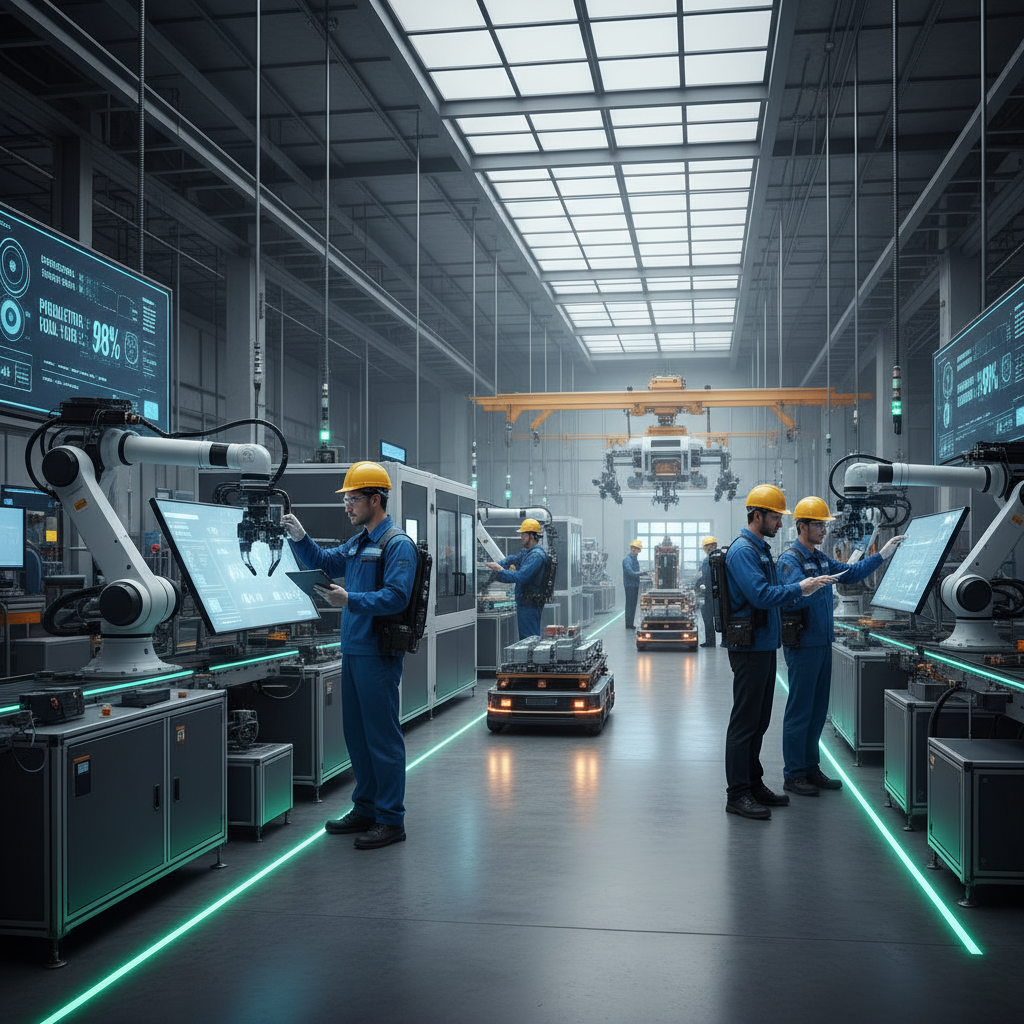
Jobs with repetitive, automated tasks are the most vulnerable. Data entry clerks, call center personnel, and warehouse staff are already witnessing AI applications cut back on human labor. Factories in cities such as Greensboro, NC, and Columbia, SC, are incorporating robotics for packaging, inspection, and inventory.
But at the same time, AI is generating new occupations that never existed before five years ago:
- AI system technicians
- Robotics maintenance specialists
- Cybersecurity analysts
- Data analysts and trainers of AI
- Machine learning engineers
Resistance to change is giving way to new career options for the Carolinas.
Upskilling and Education: Creating a Future-Ready Workforce
In recognition of the challenge, schools, colleges, and workforce boards in both states are moving to upskill workers.
In North Carolina, the NC Community College System has introduced new certification programs in AI, data science, and mechatronics. Wake Tech, for instance, provides AI basics and programming courses that are available to adult students and displaced workers.
South Carolina is not too far behind. The SC Technical College System has developed programs with an emphasis on automation within manufacturing, AI within the health sector, and intelligent logistics. At Greenville Tech, a new program entitled “Tech Forward” is assisting in preparing students for AI-driven careers by collaborating with regional employers.
“AI is changing the game,” says Rebecca Langford, a career advisor at Midlands Technical College. “We’re focused on helping students and adults pivot into the future of work.”
Government and Industry Collaboration
The states are also using public-private partnerships to close skill gaps and boost innovation.
In Charlotte, the city’s Workforce and Economic Development Office is collaborating with such banks as Bank of America and Wells Fargo to retrain customer service representatives into technical support workers as AI chatbots service take care of straightforward inquiries.
At the same time, BMW’s plant in South Carolina is introducing robotic automation and employee training to shift jobs instead of phasing them out. Up-skilling programs, which will instruct human workers on how to manage and work with automated tools, are being introduced.
Rural Regions Face Bigger Hurdles
A challenge common to both states is the rural-urban gap. While cities such as Raleigh, Charleston, and Greenville are successful centers of technology, much of the rural countryside has no access to broadband internet and digital tools.
To fill this chasm, programs such as North Carolina’s GREAT Grant Program and South Carolina’s Broadband Office are bringing more internet access. Rural county libraries are also jumping in, providing free digital literacy training and access to online education systems like Coursera and edX.
Worker Sentiment: Between Fear and Opportunity
Both Carolinas have a balance of anxiety and guarded hopefulness. A recent NCWorks survey discovered that 58% of employees were worried about job loss because of automation, but 71% wanted to acquire new skills to remain competitive.
“I’ve worked in manufacturing for 20 years,” says Rock Hill, SC’s Thomas Riley. “They’re adding more machines. Rather than waiting to be replaced, I enrolled in an online robotics course. I want to remain relevant.”
This forward-thinking approach is being fostered across sectors. Career centers are providing resume refreshers, interview preparation for technical positions, and virtual access to career fairs with companies eager to hire for AI jobs.
Vocations for the Next Generation
Youth coming into the workforce today are particularly well-positioned to take advantage of the AI revolution—if they’re ready.
STEM education is growing in K-12 schools in both states. In North Carolina, students in high school already learn Python and do AI projects in afterschool activities. In South Carolina, middle schools are testing AI ethics and coding instruction.
Parents, teachers, and legislators are pushing early exposure to technology because they know it will be the heart of next-generation medical, agricultural, educational, logistics, and other professions.
Conclusion: Adaptation Is the Way Forward
As 2030 looms closer, AI will further transform the future of work in North and South Carolina. But that doesn’t lead to inevitable job loss on a large scale. Rather, it marks the transition in the types of jobs there will be—away from labor-based and toward knowledge-based, away from repetitive and toward creative.
By investing in learning, enabling digital access, and promoting lifelong education, the Carolinas are positioning themselves not only to weather AI disruption, but to spearhead the next generation of workforce innovation.