- calendar_today June 4, 2026
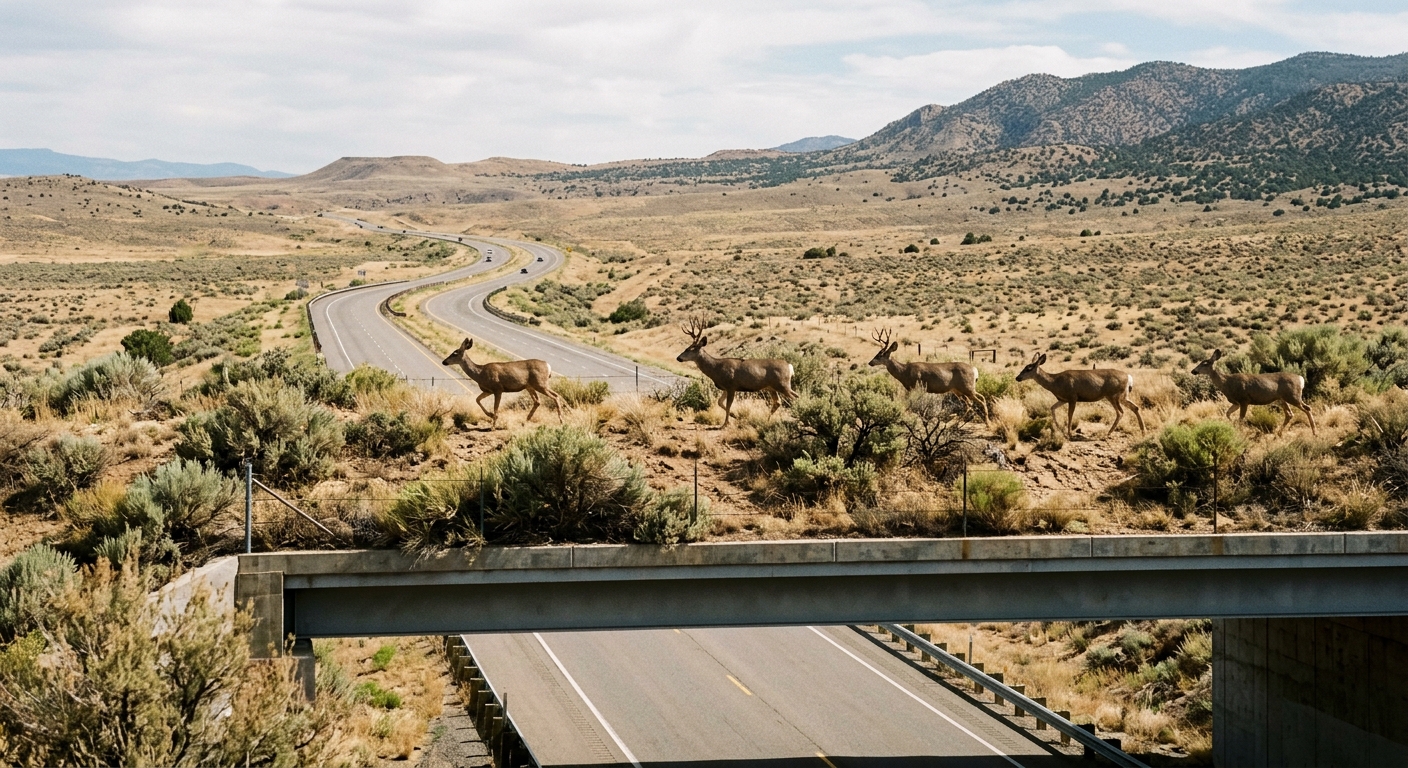
California — The state’s inaugural wildlife crossing in Siskiyou County has recorded its first successful use, as three mule deer safely traversed an overpass across a dangerous stretch of State Route 97. The development marks a significant milestone for the region’s conservation community, emphasizing California’s increasing commitment to safeguarding wildlife amid growing vehicular traffic.
Mule Deer Crossing Breaks New Ground
This initial crossing by mule deer highlights early success for the Siskiyou County project, which was implemented to reduce animal-vehicle collisions, a persistent threat along State Route 97. Between 2015 and 2020 alone, more than 50 deer and 16 elk perished due to vehicle encounters on this thoroughfare. The visual confirmation of mule deer utilizing the overpass underscores the urgency and impact of such safe passages, now being witnessed firsthand in Northern California.
Collaborative Effort Behind the Wildlife Overpass
The creation of the overpass involved a partnership between the UC Davis Road Ecology Center and Caltrans, the state’s transportation agency. The UC Davis Ecology team provided research and oversight, while the Caltrans project management oversaw construction and logistics. Fraser Shilling, director of the UC Davis Road Ecology Center, described the event as the dawn of a new chapter in wildlife connectivity, suggesting this project will serve as a model for other regions considering similar solutions.
Comprehensive Measures: Wildlife Fencing and Monitoring
The crossing is supported by newly installed wildlife fencing, which extends for several miles on either side of the overpass. This infrastructure is designed to guide animals, including gray wolves, mountain lions, black bears, and other native species, toward safer crossing points and away from oncoming traffic. Advanced monitoring equipment is now in place to document animal movements and provide ongoing data to support future improvements.
State Route 97: A Hub of Conservation Activity
Siskiyou County’s overpass is one of several major California wildlife initiatives that aim to reduce animal vehicle collisions. Additional projects, such as the Agoura Hills crossing, which at $114 million is expected to be the largest wildlife overpass in the world, and others in the Mojave Desert over Interstate 15, are currently in various stages of development.
Proven Benefits: Lessons from Other States
Leaders in California have taken inspiration from similar endeavors in Utah and Washington, where wildlife connectivity projects have already led to sharp declines in wildlife mortality and contributed positively to regional biodiversity. The continuing rollout of overpasses and underpasses throughout the western United States supports the movement and genetic diversity of species otherwise isolated by highway networks.
Protecting Biodiversity Across California
As traffic volumes increase and new development encroaches on habitats, the integration of overpasses, fencing, and monitoring remains key. The current Siskiyou County effort, including the wildlife fencing along State Route 97, stands as a flagship Caltrans project for the region. These crossings are crucial for species ranging from mule deer and elk to predators like mountain lions, helping sustain regional wildlife populations. The Agoura Hills crossing, now under construction, is expected to further amplify these benefits in Southern California.
Community Impact and Future Outlook
For local communities, these projects are more than engineering feats; they represent ongoing investments in ecosystem health and road safety. Residents and motorists on corridors such as State Route 97 may witness fewer accidents and greater biodiversity, while researchers from the UC Davis Ecology team continue to refine and report on project outcomes. As California advances these wildlife connectivity measures, the lessons learned in Siskiyou County will likely inform similar efforts across the state and beyond.