- calendar_today August 10, 2025
The groundbreaking feature “Images in ChatGPT” represents OpenAI’s official launch of direct image generation functionality within the ChatGPT interface. The GPT-4o model now powers this development, which enables users to generate images during their chat interactions while marking a major advancement in AI content creation.
The advanced image generation feature now operates on all ChatGPT plans, including Plus, Pro, Team, and free access, to expand user availability. OpenAI spokesperson Taya Christianson stated that free tier users are currently restricted to producing approximately three images daily, but these limits could change depending on user demand. Users who enjoy DALL-E will retain access through their own special GPT.
OpenAI research lead Gabriel Goh described GPT-4o as a revolutionary “omnimodal” model with the ability to process various forms of data such as text, images, audio, and video. The model demonstrates essential progress through its improved “binding” capability, which solves a longstanding problem in AI image generation. GPT-4o successfully handles 15 to 20 objects while avoiding color and shape confusion, which previous models struggled with.
The system delivers its best performance through advanced text rendering capabilities. AI-generated images have traditionally exhibited distorted and nonsensical text. Goh explained that they underwent an extensive iterative development process, which lasted multiple months to perfect. The team has achieved a consistent level of text rendering that makes text in images reliably usable despite the ongoing challenge of perfect text rendering for small text.
The system architecture uses an autoregressive method instead of the diffusion models that are standard among image generators. The image generation process that works from left to right and top to bottom, like text creation, produces better text rendering and binding features.
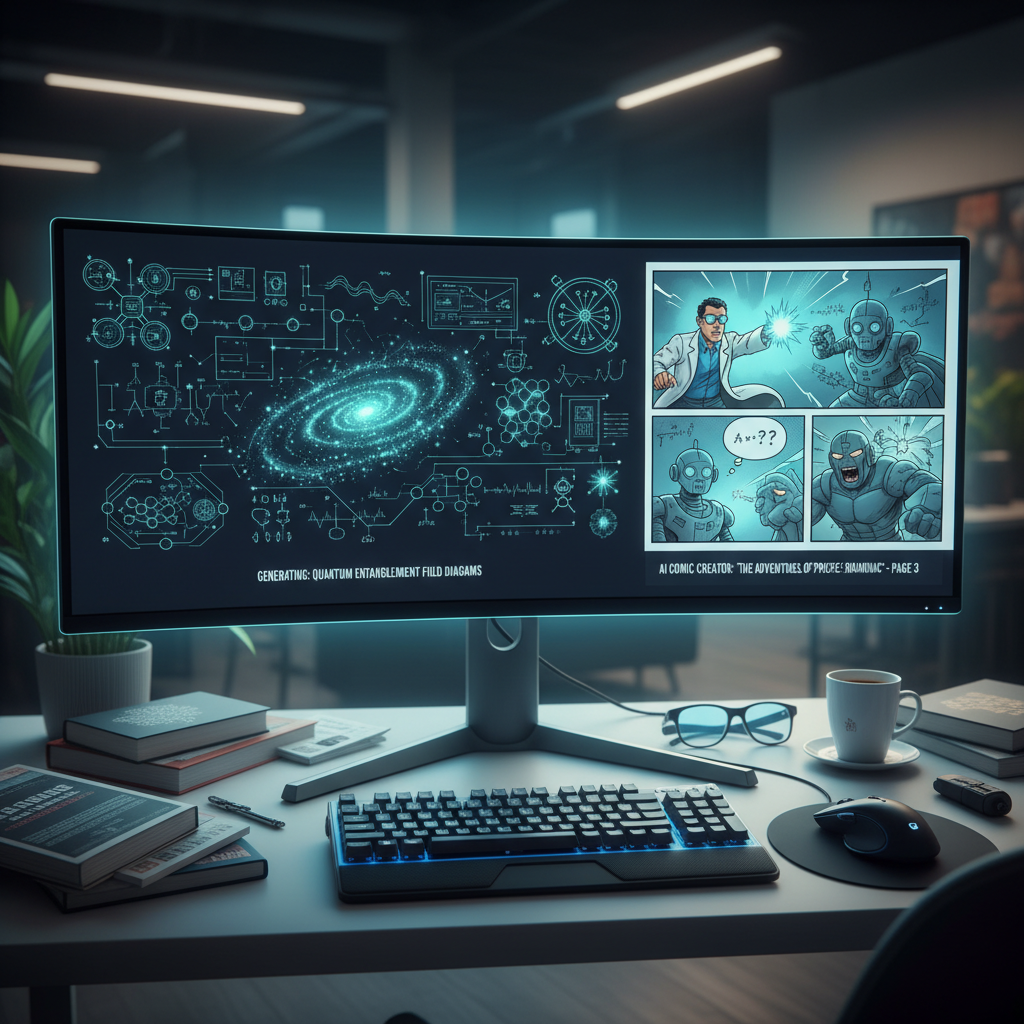
In a demonstration event, OpenAI exhibited their system’s versatile abilities, which spanned from producing precisely labeled scientific diagrams such as Newton’s prism experiment to designing multi-panel comics with coherent characters and storylines, and creating informational posters with correct text. A demonstration included practical uses such as creating transparent background images for stickers alongside applications for restaurant menus and logos.
The multimodal product lead at ChatGPT, named Jackie Shannon, described how the system uses world knowledge to enhance its functionality. “I enter the image drawing process knowing my skills have boundaries, yet I benefit from my extensive worldly knowledge accumulation”. The model incorporates world knowledge into its functions, which allows users to obtain an image of Newton’s prism experiment without needing to provide a description of the experiment.
According to OpenAI, the improvements in quality and functionality make the additional time required for image generation worthwhile. Despite the need for latency improvement, Shannon observed that the enhanced image quality, combined with capability and world knowledge, compensates for the extra waiting time.
Key Insights: Safeguards, User Ownership, and Technological Advancements
OpenAI responded to concerns about potential misuse by emphasizing its implementation of robust safeguards. The system blocks watermark removal while preventing sexual deepfake production and rejects CSAM content requests. All images produced by OpenAI will contain standard C2PA metadata, which functions as an invisible mark of OpenAI creation in place of visual watermarks. The company operates its own internal tools designed to verify images.
Shannon acknowledged that although no system can be flawless for this purpose, we keep enhancing our protective measures, which represent our initial approach. Users retain ownership of all images produced by ChatGPT and can freely use them within the defined usage policies.
The addition of image generation capabilities to ChatGPT marks a major leap forward in AI-powered creative processes. OpenAI demonstrates its dedication to providing a responsible and powerful tool through improved binding capabilities, superior text rendering, and robust safeguards. The company’s innovative image generation method stands out because it transitions to an autoregressive approach rather than traditional diffusion models. User ownership and metadata integration serve as critical components to maintain transparency and promote ethical practices in AI-generated content development. The integration of “Images in ChatGPT” allows OpenAI to improve its main product while establishing a new benchmark for both accessible and powerful AI-driven image creation.