
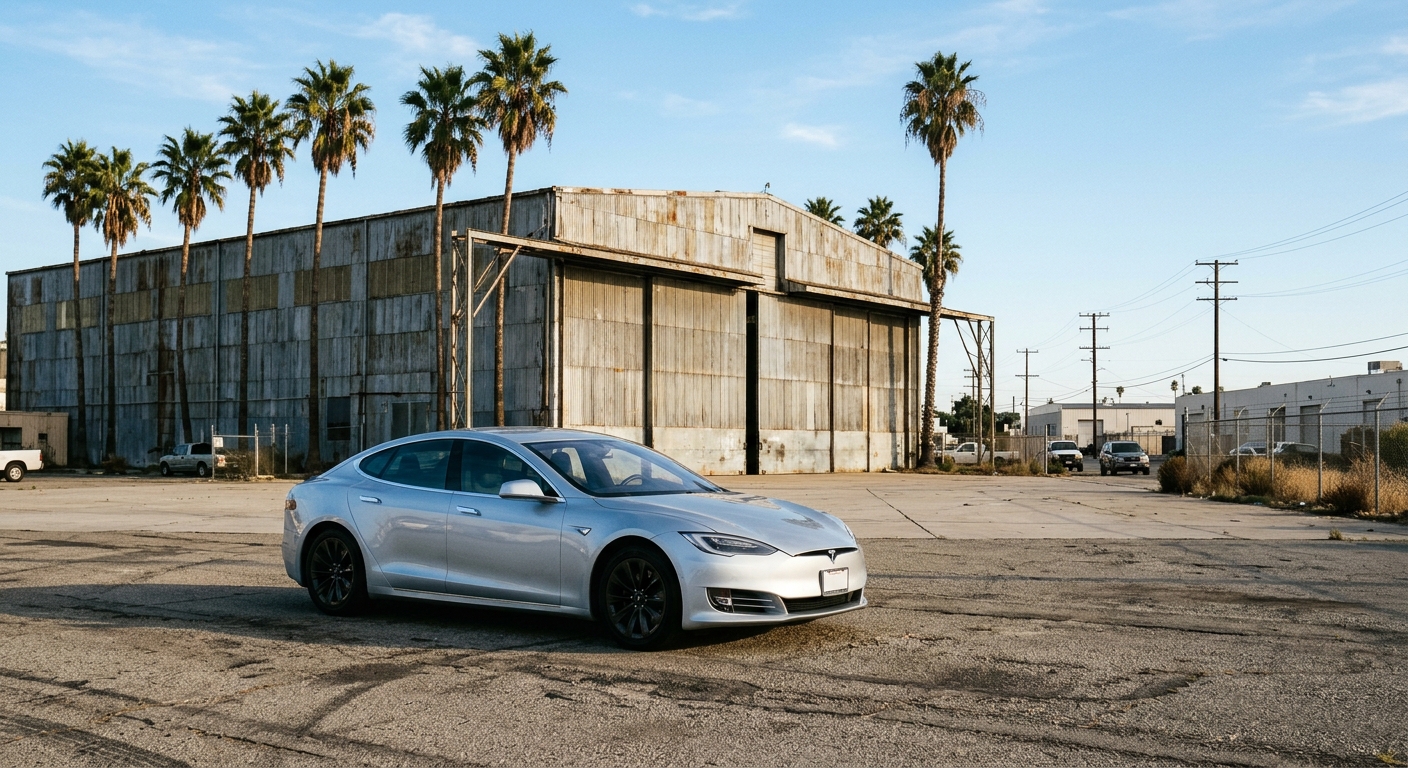
AI-generated illustration; not a photograph of the reported event.
- calendar_today October 22, 2026
A Potentially Historic Merger on the Horizon
This week, Elon Musk confirmed that SpaceX and Tesla—two companies he leads—are actively considering a merger. If completed, the deal would be the largest corporate merger ever, combining the worlds of electric vehicles and space transportation, and redefining both industries in the process. The core motivation behind this plan, according to Musk and analysts, is the evolving landscape of artificial intelligence (AI) and the immense infrastructure required to support it.
The Logic Behind the SpaceX Tesla Merger
Despite their seemingly different focus—Tesla on electric vehicles and SpaceX on rockets—their shared ambitions are converging through AI-driven technologies. Tesla's development of autonomous vehicles, including the experimental Cybercab and the Optimus robot, will demand extensive AI cloud computing power, something both companies are already developing jointly. Musk points to the "strategic no brainer" of harnessing combined resources, with particular gains in developing superintelligence software and robust AI infrastructure.
Industry analysts like Dan Ives from Yorkville Ives & Co., and Barclays' Dan Levy, note that vertical integration is a driving factor. Tesla vehicles could utilize SpaceX’s satellite network, Starlink, for connectivity, while SpaceX’s data centers might benefit from Tesla’s solar products. The companies also are collaborating on a $17-billion AI chip plant in Texas—a project that could further consolidate their technological strengths.
Financial and Structural Implications
SpaceX, now headquartered in Texas after moving from Hawthorne, was valued at $2.15 trillion, while Tesla’s market capitalization stands at $1.53 trillion. A merger would eclipse previous records, such as Vodafone’s $200 billion acquisition of Mannesmann in 2000. When SpaceX acquired Musk's AI firm xAI for $1.25 trillion earlier this year, it laid groundwork for deeper integration between his ventures.
While Musk owns 48% of SpaceX’s stock and 82% of its voting power thanks to a dual-class structure, analysts predict that if SpaceX acquires Tesla, Musk would retain significant control over the merged entity, potentially holding 37% of shares and 56% of voting power. Shareholder approval at both companies would still be required, and both boards have formed special committees to evaluate the merger—with Musk not participating due to his conflict of interest.
Practical Challenges and Regulatory Concerns
Merging two trillion-dollar companies involves overcoming major operational and legal challenges. Tesla, with over 100,000 employees and factories in the U.S., China, and Germany, contrasts with SpaceX’s more concentrated operations. Regulatory inquiries are expected not just in the U.S., but also from authorities in Europe and China. European officials, wary of an expanded SpaceX in light of ongoing geopolitical tensions, could see the merger as a potential security risk. Chinese regulators may fear surveillance risks if Tesla EVs and SpaceX technologies fully integrate.
In the U.S., analysts note that while federal regulators under the current administration are unlikely to block the deal, individual states could pose legal challenges, as seen recently with other high-profile mergers.
Market Response and the Road Ahead
The announcement of merger discussions sent stocks soaring—SpaceX closing up 3% to $386.47 and Tesla gaining nearly 8% to $159.31. The combined market shift added $64 billion to Musk’s net worth and briefly restored his status as a trillionaire. Despite the strategic advantages, Musk emphasizes that the merger is far from certain and will ultimately depend on shareholder approval and regulatory outcomes.
Shaping the Future of Technology and Transportation
The mega-merger aims to position the combined company as a leader in artificial intelligence infrastructure, robotaxi technology, and space exploration. While Tesla faces slowing vehicle sales and increasing competition, especially from China and rival robotaxi companies, its collaboration with SpaceX could provide the operational scale and technological assets necessary to tackle these challenges.
Regardless of the merger’s ultimate fate, Musk remains focused on bold ambitions, such as bringing humans to Mars aboard SpaceX's Starship rocket. In the coming months, all eyes will be on whether this historic merger proceeds and how it might reshape the future of electric vehicles, space transportation, and artificial intelligence.
Source: latimes.com.
Recent Posts

Hot Categories

131
Business

70
Events
170
News

81
Sports
103
Technology

