- calendar_today August 11, 2025
Green Energy Stocks: A Market in Transition
Leading clean energy stocks have experienced sharp declines in early 2025. Tesla (TSLA) has dropped over 45% year-to-date after weaker-than-expected vehicle deliveries. First Solar (FSLR) is down nearly 32%, despite strong 2024 revenues. Enphase Energy (ENPH) and NextEra Energy (NEE) have also fallen by 29% and close to 10%, respectively.
Investors in North and South Carolina—who often hold stakes in regional utilities, pension funds, and ESG-focused portfolios—have felt these fluctuations and are evaluating the best course of action.
Federal Support and Carolinas’ Renewable Energy Landscape
The Inflation Reduction Act (IRA) remains a key federal driver of clean energy investment in 2025, extending a 30% Investment Tax Credit (ITC) and a Production Tax Credit (PTC).
Both states complement these incentives with robust renewable energy programs:
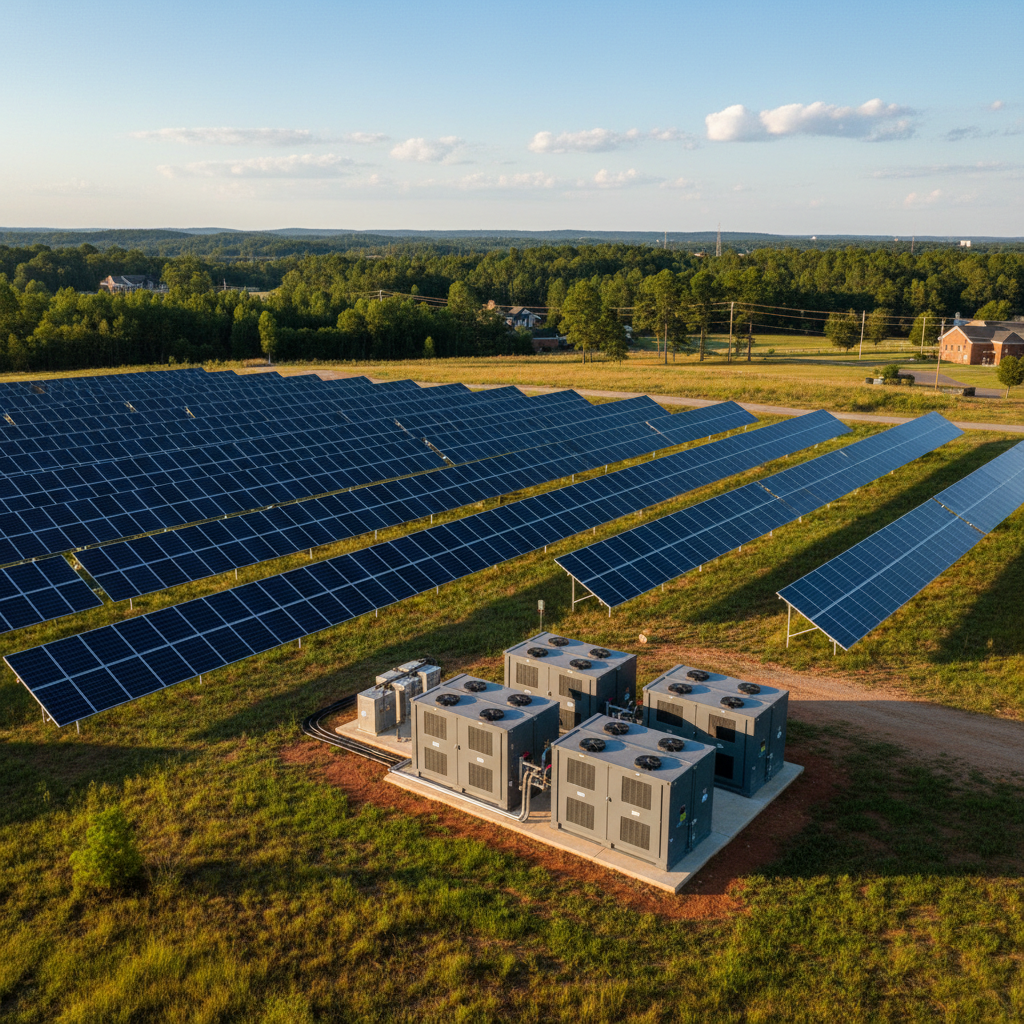
- North Carolina is one of the top solar-producing states, with utilities like Duke Energy and Dominion Energy expanding solar and battery storage projects aggressively.
- South Carolina has set ambitious renewable targets and is investing in solar farms and grid upgrades, particularly through Santee Cooper and Duke Energy Carolinas.
- Both states support net metering, property tax exemptions, and grants to encourage renewable adoption.
Together, these policies foster strong growth and investment opportunities in the region.
Regional Incentives and Economic Impact
North and South Carolina offer various incentives for solar and energy efficiency, including tax credits, rebates, and streamlined permitting processes.
According to the Carolinas Clean Energy Business Association (CCEBA), the region has seen a 20% increase in clean energy jobs since 2022, especially in solar installation, battery manufacturing, and grid modernization.
Macroeconomic Conditions: Interest Rates and Inflation
The Federal Reserve’s interest rate range of 4.25%–4.5% presents financing challenges for capital-intensive renewable projects in the Carolinas.
Inflation has moderated to 2.8% as of March 2025, potentially encouraging consumer spending on solar panels, electric vehicles, and energy upgrades.
ETF Performance: Reflecting Sector Volatility
Investors in the Carolinas often gain exposure through ETFs such as the iShares Global Clean Energy ETF (ICLN) and the First Trust Clean Edge Green Energy ETF (QCLN). Both ETFs have declined in 2025—ICLN down about 5%, and QCLN nearly 28% year-to-date—reflecting losses in top holdings like First Solar and Enphase.
Nevertheless, these ETFs have delivered strong returns over five years, highlighting long-term growth potential.
What Analysts Are Saying
“The Carolinas are emerging as significant players in the clean energy sector, driven by utility investments and supportive policies,” says Samantha Klein, energy analyst at Morningstar. “However, investors should be aware of short-term market volatility and financing pressures.”
Goldman Sachs downgraded its green energy outlook for Q2 2025, citing supply chain issues and rising grid upgrade costs—challenges relevant to the Carolinas’ energy infrastructure.
The International Energy Agency (IEA) projects renewables will supply 42% of U.S. electricity by 2030, consistent with the Carolinas’ growing clean energy ambitions.
So, Should You Invest Now?
Investment decisions should consider your risk tolerance and timeframe:
- Long-term investors (5–10 years): Current market dips may provide attractive entry points supported by federal and state momentum.
- Short-term investors: Market volatility and financing costs warrant caution.
- Diversified investors: ETFs like ICLN and QCLN offer broad exposure to mitigate single-stock risk.
The Carolinas’ clean energy market is expanding rapidly. Despite near-term challenges, the long-term outlook remains positive.
Bottom line: Understand your investment horizon. For investors in North and South Carolina, green energy stocks offer promising long-term opportunities despite current volatility.