
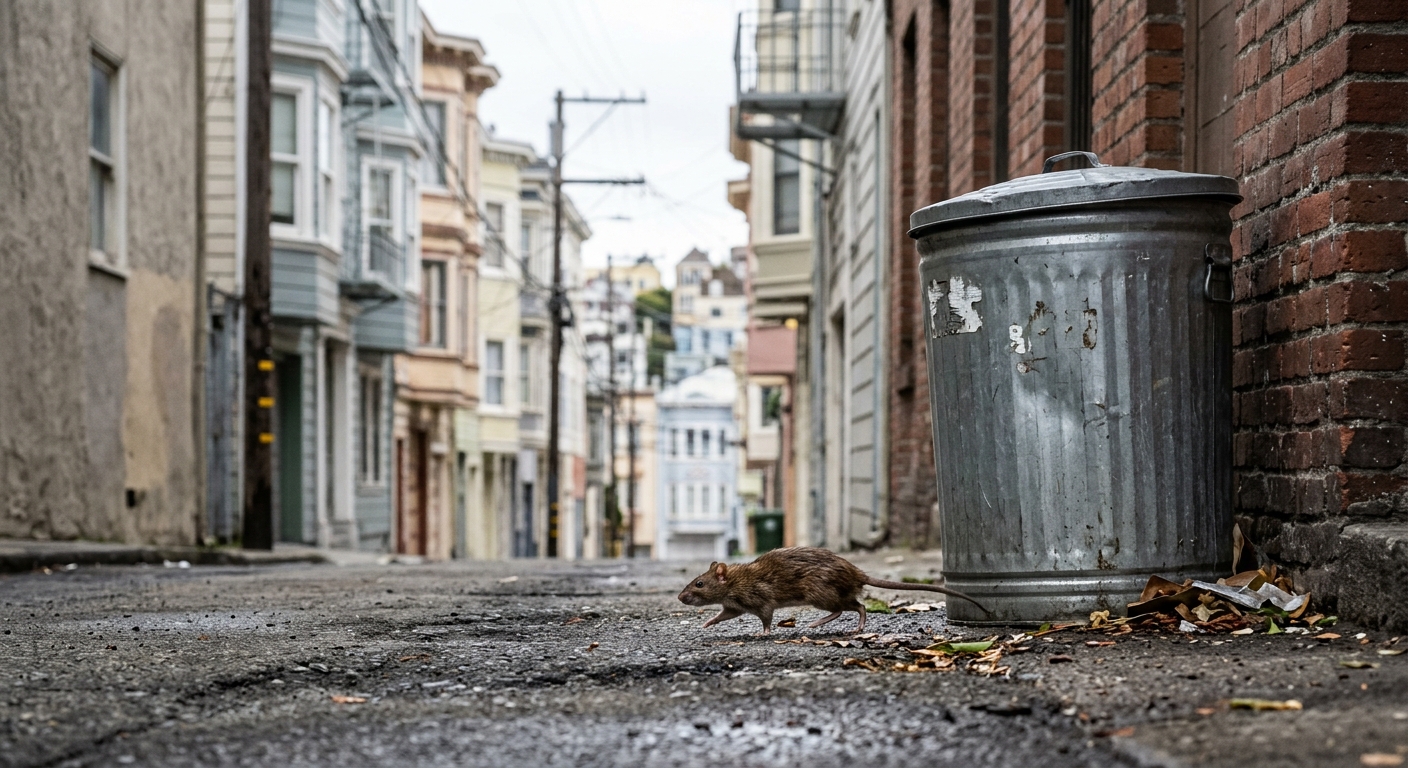
AI-generated illustration; not a photograph of the reported event.
- calendar_today October 8, 2026
San Francisco Retains Spot Among Top Rodent-Infested Cities
San Francisco is once again recognized as one of the most rodent-infested urban centers in the United States, according to a new annual report released by pest control company Terminix. The city is ranked fourth in the company's latest listing of the 50 worst cities for rodent infestation, based on data evaluating the prevalence of rats and mice in urban areas.
Terminix Releases Annual City Rodent Ranking
Terminix, a leading pest control company, published its annual list which identifies U.S. cities with the highest rodent populations. According to the 2026 report, San Francisco fell one spot from last year but remains in the top five, highlighting the ongoing challenges the city faces in managing urban rodents. New York continues to hold the top position, followed by Los Angeles and Philadelphia, which moved up to third, ahead of San Francisco. Houston enters the top five for the first time.
Top 10 Most Rodent-Infested Cities for 2026
- New York, NY
- Los Angeles, CA
- Philadelphia, PA
- San Francisco, CA
- Houston, TX
- Chicago, IL
- Washington, DC
- Boston, MA
- Dallas, TX
- Detroit, MI
These rankings reflect the persistent issues urban areas encounter regarding rodents and serve as an annual barometer for rodent hotspots across the country.
Other California Cities in the Rodent Report
California is notable for having multiple cities listed among the 50 most rodent-impacted areas. Sacramento ranks 15th, Palm Springs 30th, and San Diego 45th, according to the Terminix report. This suggests that rodent infestation is not isolated to the largest metropolitan areas but extends to other populous regions across the state.
Factors Contributing to Urban Rodent Populations
Terminix explains that cities at the top of the city rodent ranking typically offer abundant food sources, dense populations, and ample hiding places for rodents. “Several factors can influence where rodent pressure shows up from year to year,” said Emory Matts of Terminix in a news release. Environmental elements such as weather patterns, drought conditions, urban development, population shifts, and the availability of food and shelter are all significant variables. Dry weather can force rodents indoors, while milder falls and winters may allow for longer breeding seasons, thereby increasing rodent populations before colder months arrive.
Addressing Urban Rodent Control Challenges
The annual Terminix report highlights the ongoing need for effective rodent control strategies in urban environments. Officials and residents alike are encouraged to be aware of these findings and to take measures to minimize factors that contribute to the growth of urban pest populations.
Source: kron4.com.
Recent Posts

Hot Categories

132
Business

71
Events

172
News
81
Sports

105
Technology
