- calendar_today August 7, 2025
Steve Jackson Games CEO: We Simply Can’t Manufacture in the US
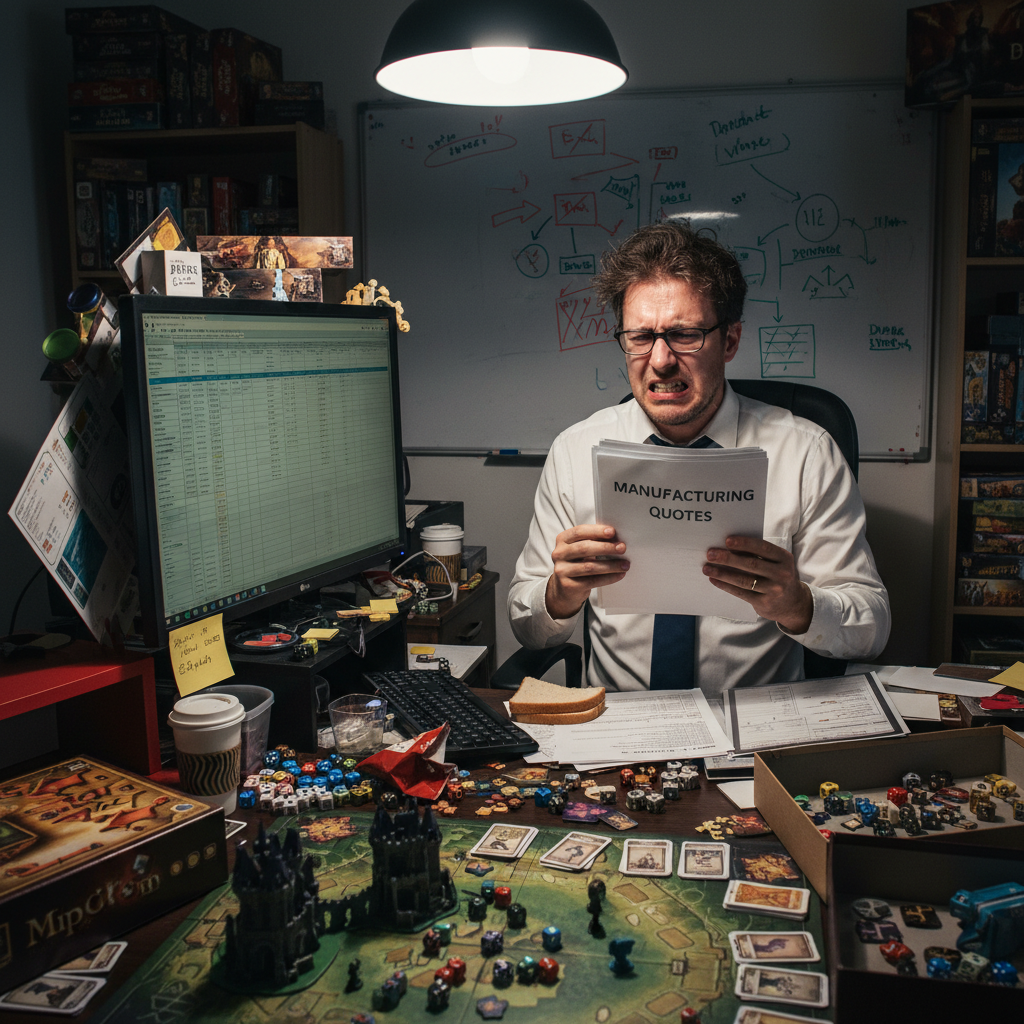
Like many industries, board games are innovative, community-oriented, and operate on fairly slim profit margins. The industry has always been accustomed to rough patches, but the last couple of weeks have brought a tax announcement so heavy that board game designers and publishers are worried it could have catastrophic effects on the future of the hobby.
Renowned designer Jamey Stegmaier, best known for the global hits Scythe and Wingspan, made headlines this week by voicing his frustration on the latest round of tariffs in the U.S., which will see an effective 54 percent tax placed on goods produced in China and imported into the United States.
“I spent a bunch of time staring blankly at the enormity of the newly announced 54 percent tariff and trying to figure out what I can even do about it. I have no solutions,” Stegmaier wrote in an emotional blog post. “Last night I tried to work on a new game I’m brainstorming, but it’s tough to create something for the future when that future looks so grim.”
For a designer whose games have found a global audience and made him one of the most successful in the industry, it was an unusual moment of public vulnerability, and one that has been broadly echoed by other designers and publishers in the field.
A global industry built on China
To produce games in the United States, on the scale at which modern board games are produced, is an unviable proposition. As Stegmaier noted in his post, most of the materials and processes required for that are based in China, such as the printing of cards or board game components, custom plastic miniatures or wooden tokens, die-cut boards, and specialty dice.
Building those tools and infrastructure domestically is, in theory, possible, but extremely unlikely. Stegmaier recalled an early quote he’d received from a US manufacturer for just an empty game box, which came to $10.
“In China, for $10 you can get the game components made and packaged up ready to ship,” he added.
It’s for that reason that the new tariff has been received with horror across the industry. Most publishers of board games in the United States, especially smaller and mid-tier publishers, work with incredibly slim margins, leaving very little room for such a cost increase, with no lead time to find savings elsewhere.
One voice, many sentiments
Other members of the board game industry have spoken out about the potential impact of the tariffs, including Meredith Placko, CEO of Steve Jackson Games. Her company produces Munchkin and, like most board game publishers, outsources manufacturing to China and other countries overseas for many of the same reasons.
“When people ask why we don’t manufacture in the US, I know exactly what to say. But I wish the answer was different,” Placko wrote in a recent post. “Here’s the thing: you can’t have specialty dice making, die-cutting, custom plastic and wood components made in the US at any kind of price or scale if there’s no infrastructure to do it. I’ve gotten quotes. I’ve talked to factories. The willingness is there. But in most cases, the equipment, labor, and timelines simply aren’t.”
It’s a foundational shift to the industry, rather than simply a cost adjustment: Placko described it as “not just a policy change. It’s a seismic shift in the foundation of the entire industry.”
Restoration Games co-founder Rob Daviau, who created the hit Pandemic Legacy, has also been vocal on the subject in recent months, with many in the industry posting on social media that Daviau’s frequent business meetings have taken on the air of “an existential crisis about our industry.”
In an interview with BoardGameWire, Daviau forecasted a “great collapse in the hobby gaming market in the US” should tariffs similar to this one come into effect.
Gamers will pay the price.
The potential impact won’t only be on the publisher and designer side of the market, but will also extend to gamers themselves. Games are likely to get more expensive as publishers look to pass the increased costs onto customers. In some cases, this may result in companies looking to cut costs and corners to maintain existing price points, meaning lower quality production, and in others may mean companies simply scaling back on the number of new games they produce.
Local game stores, already struggling in the face of online competition, could also see further harm as consumers turn to existing collections, many of which are likely to include as-yet unplayed games on what fans of the hobby term their “shelves of shame,” or make the shift to purchasing games online, where it may be cheaper.
“The thing that worries me the most is what this will do to game stores, which are already struggling,” Stegmaier wrote in his blog post. “My game is made in the US, and my game is made by a US company. US companies and US citizens will suffer from extreme inflation. Within a few months, US companies will lose a lot of money and/or go out of business.”
Limited options, mounting frustration
There may be some limited options that publishers will seek to circumvent the tariffs, including shipping their product through a non-U.S. distributor. The European market, in this case, is less affected by the tariff and may act as an alternative. However, as Stegmaier noted, the majority of his company’s sales are from the U.S. market, making the cost increase unavoidable for most.
Also frustrating to many publishers is that the cost increase effectively comes in two forms: for games still being designed or in early stages of production, publishers can shift costs and make adjustments. But games that are already in production and transit from China to the U.S. will have no way to recoup that loss, and are effectively stuck with the increase. Chris Solis, head of California-based Solis Game Studio, shared a similar story with Business Insider.
“I have 8,000 games leaving a factory in China this week,” Solis said. “This week. And now I need to scramble to cover the import bill.”
The Game Manufacturers Association, or GAMA, which lobbies on behalf of board game publishers, has been at the forefront of action to try and stop the tariffs, but so far with little result.
As the industry reorients to the challenge of this latest round of tariffs, one thing has become abundantly clear: the modern board game industry is facing one of the most existential crises it has ever seen. An industry built on spreading joy, on creativity and fun, on bringing people together, now looks at a future where the simple act of playing a board game is more and more out of reach.