- calendar_today August 24, 2025
The Sandman Season 2 Review: A Masterpiece of Adaptation
Neil Gaiman’s Sandman, in its second and final season, remains true to the spirit and tone of the Pulitzer Prize-winning original graphic novel series. While some viewers were concerned about Netflix’s decision to cancel the series after Season 2, showrunner Allan Heinberg confirmed on X (formerly Twitter) that this was always the plan, and that they felt they had the right amount of material for two seasons. The creative team’s estimation proved accurate.
The first season of The Sandman, which we praised for its “vivid artwork, impeccable casting, and above all, capturing the trippy, ethereal tone of the graphic novel series,” covers Gaiman’s Preludes and Nocturnes and The Doll’s House, as well as two bonus episodes (adaptations of the stand-alone Sandman short stories “Dream of a Thousand Cats” and “Calliope” from the Dream Country trade paperback). The second season is mostly adapted from Seasons of Mists, Brief Lives, The Kindly Ones, and The Wake, with significant material from Fables and Reflections (specifically “The Song of Orpheus” and a small portion of “Thermidor”), and the Oscar-winning “A Midsummer Night’s Dream” from Dream Country. The one bonus episode is an adaptation of the 1993 one-shot spinoff Death: The High Cost of Living. Omitted storylines that do not directly impact the main Dream King story-arc include A Game of You and several short stories.
Season 1 saw Dream escaping imprisonment, regaining his lost talismans, eliminating the escaped Corinthian (Boyd Holbrook), and solving the crisis in the Vortex (creation’s collective subconscious). He is free to rebuild the Dreaming, but is distracted when he is summoned for the first time in his life by his sister, Destiny (Adrian Lester). She convenes a meeting with his siblings Death (Kirby Howell-Baptiste), Desire (Mason Alexander Park), Despair (Donna Preston), and Delirium (Esmé Creed-Miles) which leads to a race to find and rescue Nada (Umulisa Gahiga), the queen of the First People and one of his former lovers, whom he had sentenced to Hell. This necessitates another confrontation with Lucifer (Gwendolyn Christie), still angry about being defeated by Dream in Season 1. Instead of wanting to fight again, Lucifer announces that she is giving up her role as Hell’s keeper and leaving Dream with the key to a now-empty Hell. He has the final say in who the next Keeper should be and offers up a smorgasbord of candidates from Odin, Order, and Chaos, to the demon Azazel. Meanwhile, Delirium is determined to find their brother Destruction (Barry Sloane), who ran away from his realm of Apokolips millions of years ago and has not been seen since. Morpheus’s actions to save Nada bring him to the realization of his destiny: he will eventually be forced to spill family blood and anger the Kindly Ones.
Highlights, Lowlights, and a Touching Conclusion
Production values, casting, and visuals remain at the high level fans have come to expect from the show. I have never been one of those people to complain about the pace. Gaiman’s work is often described as leisurely, and the two seasons (as well as many of the source stories they are adapted from) exhibit a deliberate, unhurried pace as if allowing the audience to fully submerge themselves in the surreal storytelling.
There is one instance where the storytelling becomes less effective, and that is in the episode “Time and Night” where Morpheus consults his parents, Time (Rufus Sewell) and Night (Tanya Moodie). These scenes are while being technically canon (Time and Night are, in the comics, the parents of the Endless), are filled with clunky exposition dialogue that is too on-the-nose even for Sewell to overcome, feeling more like a couple in therapy than godlike manifestations of abstract concepts. It is also the episode that deals the most directly with Morpheus’s backstory; if you enjoyed his origin story in Season 1, you may find it worth a re-watch.
Some other standout moments include Lucifer asking Dream to cut off her wings (spoiler: he does it himself); the ancient goddess Ishtar (Amber Rose Revah) casting off all pretense and dancing one final time in the form she is happiest in as a goddess; Dream talking to the Bard William Shakespeare about why he has to write The Tempest; a reformed Corinthian feeling chemistry with Johanna Constantine (Jenna Coleman); the song Orpheus sings in the Underworld and his deal to bring back his wife Eurydice; Dream administering euthanasia to his son; and the Furies (a trio of women goddesses of revenge) who single-handedly kill Fiddler’s Green (Stephen Fry), Mervyn Pumpkinhead (Mark Hamill), and Abel (Asim Chaudhry) for their presumption.
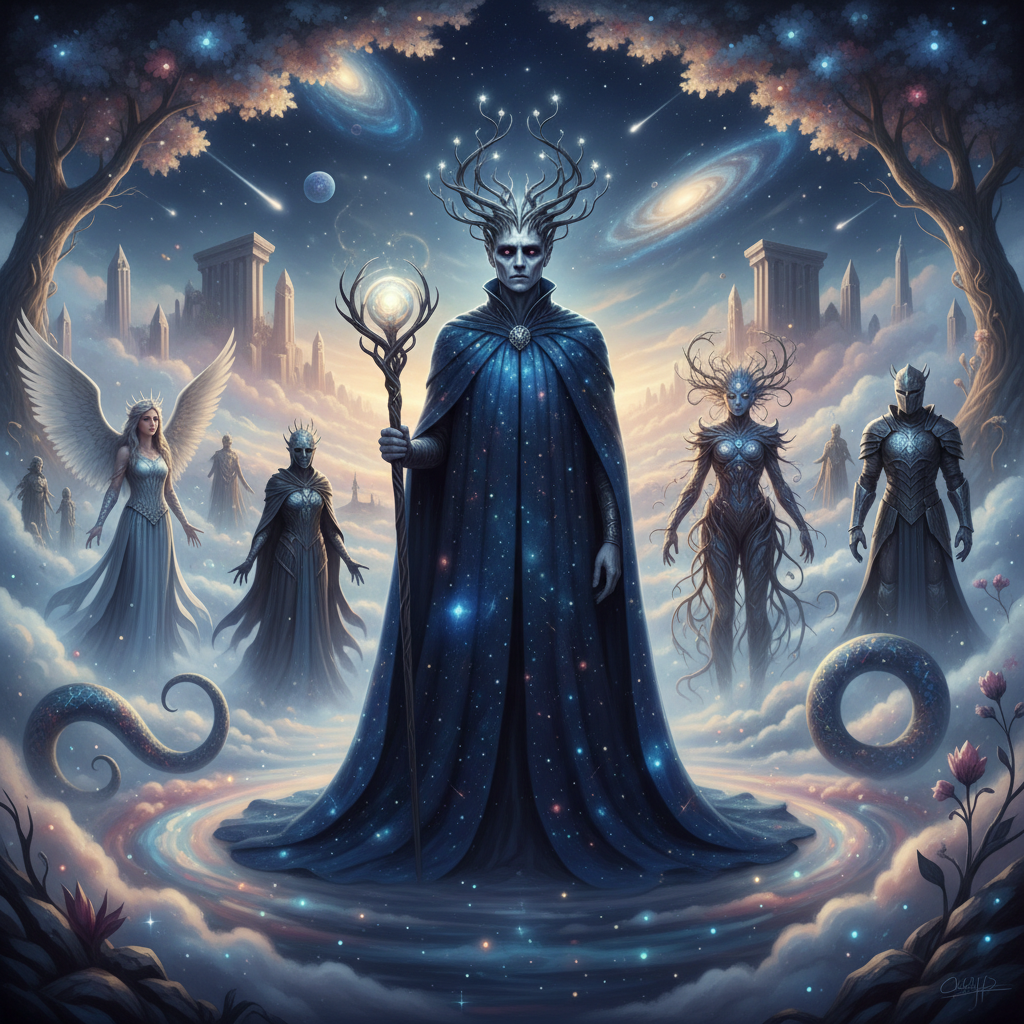
Dream’s death is not anticlimactic; it is befitting for a character whose journey ends here, and it is presented with a mix of melancholy and the dignity of a job well done. After death, he takes Death’s hand one last time and leaves her to take over while he enters the Void. In his place is Daniel Hall (Jacob Anderson), the only human to ever be sired in the Dreaming. Hall, clearly lost, is being guided to his new role as Dream by a mysterious figure in a hooded cloak. The Endless stand in a line to eulogize their lost brother and welcome the new Dream into their midst.