- calendar_today August 31, 2025
A significant update is happening at WhatsApp. It’s been brewing for years, but now, for the first time since 2009, ads are coming to the world’s largest messaging app.
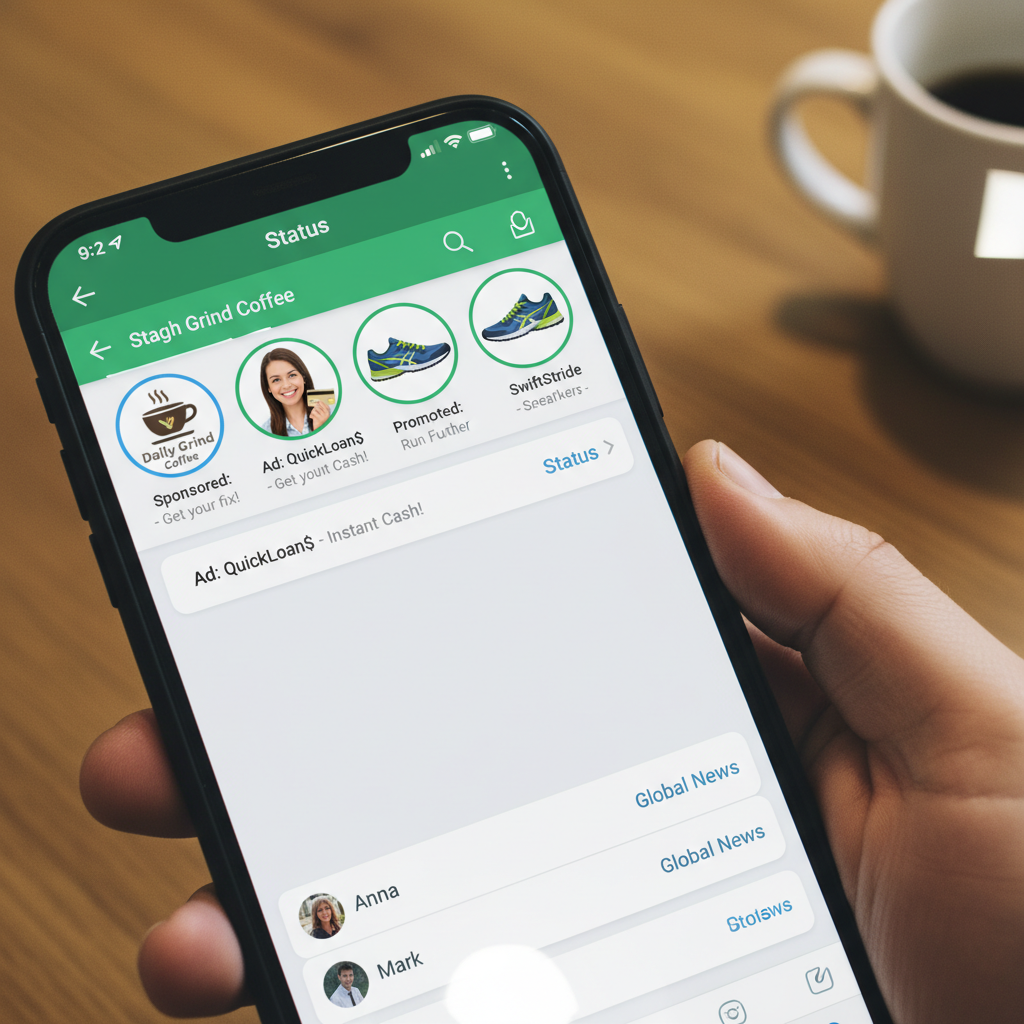
Meta, the parent company of WhatsApp, announced today that ads are beginning to roll out in the app’s “Updates” tab, where users post Status updates or follow Channels. Crucially, the company is emphasizing that these ads won’t interfere with your chats. Individual chats and group messages will remain ad-free, and Meta says it won’t show them until it has verified that they’re not invading personal conversations. Indeed, it won’t track users’ chats for advertising purposes.
According to Meta, about 1.5 billion people see the Updates tab daily, which makes it a potential gold mine for ad impressions. If you don’t regularly browse that section, you may not notice the update. But for those who do check it often for Status updates or Channels, you’ll soon see ads popping up.
Three Ad Types — And A Subscriptions Option
WhatsApp is testing three ad formats with this rollout.
First, the Status section — where users post time-sensitive updates, such as images, videos, or text — will begin showing ads from businesses. They’ll appear alongside updates from your friends, blended into the regular interface. Instead of seeing friends’ disappearing updates, you’ll see product ads. Users can contact the advertiser directly from the ad, giving businesses a new direct-to-consumer sales channel.
Second, there are Promoted Channels, which allow admins to pay to bump their Channel’s position in the app. Meta says this creates a new way for organizations, creators, and brands to build a following, rather than relying on outside promotion.
The third format introduces a subscription model. Businesses can charge users to receive exclusive updates via paid Channels. For example, a cooking page could charge a small monthly fee for premium recipes and notifications. Meta views this as another way for creators to monetize their content — and a new revenue stream for WhatsApp.
These changes fit into a larger push to make WhatsApp friendlier to businesses. In a briefing, Alice Newton Rex, VP of Product at WhatsApp, described this as a “natural evolution,” given that the Business Platform and click-to-WhatsApp ads on Facebook and Instagram have scaled significantly.
Privacy Promises And Data Use
Given WhatsApp’s reputation as a secure and private platform, introducing ads was bound to create some tension. Meta insists, however, that privacy remains intact.
The company says that it will only target ads based on basic user data — such as your country, age, language settings, and city. WhatsApp won’t look at the content of your messages to show you ads. Instead, it’ll use your activity in Status and Channels. The Channels you follow, how you interact with the content, and if you click on an ad — all of that data will influence what ads you see.
Plus, if you connect WhatsApp to Meta’s Accounts Center — an optional feature — it will sync your ad preferences across the company’s platforms. This includes using Instagram or Facebook data for your WhatsApp experience. The feature is off by default, and you can always disconnect it.
WhatsApp will also let you see why a specific ad was shown to you, hide an ad, or report it. You can also choose to block certain advertisers.
Up until now, WhatsApp made money primarily through its WhatsApp Business Platform and Facebook/Instagram ads that connect to WhatsApp threads. Earlier this month, Meta CEO Mark Zuckerberg noted that business messaging is “growing quickly” — but that WhatsApp could make much more revenue given its large user base.
It’s not alone in this effort. Discord began introducing ads in 2024. Reddit has also ramped up its advertising offerings — and contributed to its first-ever profitable quarter. With almost all other major platforms leaning on advertising for the bulk of their income, WhatsApp’s shift makes sense.
WhatsApp has long said it would stay ad-free. But with Meta bringing in 98% of its revenue from ads and having spent $16 billion to acquire WhatsApp in 2014, the company is clearly looking to cash in.
For most users, the change may not impact their experience — at least for now. But the door is open. And with Meta deeply interested in monetizing WhatsApp, these updates may be just the beginning.