- calendar_today September 1, 2025
In a massive leap forward, the Honda Motor Company, best known for cars and motorcycles, took its first-ever step into space. On Tuesday, the company revealed that it successfully launched and landed a rocket developed by its research and development department. The company is now among a growing list of carmakers with ambitious plans for space.
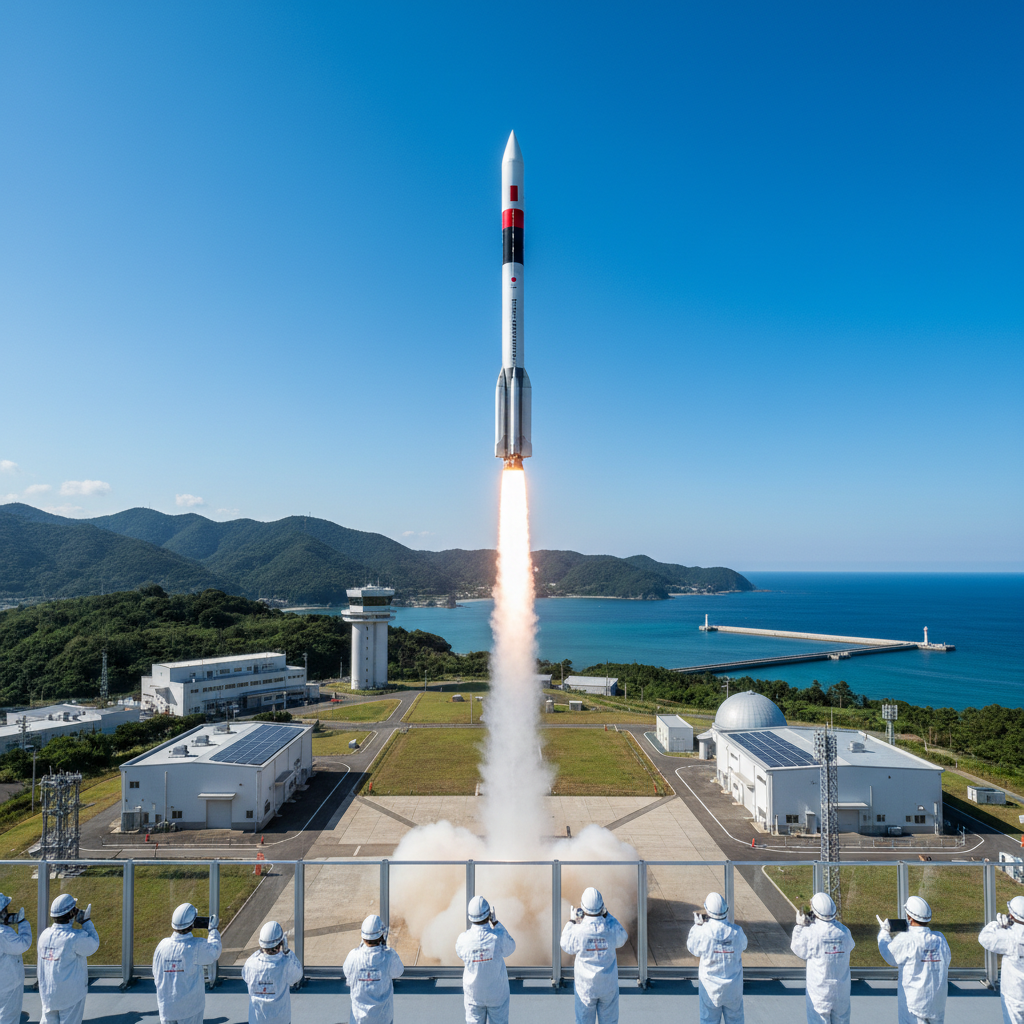
The test wasn’t performed at an international launch pad in Florida or Kazakhstan. It was at Honda’s facility in Taiki Town, Japan, which is quickly becoming a hub for space exploration. There, a roughly 21-foot rocket was launched to a maximum altitude of 890 feet, before it safely descended and landed just 37 centimeters from its target.
Now, that’s precise engineering.
The company’s initial rocket stands almost 21 feet tall and weighs 2,800 pounds before liftoff. It ascended for just 56.6 seconds. In that time, it proved it could ascend vertically, descend without crashing, and land precisely. This wasn’t done with thrusters, either — it had foldable landing legs attached to help it steady its descent and land just where it should.
That’s not what one might expect from a company that largely focuses on ground-level transportation. Still, the outcome suggests Honda is doing more than just trying things out — it’s making viable hardware.
The company has had its eye on space for a while. Honda first shared that it would explore the field in late 2021, but it didn’t say much more. For years, the company quietly worked on its new venture, with Tuesday’s test being the first to reveal how much it had accomplished.
Rather than create an entirely new system, Honda is leveraging technologies it’s developed elsewhere. Its autonomous driving technology is an important part of the program, for example. After all, the type of precise control necessary for self-driving vehicles can be used for takeoff, flight control, and pinpoint landings.
It’s an inter-industry application that’s made a lot of sense — and it appears to be working.
This rocket isn’t just about flexing technical prowess. Honda is setting itself up for a future in which satellites and other forms of space-based infrastructure are vital for running a business. Whether it’s communication, data transmission, or navigation, access to space has become increasingly valuable.
Though the rocket is still early in research, the success of the test hints at more ambitions. Honda wants to eventually develop its own small-scale launch systems that will service a growing need for satellite launches — and could tie into the automotive, robotics, and communications segments it already has in place.
Next Stop: Suborbital Flight
Honda is looking to hit a 100 km (62 miles) altitude in suborbital space by 2029. It would be similar to a conventional aircraft flight — the plane flies past the Kármán line and back — but doesn’t reach orbit. Reaching that height is a technical challenge in itself, and the ability to make that jump would demonstrate that Honda has developed the rocket propulsion, control, and landing technologies necessary to conduct more complicated launches.
But placing satellites in orbit is about more than getting above the atmosphere. It requires new vehicles, guidance systems, and likely payload technologies — and none of that is in place yet.
The company isn’t yet committing to turning its rocket program into a commercial operation. Still, this test puts it on a path where that decision could happen in the near future.
Taiki Town isn’t just a launching point — it’s where the action happens. The town has been cultivating itself as an aerospace center, too, partnering with multiple private companies and the Japanese Aerospace Exploration Agency (JAXA) to develop testing infrastructure, facilities, and training.
With Honda among the list of private companies conducting real-world experiments there, Taiki Town is rapidly becoming one of Japan’s most crucial space innovation hubs.
Honda still has a long way to go. It’s entering a competitive space with companies like SpaceX and Blue Origin, organizations that are equipped with massive funding and decades of experience launching payloads into orbit. But what Honda offers is something unique: a background in manufacturing efficiency, robotics, and mobility technology that could give it an edge as it builds out a program.
This test wasn’t just an isolated occurrence — it was a signal that Honda is ready to pursue a much greater goal.
The rocket may have landed just a few feet from its target, but the company’s space mission is looking far into the sky.