
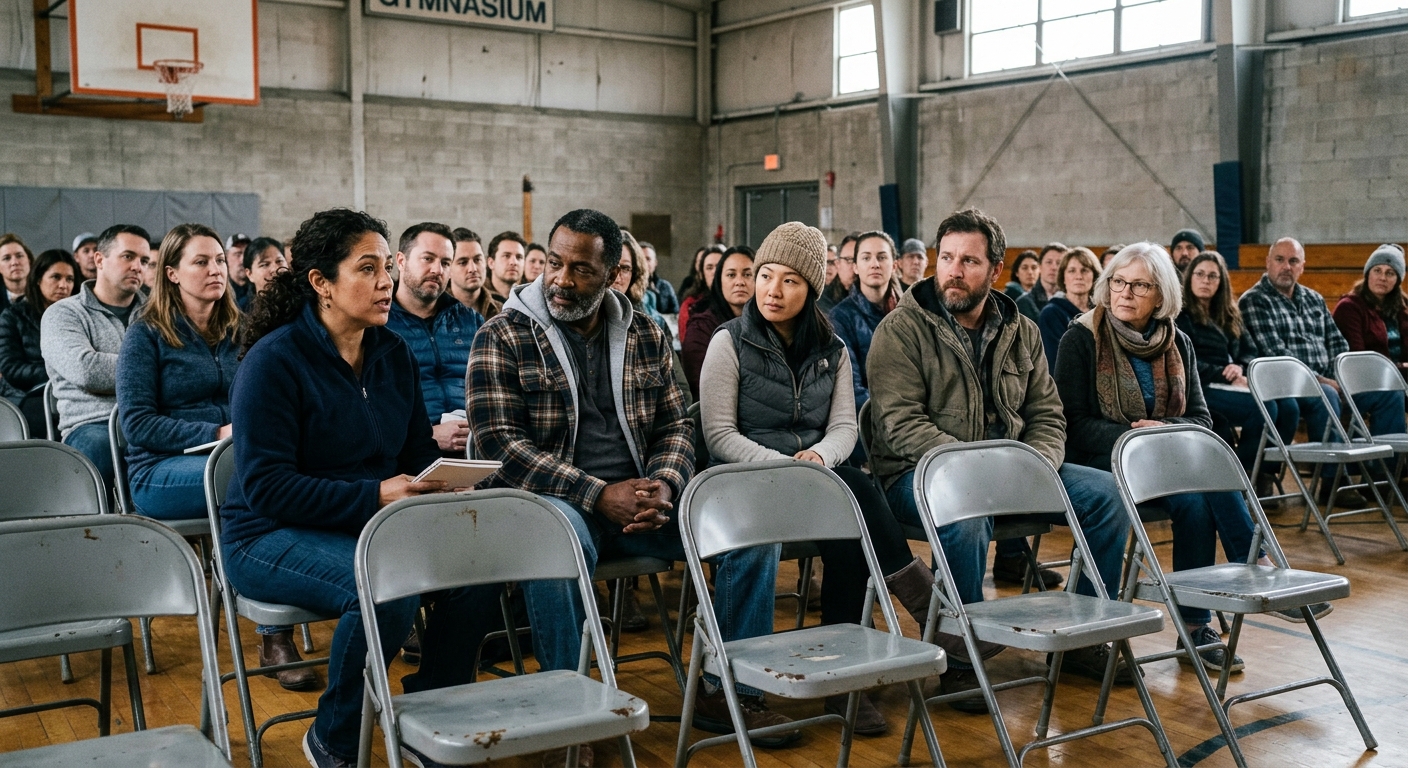
AI-generated illustration; not a photograph of the reported event.
- calendar_today October 19, 2026
Controversy Surrounds San Francisco School District's Assignment Proposal
The San Francisco Unified School District (SFUSD) is at the center of an intense debate after the school board voted in favor of a new student assignment policy that would move away from its longstanding lottery system. The change has been met with significant criticism from parents and civil rights advocates, who warn that it could lead to increased school segregation and racial discrimination.
Town Hall Gathers Community Voices
On Sunday, the NAACP hosted a town hall meeting at Third Baptist Church in San Francisco, offering families the opportunity to voice concerns about SFUSD’s proposal. The school board’s recent approval of Option C—a plan guaranteeing students a seat at their local neighborhood schools while allowing applications to specialized language programs—was the main point of discussion.
Under the current random lottery system, students are assigned to schools across the city without a guarantee of placement in their neighborhood. The proposed shift would fundamentally alter how student assignment is managed in the district's public schools.
Parents Warn of Segregation and Inequality
Former SFUSD parent Bivett Brackett was among those speaking out against Option C at the town hall. Brackett, who previously raised two children under the district's lottery system, expressed concern that the neighborhood-based approach could worsen educational inequality if not paired with equitable resource distribution.
"I think it’s segregation by another name. It’s still segregation," Brackett stated. "By passing this rule without actually redistributing resources so everyone has a good school, you’re just going to create an even bigger problem."
Brackett also shared her personal experiences, explaining that she removed her children from the district due to incidents of racial discrimination and safety concerns. She noted that as her neighborhood became more affluent, both racism and sexual abuse increased, and her son was affected by both issues. Despite her children’s graduation, Brackett remains engaged in advocacy for students of color, insisting that creating "segregated zones" is discriminatory and potentially illegal.
Civil Rights Leaders Mobilize for Action
The board’s decision has drawn the attention of local civil rights leaders. Reverend Dr. Amos Brown and NAACP San Francisco Vice President Yulanda Williams have announced plans to challenge the policy shift directly with city administration. A meeting with Mayor Daniel Lurie is scheduled, where they intend to highlight their concerns regarding both the new student assignment proposal and persistent reports of racism within San Francisco’s public schools.
"We are going to continue to fight… the NAACP is not going to tolerate anymore instances of anti-blackness or racial slurs. Hate crimes. We are just not going to tolerate it," Rev. Brown said.
Brown emphasized that civil rights advocates will continue to push for equity within the school district.
Policy Timeline and Next Steps
Despite opposition, the district’s leadership has supporters. Mayor Lurie shared support for the board’s decision on social media following the initial vote. However, a final board vote on Option C is expected in April 2027. Should it pass, the neighborhood school assignment measure would take effect in 2028.
The coming months will be crucial for parents, educators, and civil rights organizations as the community debates the future of student assignment and equity within San Francisco’s public schools.
Source: kron4.com.
Recent Posts

Hot Categories

132
Business

70
Events

172
News

81
Sports
103
Technology

