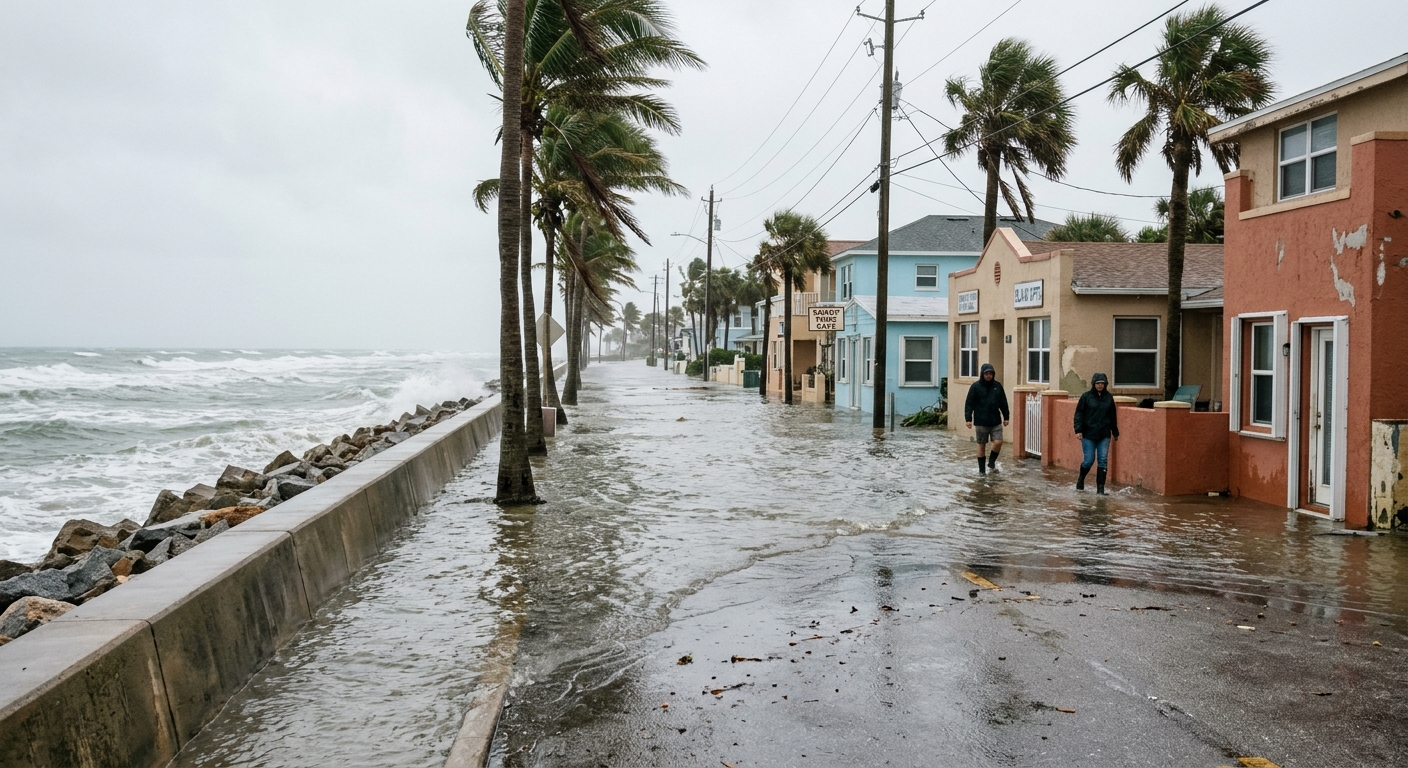
AI-generated illustration; not a photograph of the reported event.
- calendar_today October 27, 2026
Unprecedented Southern California Flooding Linked to El Niño
Southern California is grappling with historic coastal flooding, as record-breaking ocean temperatures drive sea levels to unprecedented heights. On Monday morning, communities like Newport Beach and Sunset Beach experienced flooding severe enough to inundate businesses and close sections of Pacific Coast Highway. Notably, seawater levels in San Pedro reached an all-time high of over 8 feet—a record—and the situation is expected to worsen.
Record-Hot Ocean Waters and Thermal Expansion
Experts identify record-hot ocean waters as the main catalyst behind the current coastal flooding. Hot water occupies more volume than colder water, a process known as thermal expansion, contributing directly to sea level rise. This week, maximum sea levels at high tide are nearly two feet higher than would be expected from purely astronomical forces like the moon and sun.
"The [ocean] waters along the immediate coast of California are actually at record warm levels for the time of year, all the way from about the Farallon Islands south to Baja California," noted Daniel Swain, a climate scientist at UC Agricultural and Natural Resources. Swain added that the temperature-driven thermal expansion is comparable to, or even greater than, any previously recorded in California’s coastal waters.
The Effects of El Niño and Climate Change
The intensely strong El Niño event this year is a significant factor. El Niño occurs when sea surface temperatures in the central and eastern Pacific Ocean increase sharply. "I call it El Niño Macho," said Josh Willis, a NASA climate scientist, describing this event as potentially similar in magnitude to the 1997 El Niño, which caused massive global damage. He emphasized that sea levels are even higher now due to two decades of climate change since then.
According to Reinhard Flick of the Scripps Institution of Oceanography at UC San Diego, sea surface temperatures off Southern California are at least 9 degrees warmer than average. On Monday, the Scripps Pier in La Jolla recorded 73.8°F, more than 9 degrees above the seasonal norm. Flick explained, "The water was warm all year off of Southern California, but the El Niño is now enhancing that and keeping it warm, where naturally it would drop."
Recent Flooding Events Along the Pacific Coast
Coastal communities have seen significant impacts. Floodwaters surged from Newport Harbor onto the Balboa Peninsula, affecting businesses in the Balboa Fun Zone, while crews worked to manage the knee-high water. Long Beach residents reported flooding in areas like Bayshore Beach, Naples, and the peninsula. Nancy Pinckert, a resident of Naples, voiced concern over the local seawalls, stating they are under "profound stress" and raising fears that upcoming king tides could breach these barriers for the first time.
Earlier this month, a Kelvin wave—an oceanic event moving warm water along the coast—arrived off California, further raising sea temperatures and contributing to coastal flooding. Combined with the remnants of storms like Tropical Storm Rachel, these phenomena led to dramatic flooding in locations such as the Long Beach Peninsula and Newport Beach.
Lunar Tidal Cycles Intensify High Tide Impacts
Beyond ocean temperature, natural lunar cycles are also amplifying tidal extremes. California is currently experiencing the joint peaks of the 18.6-year lunar node and 4.4-year lunar perigee tidal cycles, which heighten tide-generating forces. According to Flick, these cycles are expected to produce even higher tides during upcoming holiday periods, such as Thanksgiving and Christmas. Should strong storms coincide with these peak tides, even more severe coastal flooding could result.
Outlook for the Winter Season
Scientists had anticipated these extreme conditions. Mark Merrifield, director of UC San Diego’s Center for Climate Change Impacts and Adaptation, predicted earlier that this El Niño would bring "likely the highest sea levels ever recorded on the California coast." The accelerating timeline of flooding, driven by warm ocean waters, exceptional high tides, and amplified by climate cycles, signals ongoing risks for Southern California’s coastline in the winter ahead.
Source: latimes.com.
Recent Posts

Hot Categories

132
Business

70
Events

172
News
81
Sports
103
Technology