
- calendar_today August 14, 2025
.
The future of the electric vehicle (EV) has hit some turbulence in the United States. Monthly sales of EVs to US customers in August were down for the first time in over a year of consistent month-over-month increases. Automakers are also not immune to this growing buyer resistance to EVs. Genesis and Volvo are among the most recent car brands to take an L with their electric vehicles as they consider significant changes to their lineup.
Government policy is also not on the side of EVs as of late. The Biden administration has cut back on some popular subsidies and vehicle pollution standards. This means that there are simply fewer carrots from the federal government to sweeten the EV-buying pot. There is, however, one less obvious hurdle in the path of EV adoption, and it might just be the biggest yet, according to Telemetry industry analyst Sam Abuelsamid.
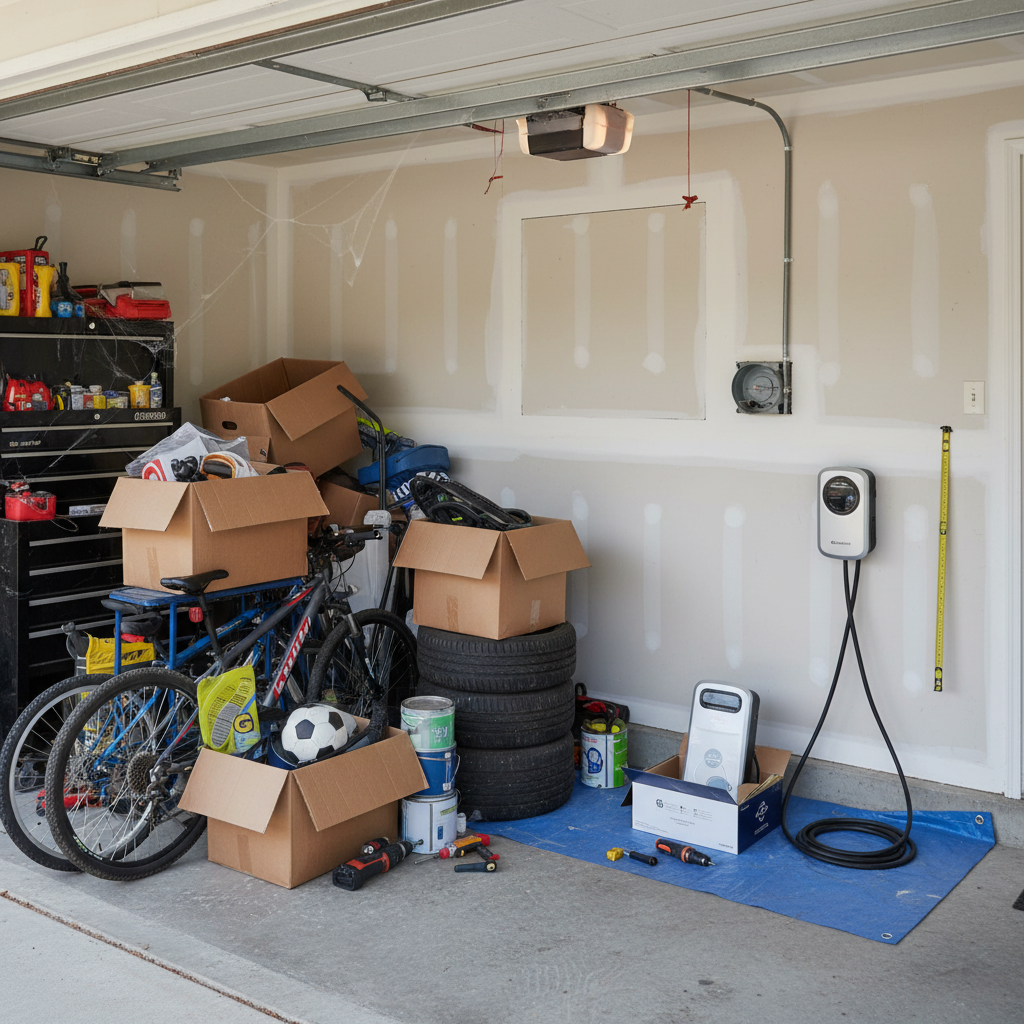
EV range and charging have for years been cited as the number one concern for prospective buyers in surveys. In a new market research report, Telemetry Vice President Sam Abuelsamid dived into the details of the issue, shining a spotlight on one small problem: garage usage.
The great charging network wars have largely focused on big public fast-charging sites, but most EV charging today still occurs at home. An estimated 80 percent of all EV charging is from AC power, typically at a single-family residence (SFR). In fact, the National Renewable Energy Laboratory (NREL) found that 42 percent of SFRs already have a household member parked next to an outlet capable of supporting a level 2 (240-volt) charger.
However, that share could easily increase, all the way up to 68 percent of SFRs, if owners simply cleared out some space in their garages and changed their parking habits. In a statement to Telemetry, Abuelsamid said, “90 percent of all houses can add a 240 V outlet near where cars could be parked. Parking behavior, namely whether homeowners use a private garage for parking or storage, will likely become a key factor in EV adoption.”
That 68 percent share is based on the ability of a given SFR to add an outlet. Many garages have some free space that could be opened up for vehicle parking with a shift in storage habits. In fact, the number of homes capable of EV charging would rise from 31 million to more than 50 million with garages opened up in this way. The number jumps even higher to over 72 million when considering SFRs with wiring that can be modified. The NREL estimate is well above Telemetry’s most bullish EV sales scenario for 2035, which puts the number of EVs on the road in the US between 33 and 57 million.
It’s important to note that being capable of EV charging on paper is far from being ready for it in practice. In the same NREL study, nearly 34 million homes were found to require an electrical system upgrade in order to support a level 2 charger. Such upgrades, which can range from new wiring to complete electrical panel replacement, can cost thousands of dollars.
In short, getting the required infrastructure into homes would go a long way to reach the types of EV sales figures commonly discussed and projected by analysts and industry groups. However, when this installation cost is added to the purchase price, the oft-touted cost savings of EVs on the total cost of ownership over time come under serious threat.
Multifamily Mayhem
For the 23 percent of Americans who don’t live in a single-family residence, the situation is even more dire. Those living in multifamily homes such as apartments, condos, and townhomes have little individual control over the ability to charge in most cases.
EV drivers in these dwellings must appeal to a landlord, management company, co-op board, or other authority to get permission for charger installation. In many cases, this is not something that they have the unilateral ability to authorize. Multifamily homes also have a higher per-unit cost for charger installation, with upgrades to the building electrical system and wiring all potentially required.
Unlike the case with SFRs, most multifamily residents are also not eligible for utility and local government subsidies and rebates. This dramatically increases the cost of the work and the required payback period in order for an installation to be approved.
As it stands, the number of charging-capable spaces in multifamily homes is far lower than that of homes. Of the 36 million Americans living in a multifamily unit, 23 million of them currently have an EV. However, only 11 percent of EVs in this segment of the housing market are parked close enough to a charging outlet to make use of it. While some states are requiring that 20–25 percent of all spaces in multifamily dwellings be EV-ready in new developments, the best estimates project only 6.7 million to 11.4 million multifamily SFRs in 2035.
Public Charging Demand
As promising as home charging growth is, the reality of public charging demand is much more bleak. Telemetry estimates that 11.7 million to 14.3 million EV drivers who own single-family homes will still need to use public charging in 2035. An additional 7.8 million to 8.1 million EV drivers will need to use public charging, even though they live in a multifamily residence.
Meeting this demand will require installation of 523,000 to 586,000 DC fast chargers plus another 1.5 million to 1.6 million level 2 chargers nationwide. However, there are notable challenges to the deployment of this infrastructure, especially when considering the huge additional electrical loads that AI data centers require. While power companies have been somewhat focused on EV charging in their grid planning, their systems are not as robust as many think.
The EV’s future in the US is not quite as bright as some want to make it out to be. As the data shows, despite the number of houses that could be opened up for EV charging in theory, the simple reality of garage clutter, expensive electrical upgrades, and the burdens of multifamily living are likely to create bottlenecks on EV adoption growth. The Telemetry data also shows that the amount of public charging demand could easily outpace available supply over the coming decade, even as utilities and municipalities make efforts to add more.
The takeaway here is simple: EV adoption may well depend on cluttered US garages as much as government policy and automaker plans.
Recent Posts

Hot Categories

138
Business

71
Events

173
News
81
Sports

107
Technology
