
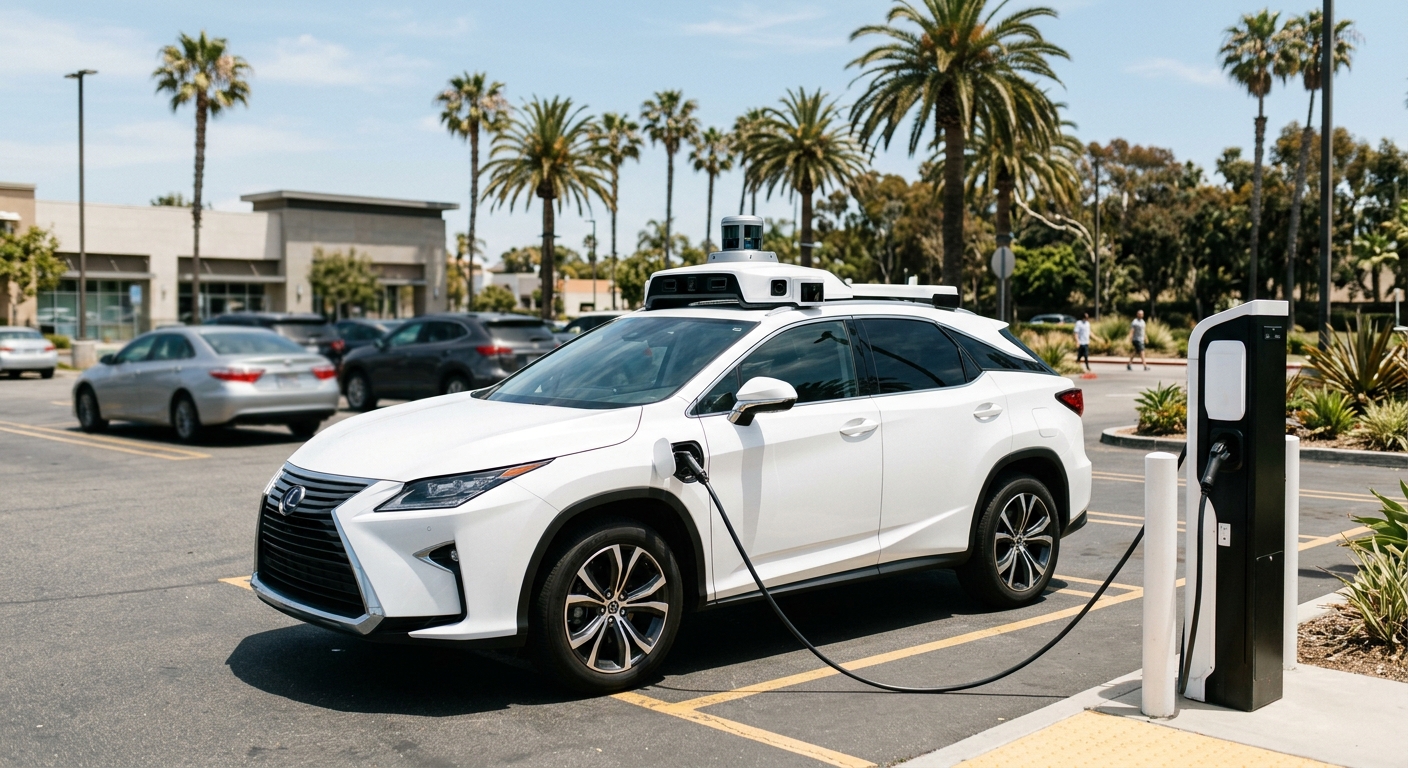
AI-generated illustration; not a photograph of the reported event.
- calendar_today October 30, 2026
Robotaxis Filling Up EV Charging Stations
San Diego is experiencing a surge in the use of public EV charging stations by Waymo robotaxis, leading to frustration among local electric vehicle (EV) owners. With Waymo officially launching its autonomous ride-hailing fleet in San Diego in September 2026, residents have observed driverless vehicles occupying scarce charging spots, often causing long waits for those needing to charge their own cars.
San Diego Drivers Speak Out on Charging Woes
Local EV driver José Manjarrés described waiting an hour at a station filled with Waymo robotaxis. “It becomes really annoying when you see three Waymos in a charging station with four spots,” he said, capturing a sentiment echoed by other residents. Finn Sadler, another local motorist, reported frequent lines at charging points and even considered returning to a gasoline car due to the persistent inconvenience. “They come in droves,” Sadler remarked, noting how the robotaxis contribute to charging station congestion.
Charging Infrastructure and the Private Sector
Most of the affected San Diego stations are operated by Electrify America, which reports 13 locations citywide. The company stated it has no direct partnership with Waymo. Waymo robotaxis have also been spotted at EVgo stations, which acknowledged serving both autonomous and private consumers since 2020. An EVgo spokesperson confirmed their San Diego utilities remain available to all drivers, including robotaxis. As the demand grows, drivers and companies alike are faced with challenges in managing the limited electric vehicle infrastructure.
Waymo’s Approach and City Responses
Waymo says it strives to minimize the impact of its vehicles on public charging by posting human staff at some stations and prioritizing the use of dedicated company charging infrastructure. However, Waymo acknowledges that this isn’t always feasible, particularly in regions still developing their EV charger networks.
The influx of autonomous vehicles has heightened local concerns. City officials were wary of Waymo’s expansion plans even before the official launch. In January 2026, a Metropolitan Transit System advisory committee chaired by San Diego Councilmember Sean Elo-Rivera voted to oppose driverless vehicle expansion and urged state leaders to grant communities a greater say in approving or regulating autonomous vehicles. On September 14, the San Diego City Council unanimously supported a resolution requesting more local control over deployment, siting of charging hubs, and keeping autonomous vehicles away from sensitive locations like homes, schools, and airports.
Frustration Fuels Calls for Policy Changes
Residents and policymakers argue that private citizens, many of whom cannot charge at home due to logistical or financial reasons, now face heightened competition from driverless fleets. "Waymo or autonomous vehicles generally should not be displacing people," said Councilmember Elo-Rivera, reflecting growing concerns about equitable access to public EV chargers and the need for responsive autonomous vehicle policy.
San Diego officials say they are working to expand the city’s public charging network. Over the next 18 months, more than 50 additional sites are expected to gain chargers, with installations underway at libraries and recreation centers. A city spokesperson confirmed that public EV chargers will remain accessible to all, including robotaxis and their human-driven counterparts, operated on equal terms and fees.
Broader Context: Sharing Public Space with Machines
San Diego’s situation mirrors challenges seen in other regions, such as Santa Monica and Los Angeles County, where robotaxi presence and charging needs ignite debates on coexistence and regulation. Commerce, another city encountering Waymo’s mapping and training activities, has responded by increasing overnight patrols and monitoring driverless vehicles parked in residential areas.
As California navigates the rapid integration of autonomous vehicles and evolving electric vehicle infrastructure, questions of access, policy, and public space usage remain at the forefront for residents and leaders alike.
Source: latimes.com.
Recent Posts

Hot Categories

137
Business
71
Events

172
News

81
Sports
106
Technology
