
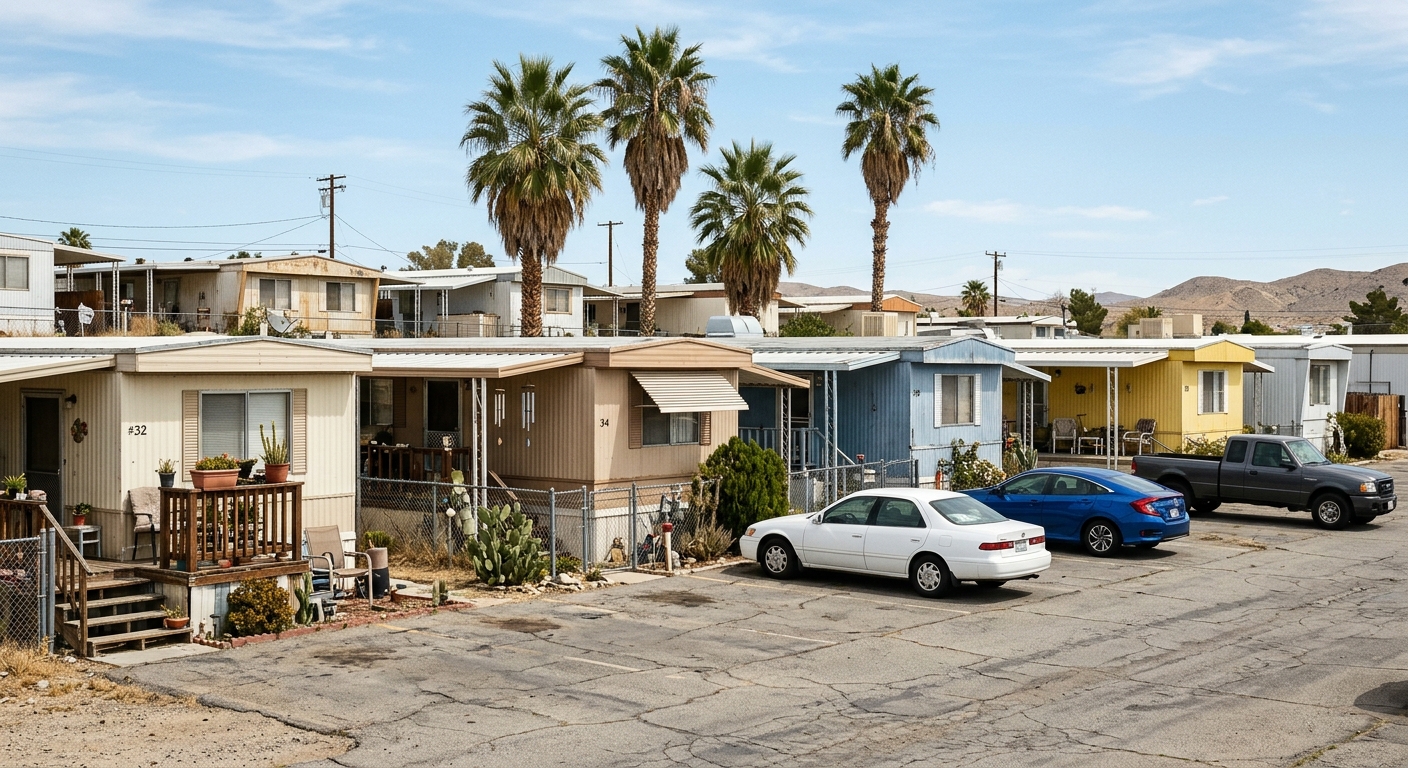
AI-generated illustration; not a photograph of the reported event.
- calendar_today November 17, 2026
City Council Moves Forward on Possible Sale
In the city of Bell, Los Angeles County, the future of two city-owned mobile home parks—key sources of affordable housing for nearly 300 residents—has been thrown into uncertainty. At a recent public meeting, emotions ran high as residents protested the City Council’s vote to move forward with a process that could result in the sale of Bell Mobile Home Park and Florence Village Mobile Home Park. The residents, many of whom have some of the lowest incomes in the area, face a potential loss of stable housing and few affordable alternatives.
Longstanding Affordable Housing at Risk
Mobile home parks in California have historically provided some of the most affordable living arrangements, with average monthly costs notably lower than traditional rentals or homeownership. At Bell Mobile Home Park, residents pay as little as $648 a month for their space—substantially below regional costs—and many families have lived there for decades. Yet, city leaders argue that debts and rising maintenance expenses, estimated at $1.3 million annually in debt payments and up to $900,000 a year in operational fees, have made it impossible to continue subsidizing the parks.
Echoes of Past Corruption and Distrust
The debate is further complicated by Bell's troubled history. In 2010, journalists revealed that city officials misappropriated public funds, paying themselves excessive salaries and using city resources for personal benefit. Seven officials were convicted, an episode that deeply damaged trust between city leaders and residents. Although the city instituted transparency reforms and improved its financial management, the proposed sale has revived concerns about governance and accountability, with residents claiming they cannot get clear answers about their future.
Impacts on Residents and Housing Security
Many residents, predominantly Latino and earning less than $50,000 a year, say the threatened sale leaves them with few options. A relocation impact report commissioned by the city found that alternative housing would likely cost twice as much as their current mobile home rents. The law requires Bell to pay for relocation and purchase the homes—which are often too old to move—potentially costing the city $40 million. Despite this, families like the Jimenezes, who pool incomes to afford their home and whose children play in their small backyard, fear being forced out with insufficient compensation.
Financial Challenges Prompt Asset Sales
The city’s financial difficulties are not confined to the mobile home parks. To address deficits—currently losing about $1 million a year on the parks—Bell has also sold other low-income properties, including a small apartment building and single-family homes. Budget records show the last annual housing authority report was published in 2020, and city officials cite turnover and the pandemic for the backlog, while recent mailers to residents emphasize the unsustainable costs of maintaining the parks.
Uncertain Outcomes and Community Response
While a timeline in the city’s relocation report suggests residents could be notified of needing to leave as soon as the end of the month, city leaders have declined direct interviews and provide few specifics about buyer negotiations. At least one property firm has advertised the parks for potential retail development, further unsettling residents. The mayor and current council emphasize an effort to move beyond the past scandal, but the ongoing debate over the parks underscores the continued struggle for affordable housing and governance accountability in Bell.
Source: latimes.com.
Recent Posts

Hot Categories

155
Business

74
Events
220
News

83
Sports
120
Technology
