
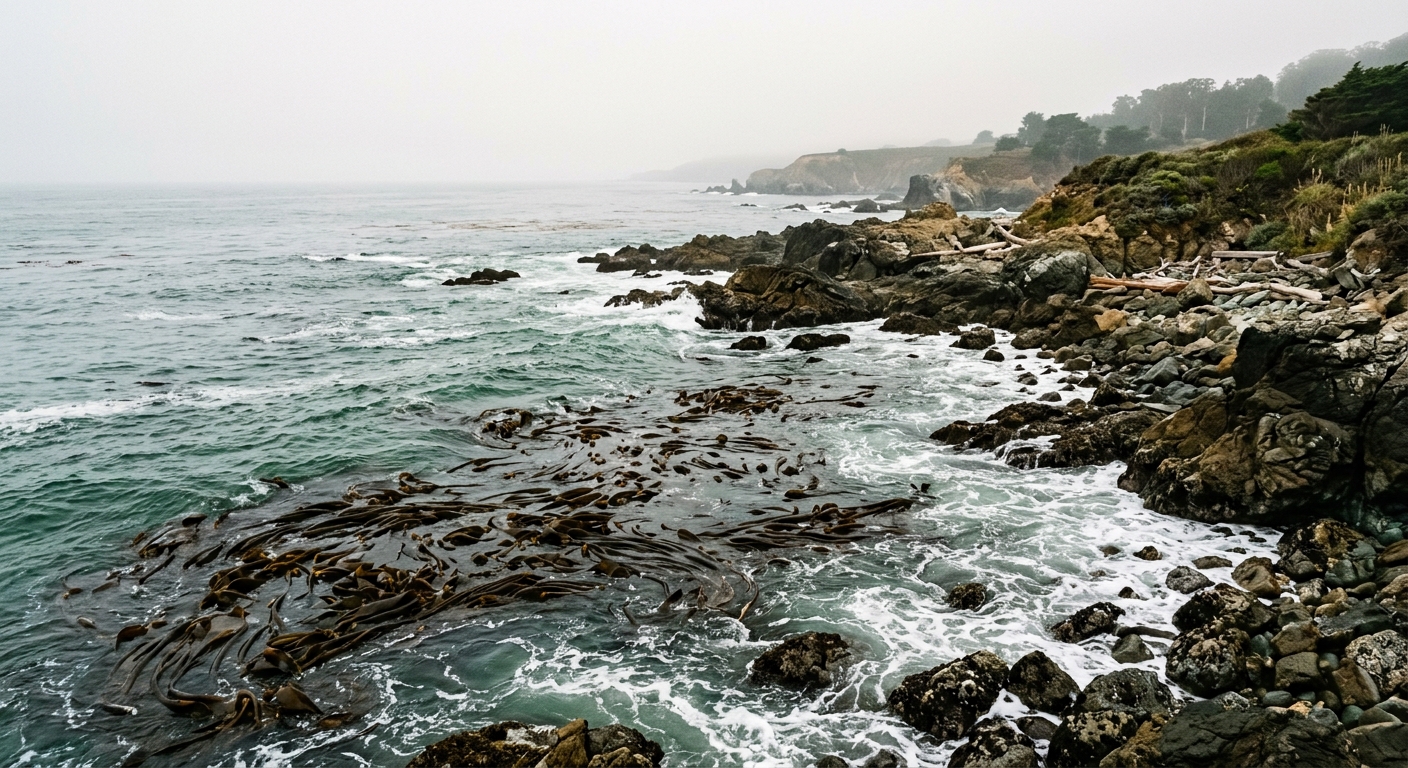
AI-generated illustration; not a photograph of the reported event.
- calendar_today October 19, 2026
California Approves New Tribal-Led Marine Protected Areas
In a landmark decision, California has designated its first tribal-led marine protected areas, marking a significant development in both environmental conservation and indigenous stewardship of ocean resources. The move has garnered celebration from environmental groups but raised concerns among commercial and recreational fishers over potential losses of traditional fishing grounds.
Locations and Designations: Carpinteria and Point Sal
On Thursday, the California Fish and Game Commission voted to establish two State Marine Conservation Areas (SMCAs), each covering approximately nine square miles. These areas are located near Carpinteria and around Central California’s Point Sal. Co-led by the Santa Ynez Band of Chumash Indians and the Northern Chumash Tribal Council, these efforts mark a new chapter in tribal involvement in managing and protecting marine environments.
The SMCAs permit hook-and-line fishing from shore but ban commercial fishing and boat-based sportfishing. These restrictions aim to conserve local marine ecosystems while still allowing some traditional shore activities.
Cultural and Ecological Importance
Violet Sage Walker, chair of the Northern Chumash Tribal Council, highlighted the ecological and cultural significance of the area near Point Sal. According to Walker, the site includes kelp forests and Lion Rock, which supports populations of sea lions, seals, and migratory birds. Ancient village sites also line the coastal region, adding to its cultural heritage. The new designation offers a heightened level of protection compared to the existing Chumash Heritage National Marine Sanctuary and is intended to guard against external threats, such as potential oil and gas leases.
Kenneth Kahn, chairman of the Santa Ynez Band of Chumash Indians, called the new Mishopshno State Marine Conservation Area a recognition of the area’s vital cultural and spiritual values, emphasizing the importance of protection for future generations.
Biodiversity and Conservation Impact
Douglas McCauley, a marine biology professor at UC Santa Barbara, described the new conservation area as an "ocean oasis" packed into a "postage stamp." The protected habitat includes a salt marsh nursery for leopard sharks and bat rays, kelp forests frequented by harbor seals and various fish species, and what may be the largest white shark nursery in the state, if not the world. McCauley underscored the high levels of biodiversity and ecological uniqueness offered by the new protected zones.
Sandy Aylesworth, director of the Pacific Initiative at the Natural Resources Defense Council, noted that these designations represent an important step forward for California’s broader marine protected area network, making it more connected and resilient against the impacts of climate change.
Concerns from Commercial and Recreational Fishers
Despite conservation benefits, the new protected areas have sparked opposition from commercial and recreational fishing communities. Jaime Diamond, owner of Stardust Sportfishing and head of Santa Barbara Landing, expressed concern over the loss of accessible fishing grounds for affordable half-day trips, often favored by families and individuals with mobility issues. Diamond recounted how local fishing clubs and families lament losing the opportunity to engage in intergenerational activities connected to the sea.
Dave Colker, executive director of the Ventura County Commercial Fishermen’s Association, raised the concern that restricting local fishing could lead to more seafood imports from abroad, potentially increasing carbon emissions. Colker also highlighted the lack of detailed analysis on how these new restrictions would impact commercial operations.
Decision Process and Ongoing Initiatives
The California Department of Fish and Wildlife, which advises the Fish and Game Commission, recommended against the immediate creation of the new protected areas, instead supporting the idea of tribal management through a separate process. Conversely, the Ocean Protection Council recommended approval of both new SMCAs.
The commission’s decision was unanimous for the Point Sal area, while the Carpinteria proposal passed by a narrow 3-2 margin. These moves are part of a multiyear process to strengthen California’s network of marine protected areas, established to protect marine biodiversity and habitat integrity. The state, as of June, had protected 27.1% of its land and 21.9% of its coastal waters toward a goal of conserving 30% of both by 2030—a goal set under Governor Gavin Newsom’s "30x30" initiative.
Moving Forward with Tribal and Environmental Stewardship
These new tribal-led marine protected areas represent a milestone in indigenous marine stewardship and coastal habitat protection. While controversies over fishing restrictions continue, supporters argue that such measures are crucial for sea life conservation, kelp forest protection, and marine ecosystem preservation as California progresses toward its environmental goals.
Source: latimes.com.
Recent Posts

Hot Categories

132
Business

70
Events

172
News

81
Sports
103
Technology
