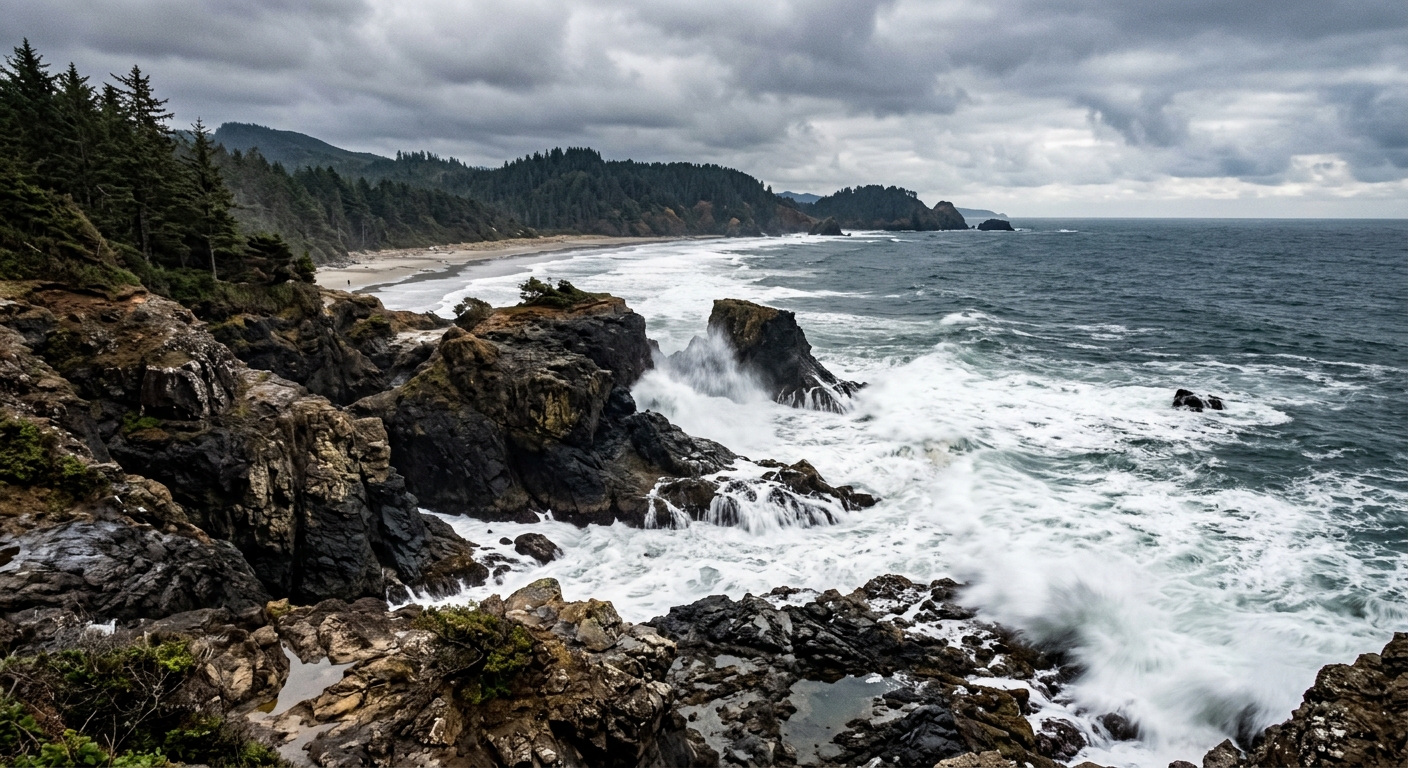
AI-generated illustration; not a photograph of the reported event.
- calendar_today August 7, 2026
California — The Trump administration’s move to challenge California’s authority under the coastal zone management act has sparked a wave of concern among state officials, environmental groups, tribal leaders, and local businesses. The federal review threatens the decades-old partnership between state and national agencies that has helped shield the iconic California coast from industrial development, igniting a heated debate over the future of regional environmental safeguards.
Historic Safeguards Under Threat
Since its adoption in 1972, the coastal zone management act has empowered California’s coastal management program, enabling state authorities to review and, when necessary, object to federal projects with potential impacts on the shoreline. This authority has been instrumental in protecting the California coast from large-scale industrial activities, especially high-profile concerns like offshore oil drilling and expansive desalination operations.
NOAA Review Raises Alarm
The current federal review is being led by the NOAA Office for Coastal Management. Critics say this review is politically charged and departs from standard practice, as just last year California’s coastal program received a favorable evaluation during the Biden administration. If the review leads to withdrawal of California’s certification, it could severely limit the state’s say in future federal projects along its coastline.
Role of the Coastal Commission
California’s celebrated coastal commission has long served as a robust defender of the shoreline, leveraging the mechanisms provided by the coastal program to block or modify high-risk developments. This commission not only enforces environmental standards but also fosters public engagement, ensuring that coastal policy reflects input from diverse communities throughout California.
Environmental and Economic Stakes
Local officials, Indigenous communities, businesses, and environmental groups are united in warning that weakening the coastal management infrastructure would jeopardize both the environment and the economy. They underscore that the California coast is not just a natural treasure, but a vital economic engine for the state, sustaining tourism, fisheries, and property values along hundreds of miles of shoreline. Strong environmental protections have been credited with balancing economic growth and ecological resilience, a model watched closely by coastal states nationwide.
Public Mobilization and Activism
Opposition to the review is mounting. Thousands have submitted public comment opposing federal intervention, with advocacy groups guiding community responses and keeping residents informed. Grassroots environmental activism is in full force, as organizations mobilize local stakeholders to defend the integrity of the coastal zone management act. Governor Gavin Newsom has encouraged citizens to continue voicing their concerns, arguing that the protection of the California coast is a legacy that must be passed down to future generations.
Broader Policy Tensions
Many see this challenge as part of a wider pattern of federal efforts to curtail state-level environmental protections. Environmentalists and legal scholars have described the federal inquiry as unprecedented, recalling that the last NOAA evaluation of California’s coastal management found the program effective and collaborative. Changes to the state’s role could set a precedent affecting other regions and their authority to set clean water, wildlife, and coastal access standards.
Next Steps for California
While the outcome of the federal review remains uncertain, California’s leaders have pledged to fight for the continued autonomy of the state’s coastal program. Officials emphasize that any erosion of local control would weaken California’s climate and conservation strategies, with implications for residents, businesses, and natural ecosystems alike. As proceedings continue, robust civic participation and interagency cooperation appear critical to the defense of California’s treasured coastline under the coastal zone management act.
Recent Posts

Hot Categories

133
Business

71
Events

172
News
81
Sports

105
Technology