
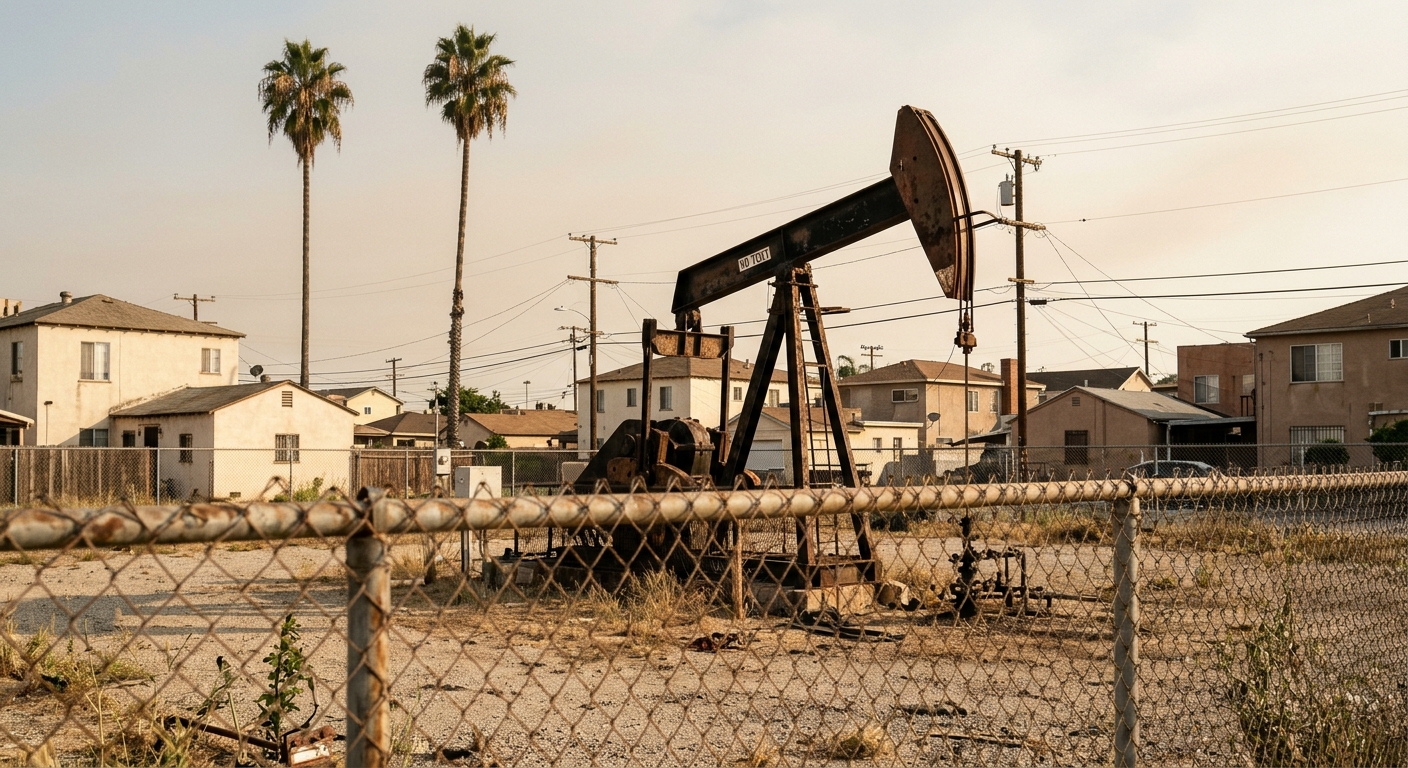
AI-generated illustration; not a photograph of the reported event.
- calendar_today October 28, 2026
Los Angeles City Council Unanimously Votes to End Oil Production
After years of debate and legal setbacks, the Los Angeles City Council voted unanimously on Wednesday to approve an ordinance that will ban new oil and gas drilling and phase out existing oil production within the city over the next 20 years. The comprehensive los angeles oil ban makes Los Angeles the largest U.S. city to move forward with such a plan, pending approval from Mayor Karen Bass, who intends to sign the ordinance promptly.
Details of the Oil Drilling Ban and Production Phaseout
The newly passed city ordinance halts all new oil and gas drilling within Los Angeles and establishes a 20-year phaseout period for some 600 active and 1,200 idle urban oil wells. Once idle, wells cannot resume operation. During the phaseout, existing wells are designated as "nonconforming use," which restricts their activities to basic maintenance without allowing re-drilling or expansion. Routine servicing is still permitted, but any new production is effectively halted.
Legal History and the Role of Assembly Bill 3233
The ordinance revives a historic ban that the City Council first passed in 2022, which was later overturned by a judge after legal challenges from the oil and gas industry. Opponents argued that California state law superseded city authority on petroleum regulation. However, in response to this legal gap, Governor Gavin Newsom signed Assembly Bill 3233, which explicitly grants local governments the power to regulate oil and gas operations within their jurisdictions. After this legislative shift, the city was able to reintroduce and pass the oil drilling ban, with supporters citing the changed legal landscape as essential to the move.
Industry Response and Ongoing Legal Challenges
Oil companies have opposed the ordinance, characterizing it as an illegal taking of property and claiming it violates business and royalty owners’ rights. Warren Resources, one of the major operators in the city and a key plaintiff in earlier lawsuits, argued that AB 3233 unlawfully grants authority to the city and that the environmental reviews supporting the ban are insufficient. The company further disputed health risk claims, stating there is insufficient evidence linking oil operations in Los Angeles to widespread negative health impacts and asserting their sites do not emit significant pollutants.
Community Concerns, Environmental Justice, and Health Impacts
The phaseout is widely supported by environmental justice groups such as STAND-L.A. and Esperanza Community Housing, who highlight that most oil wells are located in communities of color and near densely populated neighborhoods. Residents near wells, particularly in districts like Wilmington and Inglewood, have long reported health issues including asthma, dizziness, miscarriages, and heart disease, issues supported by studies linking proximity to oil wells with adverse health impacts. Community organizer Ashley Hernandez described visible pollution and foul odors as common experiences for residents living near wells. Advocates hope the oil production phaseout will serve as a model for other municipalities seeking to address similar concerns.
Next Steps: Clean Energy Goals and Site Remediation
The oil ban aligns with Los Angeles’s commitment to achieving 100% clean electricity by 2035 and its investments in renewable energy. Mayor Bass’s recent Climate Action Plan also calls for redeveloping former drill sites into areas for housing, parks, and other communal benefits. Councilmember Katy Yaroslavsky, a leader in reinstating the ban, acknowledged the high likelihood of further legal challenges, but affirmed the city’s position: “Oil drilling, we know, has no place in the city of Los Angeles.”
Conclusion: A Landmark Moment for Fossil Fuel Regulation
With this measure, Los Angeles sets a significant precedent for fossil fuel regulation at the local level, prioritizing environmental justice and public health. The ordinance now awaits the mayor’s signature before beginning the multi-decade process of transitioning the city away from urban oil wells toward clean energy goals.
Source: latimes.com.
Recent Posts

Hot Categories

133
Business

71
Events

172
News
81
Sports

105
Technology

