- calendar_today September 1, 2025
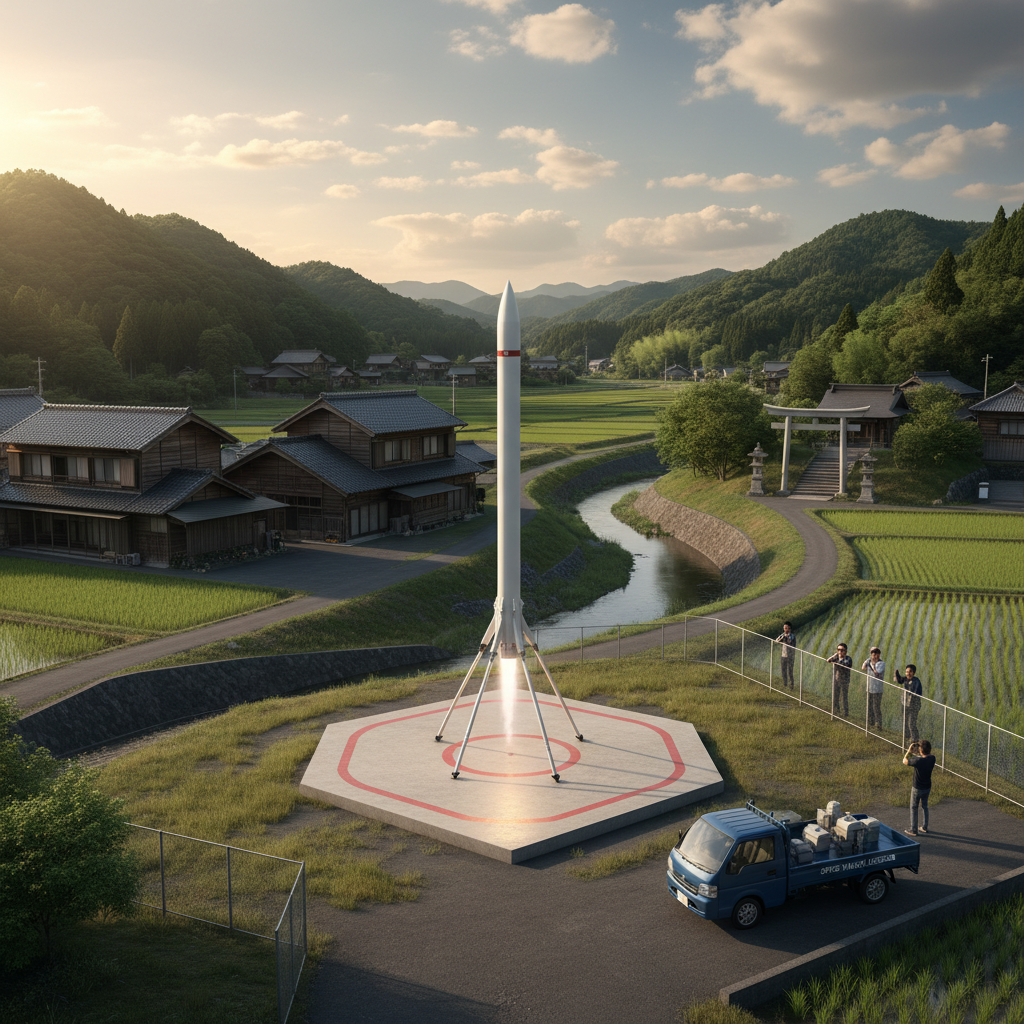
Honda, the Japanese car and motorcycle maker best known for ground-based transportation, has taken a major step into the stratosphere. On Wednesday, the company announced that it successfully launched and landed a reusable rocket developed by its research and development division. It’s the first time the company has managed to successfully launch a rocket and return it back to the ground.
But it didn’t take place on some far-flung foreign launchpad. It happened right there in Taiki Town, Japan — a community that is quickly becoming a burgeoning space hub. The rocket soared to a height of 890 feet before making a safe landing within just 37 centimeters of the target.
That’s not coincidence. That’s precision engineering.
The rocket in question is a 20-foot-tall vehicle that weighed over 2,800 pounds when it took off. It hovered in the air for a brief but critical 56.6 seconds. In that brief time, the vehicle demonstrated not only vertical takeoff capabilities but also vertical stability and landing accuracy. The rocket’s retractable landing legs — which supported it during liftoff — allowed it to make a soft landing exactly where it was supposed to.
This isn’t the sort of thing one would expect from a company whose primary experience is in vehicle movement on the ground. But the result shows that Honda isn’t simply testing ideas. It’s building working spaceflight hardware that could actually go somewhere.
A Path to Space Travel
Honda isn’t taking the space race blind. It announced its interest in space technology in late 2021, but has largely kept its development efforts under wraps. Now, with years of relative silence behind it, this test shows what has been going on.
Instead of building a whole new ecosystem from scratch, Honda is repurposing existing technologies that already exist in other sectors. Its automated driving technologies, for instance, play a role in this rocket program. The same sort of fine control needed for self-driving vehicles is now being applied to vertical takeoff, vertical stabilization, and pinpoint landing.
It’s an across-industry application that makes a lot of sense — and it seems to be working.
The rocket itself isn’t just about showing off technical chops. Honda is positioning itself for a future where satellites and space-based infrastructure become integral to doing business. Whether it’s communications, data transfer, or navigation, there’s a strong value in having access to the upper atmosphere.
This rocket is still very much in the early research stages, but the success of this test shows the direction of where the company is heading. Honda is eyeing opportunities to build its own small-scale launch systems to meet the growing need for satellite launches — which could eventually tie back to its automotive, robotics, and communications businesses.
An Aim for Suborbital Flight
The company is aiming to achieve suborbital flight by 2029. That means going above the 62 miles (or 100 kilometers) that marks the line between space and earth. These flights won’t stay in orbit, but they will break the Earth’s atmosphere — which is a feat in and of itself.
If it can make it to suborbital flight, it will demonstrate that Honda has developed the propulsion, control, and landing systems necessary to achieve more ambitious launches. But getting satellites into orbit will require more than simply going above the Earth. It will mean building new launch vehicles, guidance systems, and perhaps even payload technologies.
That next step remains uncertain. Honda hasn’t committed to making its rocket program into a full-on commercial business just yet. But this test flight puts it on a path where that decision might not be too far off.
Taiki Town isn’t just a backdrop. The community has been working to become a center for aerospace development. Located in Hokkaido, it’s partnered with a number of private companies and national entities, including JAXA, to develop testing infrastructure, support facilities, and training programs.
With Honda adding to the growing list of companies that are performing real-world experiments there, Taiki Town is quickly becoming one of Japan’s most important space innovation hubs.
It’s still a long way to go. Honda is entering a sector dominated by titans like SpaceX and Blue Origin, companies with huge resources and years of experience in orbital flight. But what Honda brings is a different background: manufacturing efficiency, robotics, and mobility technology — areas that could give it a unique edge as it moves forward.
This week’s test wasn’t just a one-off experiment. It was a signal that Honda is preparing for a future far beyond the Earth’s surface.
And while the rocket landed just a few feet away from its target, the company’s space journey is clearly aiming much, much higher.