- calendar_today September 2, 2025
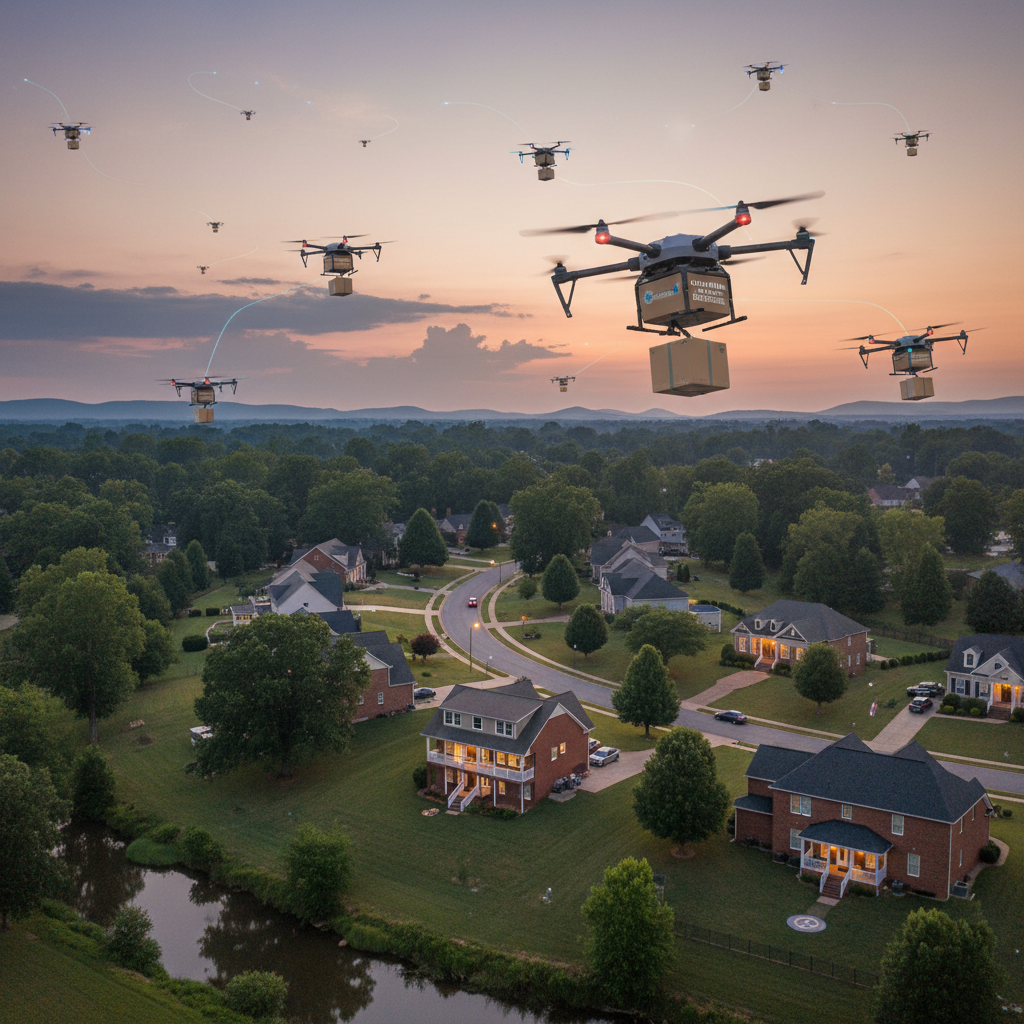
The skies above North and South Carolina are starting to hum with a new type of energy—one that is a sign of progress, velocity, and a forward leap into the future. Amazon’s growing drone delivery initiative is changing how merchandise travels through both states. What was a futurist concept is now quietly becoming part of the day-to-day lives of individuals and companies in the Carolinas.
This transformation in logistics is not merely a technological enhancement. It’s an important change in the way that the region thinks about efficiency, access, and economic opportunity. North and South Carolina, with their diverse blend of urban and rural areas, are particularly well-suited to take advantage of drone technology—and they’re making it happen.
A Game-Changer for Carolina Logistics
Historically, the Carolinas’ logistics network has depended predominantly on truck transport. Delivery trucks, freight trains, and highways have long underpinned regional trade. Though convenient, these networks are often slow, expensive, and susceptible to delays due to traffic, weather, or distance.
Amazon’s aerial delivery system bypasses most of these issues. Employing electrically powered autonomous drones, packages are delivered in 30 minutes to residential and commercial locations. Equipped with sophisticated navigation systems, these drones can navigate around obstacles and find the most efficient routes in the air—no traffic congestion or roadblocks needed.
This is especially precious in the Carolinas, where rural and semi-rural regions stretching across vast distances have been left behind by e-commerce’s rapid pace. Drone delivery can make high-speed delivery possible even in small towns, agricultural regions, and remote communities.
Economic Opportunities Take Flight
As Amazon’s drone delivery initiative grows throughout the area, it’s not only consumers who stand to gain. Regional economies are beginning to take notice. In North Carolina, where tech development has been on the rise in cities like Raleigh and Charlotte, the advent of drone logistics opens doors to opportunities for job growth and inter-industry collaboration.
New career opportunities in drone maintenance, drone operations, software design, and air traffic control are being created. Technical schools and even schools are starting to provide training courses on drones in order to prepare the future professionals.
At the same time, in South Carolina, a state famous for its factory centers and expanding logistics networks, companies are investigating how drone delivery can make life easier. For small retail stores and local suppliers, the result is quicker restocking, lower overheads, and having the capacity to compete with national companies based on fulfillment time.
In the two states, the message is stated simply: adopting drone logistics is not merely for convenience—it’s an economically astute decision.
Bridging Urban and Rural Gaps
Among the most exciting things about Amazon’s expansion of drone delivery in the Carolinas is its capacity to reach both urban hubs and rural outposts with equal effectiveness. Drones are already being incorporated into last-mile delivery efforts in cities such as Columbia, Charleston, and Greensboro. It facilitates faster deliveries during rush hours and disburdens road-based services.
But it’s in the countryside—where delivery trucks may take longer to arrive—that drones really excel. Rural farms, coastal towns, and mountain villages that previously waited days for necessities are now getting them in less than an hour. That type of access can enhance quality of life, supplement health requirements, and even enable small businesses to be well-stocked and remain competitive.
Drones don’t require conventional infrastructure to fly. That’s why they are perfect for areas where paved roads are scarce or weather can slow down ground transport. In this manner, Amazon is not merely revolutionizing how packages deliver—it’s redefining what “accessible logistics” actually entails.
Environmental and Cost Advantages
As the Carolinas expand, both states are paying close attention to sustainability. Traffic jams, fuel use, and carbon output are all issues—and particularly in rapidly expanding cities and preserved natural areas.
Drone delivery provides a cleaner option. Powered by electric propulsion systems, drones emit fewer pollutants than diesel trucks and follow more efficient routes. Keeping fewer delivery vehicles on the road may translate to reduced pollution, lower maintenance expenses, and reduced traffic delays.
Financially, the savings are considerable. Amazon and other merchants can save on last-mile delivery costs, and eventually, such savings can filter down to the customer. Faster and cheaper shipping makes products more affordable and raises the level of customer satisfaction—two of the recipes for e-commerce success.
Embracing the Future with Open Arms
The Carolinas are not new to innovation. With a past steeped in flexibility—from textile factories to technology startups—these states are well-versed in transformation. Amazon’s drone initiative is merely the latest installment in that long tradition.
Local governments are beginning to create policies for controlling low-altitude airspace, and public opinion is gradually coming round to excitement instead of skepticism. As individuals become more accustomed to seeing drones fill the sky, confidence in their safety and utility is increasing.
Amazon’s move here is more than an experiment. It’s a sign of commitment to the area—and an invitation to other tech-savvy companies to do the same.
Final Thoughts
North and South Carolina are showing that innovation can happen outside Silicon Valley and big metropolitan areas. With Amazon’s drone delivery expansion, the Carolinas are cutting out a leadership position in logistics’ next chapter.
Quicker delivery, improved rural service, economic stimulus, and environmental advantages—these are all taking flight across the Carolinas. And though the drones themselves are silent, the message they’re carrying is deafening: the future of delivery is here, and it’s flying right above us.
Recent Posts

Hot Categories

132
Business

70
Events

172
News
81
Sports
103
Technology