AI-generated illustration; not a photograph of the reported event.
- calendar_today November 16, 2026
Olive Ridley Sea Turtle Hatchlings Released in California
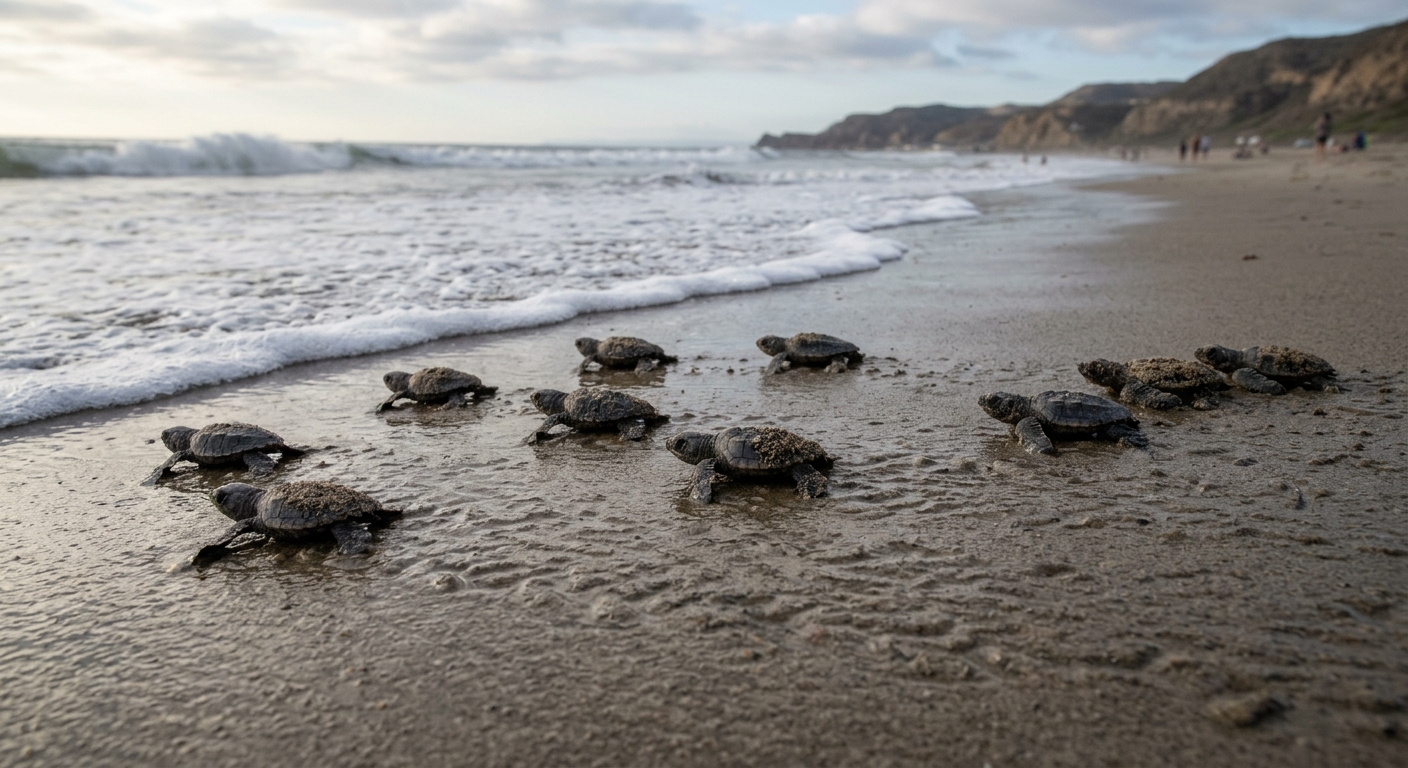
In a rare event for the U.S. West Coast, a second group of olive ridley sea turtle hatchlings made their way to the ocean early Sunday morning in Huntington Beach. The release marks a significant milestone in California’s emerging season of native sea turtle nesting.
Details of the Historic Release
The 21 newly hatched olive ridley turtles were released by staff from the Aquarium of the Pacific. These hatchlings emerged from eggs that had been laid on September 19 on Huntington City Beach. Due to risks associated with high tides, these eggs, along with others from a separate nest in Seal Beach, were relocated in late September to the non-profit Aquarium of the Pacific in Long Beach for safekeeping.
Efforts to Protect and Release Hatchlings
After their successful incubation at the aquarium, the young turtles were carefully transported back to Huntington Beach for their release. This group closely followed a first wave of 54 olive ridley hatchlings from 104 eggs laid September 16 at Seal Beach, which were released Saturday morning near their nesting site. The ongoing efforts involve interagency partnerships and the expertise of the aquarium's veterinary team, including Director of Veterinary Services Dr. Lance Adams.
Ongoing Incubation and Future Hatchings
As of Sunday, 50 eggs from the Seal Beach nest remain in a climate-controlled room at the Aquarium of the Pacific and may hatch in the coming days. Additionally, up to 87 eggs from the Huntington Beach nest could still hatch and are carefully monitored, though the exact number remains unconfirmed by the aquarium staff. These developments represent the first known instances of sea turtle nesting and hatching on the U.S. West Coast.
Broader Context: Marine Conditions and Nesting Behavior
Olive ridley sea turtles are typically found in tropical regions of the Pacific, Indian, and Atlantic Oceans. Large nesting populations are common in countries like Mexico, Nicaragua, Costa Rica, and Panama. Until now, the furthest north a nest had been documented was about 700 miles south of Orange County, in Baja California Sur. Recent extreme marine heatwaves and a strong El Niño effect have pushed Southern California’s water temperatures closer to those in the turtles’ traditional nesting grounds.
Conservation Challenges and Survival Rates
In the wild, olive ridley nests can have hatch rates of up to 90%. However, surviving to adulthood remains a daunting challenge for hatchlings, with only about 1% expected to reach maturity, according to the U.S. National Oceanic and Atmospheric Administration. The recent egg relocations and supervised releases are part of broader sea turtle conservation efforts aimed at increasing survival chances for these vulnerable reptiles.
Related coverage
Source: latimes.com.
Recent Posts

Hot Categories

155
Business

74
Events
220
News

83
Sports

120
Technology