
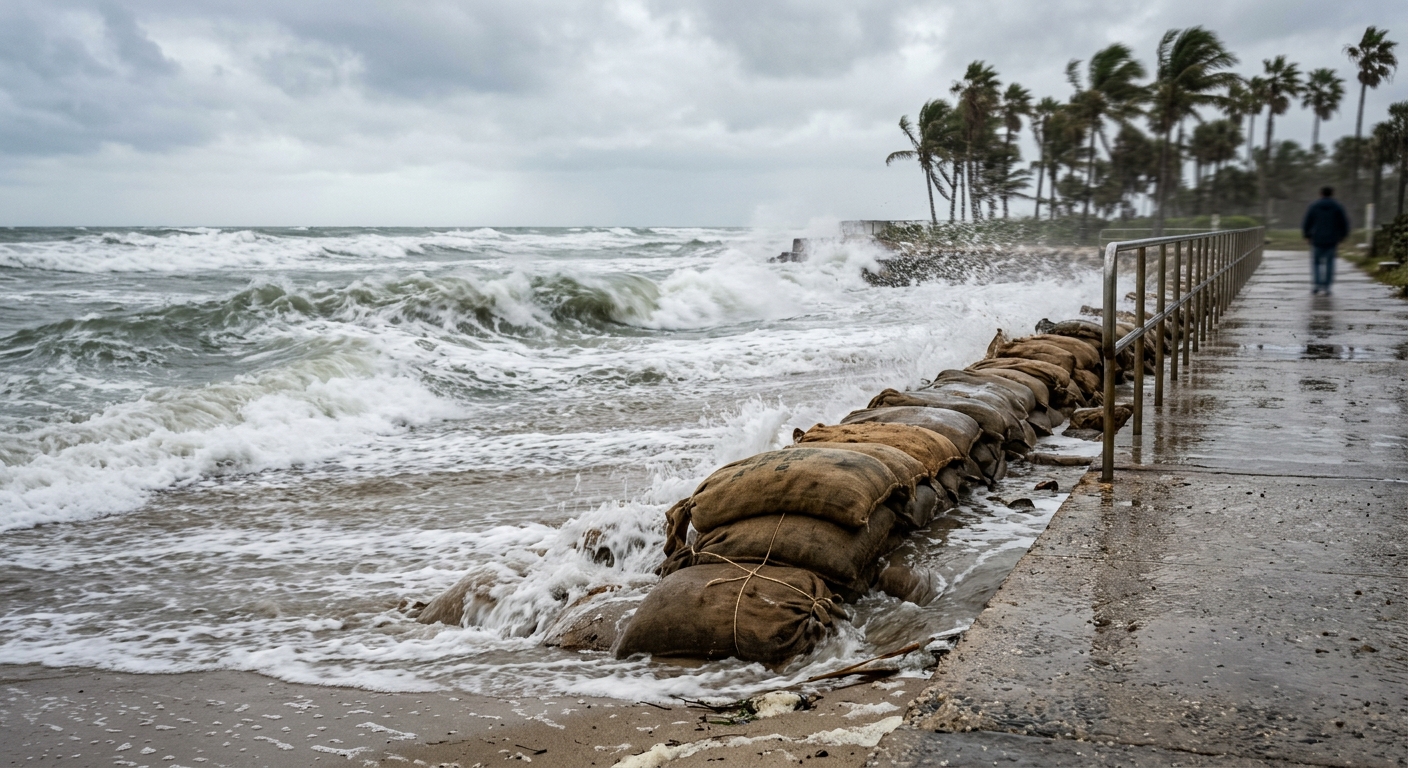
AI-generated illustration; not a photograph of the reported event.
- calendar_today October 26, 2026
Record and Near-Record Sea Levels Expected Along Southern California Coast
Southern California is bracing for several days of extreme sea levels, with the potential for significant coastal flooding starting Monday morning. The National Weather Service has warned that sea water could reach record or near-record heights, endangering low-lying property, businesses, and infrastructure along the coast.
Communities Mobilize for Incoming Flooding Threat
Officials in Newport Beach and Long Beach have been preparing in anticipation of the high tides. Precautionary measures include moving sand to reinforce beaches and installing sandbags to shield vulnerable areas such as the Balboa Peninsula and the Long Beach Peninsula. Residents in flood-prone zones have been advised to relocate vehicles to higher ground and protect their properties with sandbags.
Coastal Flood Warnings in Orange and San Diego Counties
Orange and San Diego counties face the highest risk, with the National Weather Service issuing a coastal flood warning effective through Thursday afternoon. The highest sea levels are expected during the morning high tides on Monday, Tuesday, and Wednesday. Officials warn that “significant coastal flooding” is likely, and some shoreline erosion is expected in the morning hours.
Farther north, Los Angeles, Ventura, Santa Barbara, and San Luis Obispo counties are under a coastal flood advisory, which warns of possible isolated damage to vulnerable coastal structures.
Unusual Combination of Factors Drives Rising Sea Levels
This year, a rare mix of conditions is leading to the dangerous situation along the coast. These include:
- El Niño fueling an active eastern Pacific hurricane season
- A sustained marine heat wave raising average ocean temperatures
- An astronomical alignment of the moon, Earth, and sun that happens once every 20 years
As a result, total water levels in Los Angeles, Orange, and San Diego counties could surpass 8 feet above the baseline, well above historical averages. For example, the record for La Jolla is 7.81 feet set in 2015, while levels this week could exceed that mark. On Sunday in Newport Beach, water climbed to 8 feet, and is predicted to reach 8.5 feet later in the week.
Exceptional Ocean Temperatures and Astronomical Tides
Ocean temperatures are playing a significant role in these elevated sea levels. At La Jolla’s Scripps Pier, temperatures peaked at around 77 degrees in early August, compared to an average maximum of 70 degrees. As of Thursday, the water was still much warmer than usual at about 73 degrees. Scientists attribute the heightened temperatures to ongoing effects from El Niño, a marine heat wave, and long-term climate trends.
Beyond these short-term threats, experts warn of even more extreme tides later in the year. The expected “king tides” around Thanksgiving, Christmas, and Martin Luther King Jr. Day will be further intensified by tidal cycles: the 18.6-year lunar node and the 4.4-year lunar perigee, both of which are currently near their peak. These cycles result from subtle changes in the moon’s orbit, amplifying normal tidal ranges.
Looking Ahead: Heightened Risk from Winter King Tides
If strong storms coincide with these future king tides, coastal flooding risks could escalate significantly. Scientists caution that the region may see even higher water levels and more damaging floods through the coming winter months.
The current situation serves as a warning of the increasing challenges facing Southern California’s coastlines. Continued monitoring and preparation are advised as the community navigates the impacts of rising sea levels, unusual tidal cycles, and ongoing climate factors.
Source: latimes.com.
Recent Posts

Hot Categories

132
Business

70
Events
172
News

81
Sports

103
Technology
