- calendar_today August 28, 2025
The Authentic Korean Details You Missed in KPop Demon Hunters
KPop Demon Hunters has topped Netflix’s global charts since its June release, trending not only in Asia but among fans worldwide. Streaming numbers tell only part of the story. In the two weeks since its release, the fantasy adventure musical has been watched over 33 million times and has a spot in Netflix’s global top 10 in 93 countries, ranking number two worldwide. Fans have begun posting fan art, and calls for a sequel fill social media.
There is another measure, one beyond Netflix viewers: The Demon Hunters have arrived on music charts, taking over in a manner not seen since BTS and Blackpink first captivated global audiences in 2015. Since its premiere on 20 June, KPop Demon Hunters has sent its fictional characters to the top of the Billboard Hot 100, with seven songs from the soundtrack making the chart. In Spotify’s US chart, the top two spots are held by KPop Demon Hunters, a feat the service says is rare for fictional artists.
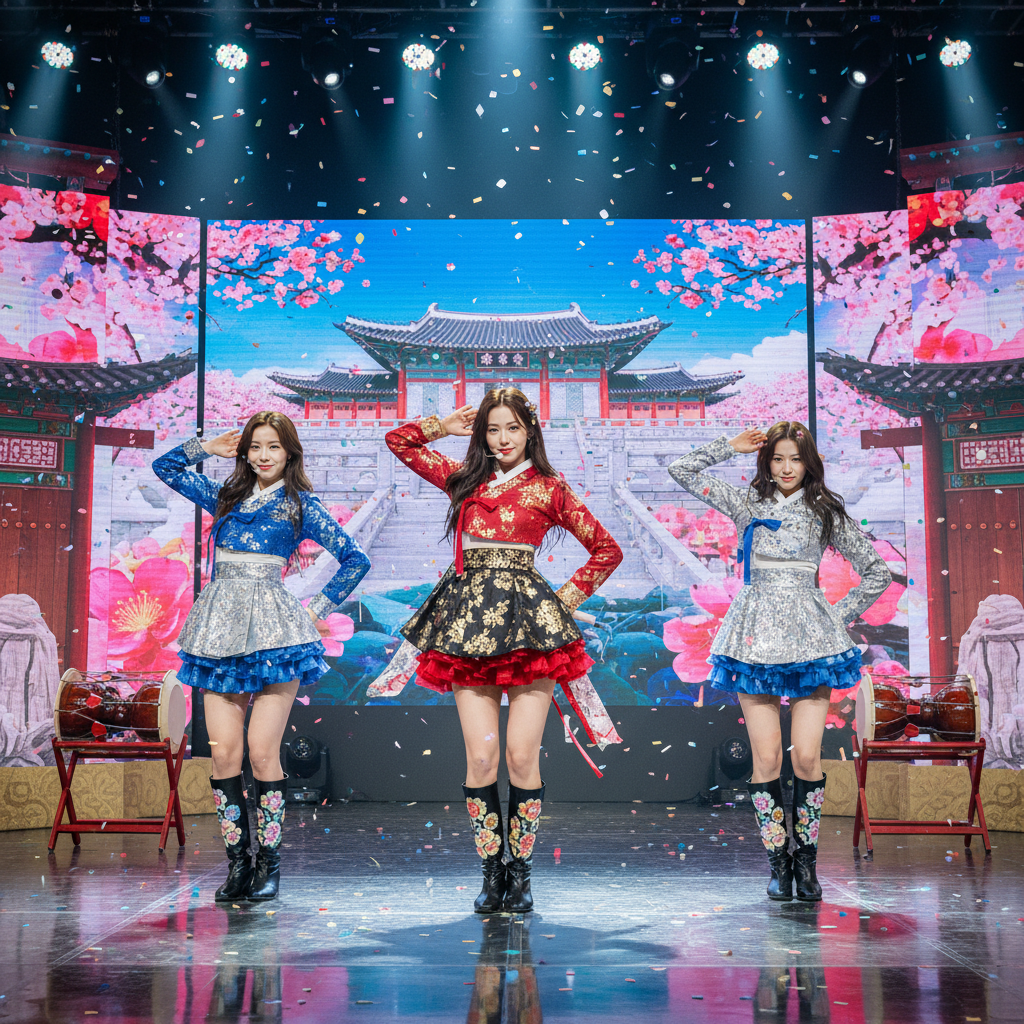
It has been a strange ride for both the soundtrack and the film’s cast. Huntr/x and Saja Boys did not start as animated characters but as the subject of a screenplay by Maggie Kang, who is Korean-Canadian, before the pandemic delayed production for several years. Kang’s original idea came from watching K-pop idols and “imagining what would happen if the idols I looked up to when I was younger suddenly had to fight evil in real life.” In the film, the Huntr/x — a trio of all-female pop stars named Rumi, Mira, and Zoey — use their fame to battle evil spirits on their way to a full-blown musical, complete with glittering choreography and a high-stakes story about friendship, trust, and being true to yourself.
The fantasy adventure format and the accompanying visuals drew people in, but the music has ensured that KPop Demon Hunters is more than just a summer flick. In addition to introducing familiar concepts to new audiences, the directors wove a soundtrack that goes beyond K-pop, according to Lashai Ben Salmi, community leader and director of Korean-focused programs for the European division of London-based civic organization Now2Know. “Musically, it gives the film a surprising level of maturity,” says Ben Salmi, who is also the editor of Reppler Seoul, a Seoul-based online magazine.
Collaborations with Teddy Park and Lindgren
To help create a product that resonated with existing fans, co-director Kang and Chris Appelhans connected with a Korean label and recruited some of the industry’s top names, including Teddy Park, who has worked with the global megastar Blackpink, and Grammy Award-winning producer Lindgren, whose K-pop credits include BTS and TWICE. The result: Original songs sound as if they could belong to an established K-pop group.
“I am not usually a K-pop follower, but now I’m a fan,” says Amanda Golka, a Los Angeles-based content creator and the founder of Alohasizeup. “I have been blasting the soundtrack from Spotify every time I’m in the car. It’s fascinating how music can be such a universal language.”
Attention to Detail
With its familiarity and attention to detail, KPop Demon Hunters builds on other mainstream cultural hits in the US and Western markets: K-pop, K-dramas, and Korean cinema have long been enjoyed by international audiences, but often focus on big themes rather than cultural nuances. The Demon Hunters also break with tradition in another way, says Golka. While the cast mostly sings in English, lip flaps are synced to the correct Korean pronunciation, and even their gestures are familiar to Korean speakers: “There were many scenes that felt Korean, including non-verbal communication, which is especially obvious in the Korean language.”
Behind the scenes, the film’s creators worked to ensure cultural relevance and accuracy, visiting South Korea to shoot footage and learn more about traditional Korean elements. That included driving through folk villages to use as references for backdrops; creating concept photos of traditional clothes in Myeongdong’s streets; and meeting with food experts to research scenes in which characters eat with their hands at a dinner table, because “Eating with utensils is not customary in Korean culture, so they wanted to show a more traditional way of eating,” says Kang.
The production team also sought to normalise Korean culture on screen by including several culturally significant locations, including Seoul’s ancient city wall, its centuries-old Hanuiwon healing clinics, traditional public bathhouses, and Namsan Tower. At the same time, its choice of which to highlight is authentic without being cliche, notes Ben Salmi, who grew up in South Korea. “Many Westerners may think of Korea as simply a kingdom and Confucius, but the film is realistic and balanced. This alone helps Korean people to feel they are being shown respectfully and accurately.”
In addition to authenticity in scenes, KPop Demon Hunters brings the energy and spirit of K-pop fandom to life. Korean viewers will recognise fan signing events, light sticks, Kalgunmu (perfectly synchronised dance routines), and Korean placards held high by fanchanting fans. The film also weaves in traditional Korean folklore and shows (rather than tells) the Korean-ness of the band members.