
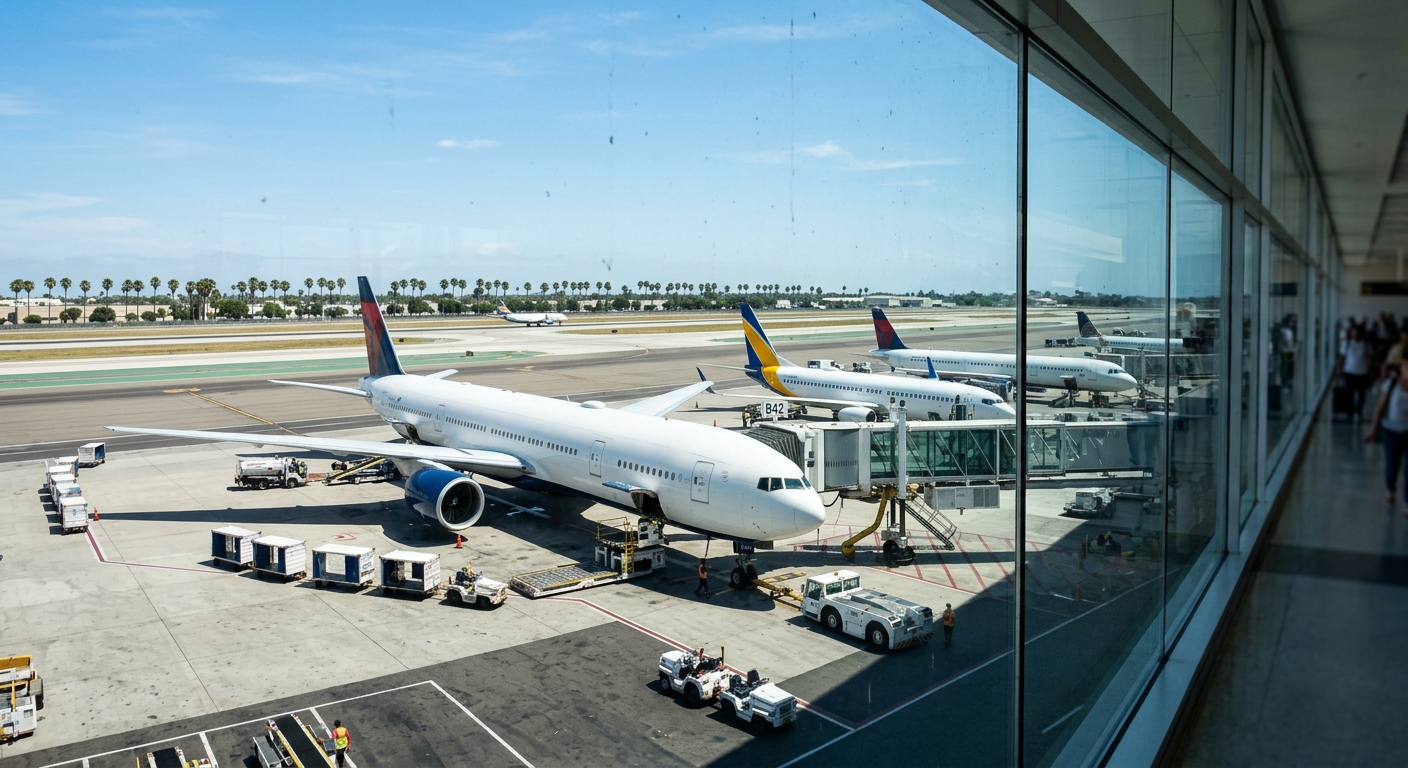
AI-generated illustration; not a photograph of the reported event.
- calendar_today November 14, 2026
FAA Ground Stop Triggers Widespread Flight Disruption
On Friday, travelers across the United States experienced mass delays and cancellations as the Federal Aviation Administration (FAA) instituted a nationwide ground stop. The decision followed a communications issue with air traffic control centers, leaving airports crowded and passengers uncertain about both their schedules and their rights.
Scope of the National Disruption
As of 4:30 p.m., more than 10,000 flights within the U.S. were delayed and over 5,000 flights were canceled, according to data from FlightAware. Flights already in the air at the time of the ground stop were permitted to continue to their destinations. However, all other domestic departures were halted, and international flights were being managed on a case-by-case basis, as per FAA guidance.
Officials reported that the cause of the technical failure was still unknown on Friday evening, with no clear timeline for resuming full domestic operations. Homeland Security Secretary Markwayne Mullin stated there was no evidence that the telecommunications outage was due to a foreign or nefarious actor.
Passenger Rights During Tarmac Delays
The U.S. Department of Transportation (DOT) requires airlines at U.S. airports to allow passengers to deplane if tarmac delays exceed three hours for domestic flights or four hours for international flights. During such delays, airlines must also provide water and snacks within two hours, maintain working toilets and comfortable temperatures, and ensure medical care is accessible if necessary.
Your Rights If Your Flight Is Delayed
In cases of flight delays, passengers are generally not entitled to automatic financial compensation. However, if a traveler's scheduled departure or arrival changes by at least three hours on domestic flights or six hours on international routes — and the traveler decides not to proceed — the DOT stipulates a right to a refund.
Several airlines implemented flexible policies in response to the FAA ground stop:
- United Airlines waived change fees and fare differences for passengers rescheduling trips for flights departing on or before November 20. Those affected by the outage can cancel for a full refund.
- Delta Airlines introduced a travel waiver allowing customers to change flights at no extra charge.
- Alaska Airlines offered a flexible travel policy, including refunds for canceled flights and waived fees for certain changes.
Compensation and Refunds for Flight Cancellations
Passengers whose flights are canceled due to the ground stop are eligible for a full refund if they choose not to accept an alternative flight, in accordance with DOT policy. It is important to note that federal law does not obligate airlines to provide meal or hotel accommodations when cancellations are caused by events outside the airline’s control, such as this FAA outage.
Staying Informed and Reacting Effectively
Travelers are encouraged to stay updated through their airline’s official communication channels for the latest information on rebooking, refund requests, and changing travel plans. The situation continues to evolve as the FAA investigates the source of the outage and works towards resuming normal operations.
Source: latimes.com.
Recent Posts

Hot Categories

155
Business
74
Events

220
News

83
Sports
120
Technology