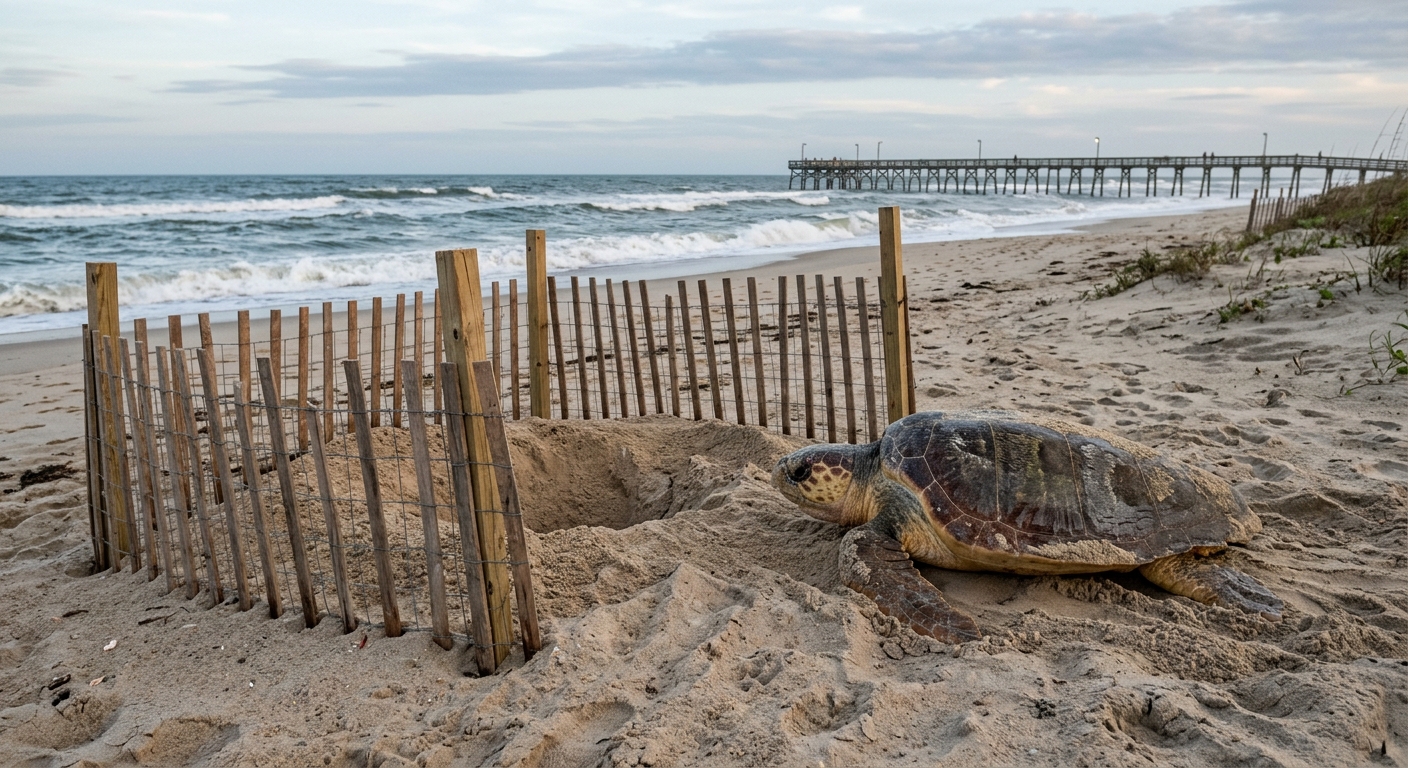
AI-generated illustration; not a photograph of the reported event.
- calendar_today September 22, 2026
In a first-of-its-kind occurrence for California, sea turtle nesting has been observed along the state’s beaches, signaling a notable development for marine conservation on the U.S. West Coast.
Rare Olive Ridley Turtle Nests in Huntington Beach
Late in September, lifeguards near Seal Beach in Huntington Beach, California, spotted an olive ridley turtle coming ashore to lay eggs. The sighting quickly triggered a response from local authorities, who cordoned off the nesting area to prevent disturbances and initiated protocols for sea turtle protection.
Multiple Sea Turtle Sightings Raise Questions
Just three days after the initial event, another turtle was seen laying eggs near the Huntington Beach Pier. With the region known for diverse west coast wildlife but not for nesting turtles, specialists remain uncertain whether these nests are the work of the same olive ridley turtle or two separate individuals. The sudden presence of sea turtle eggs has captured the attention of researchers and the public alike.
Unusual Behavior and Regional Impact
Olive ridley turtles, typically ranging throughout Central America in countries such as Mexico, Nicaragua, Costa Rica, and Panama, rarely nest north of their usual habitats. Each adult may weigh up to 100 pounds and measure around three feet in length. The appearance of an endangered species nesting on the California coastline not only brings scientific intrigue but also reinforces the need for vigilant seawildlife monitoring in the region.
Incubation and Protection Efforts Underway
Officials from the National Oceanic and Atmospheric Administration (NOAA) and the U.S. Fish and Wildlife Service have collaborated with local teams to secure and monitor the nests. The sea turtle incubation period, expected to last between 45 to 60 days, is being carefully watched to ensure minimal human disruption and potential hatchling success.
Community Response and Conservation Implications
Huntington Beach and surrounding areas have rallied behind the occurrence, highlighting the role of marine conservation on California’s beaches. Local residents, environmental organizations, and beachgoers have shown strong support for maintaining safe habitats for these turtles. The event serves as a reminder of the critical need to protect nesting areas and underscores the valuable role Californians play in supporting wildlife conservation efforts.
Broader West Coast Significance
This event marks a crucial moment for west coast wildlife. Regular sea turtle sightings in the ocean are not unusual, but actual nesting far outside traditional regions is unprecedented. Observers and wildlife authorities continue extensive seawildlife monitoring, seeking data to understand whether climate, changing ocean conditions, or other factors are encouraging olive ridley turtles to adapt their nesting locations.
Ongoing Research and Developments
The situation remains a developing story as researchers and conservationists monitor the nests. Updates regarding hatchlings, the health of the nests, and any further sea turtle sightings are expected in the coming weeks, offering opportunities for further community engagement and scientific insight. Authorities reaffirm the importance of keeping clear of fenced areas and reporting turtle activity, supporting ongoing efforts in sea turtle protection.
Recent Posts

Hot Categories

133
Business

71
Events
172
News
81
Sports

105
Technology