
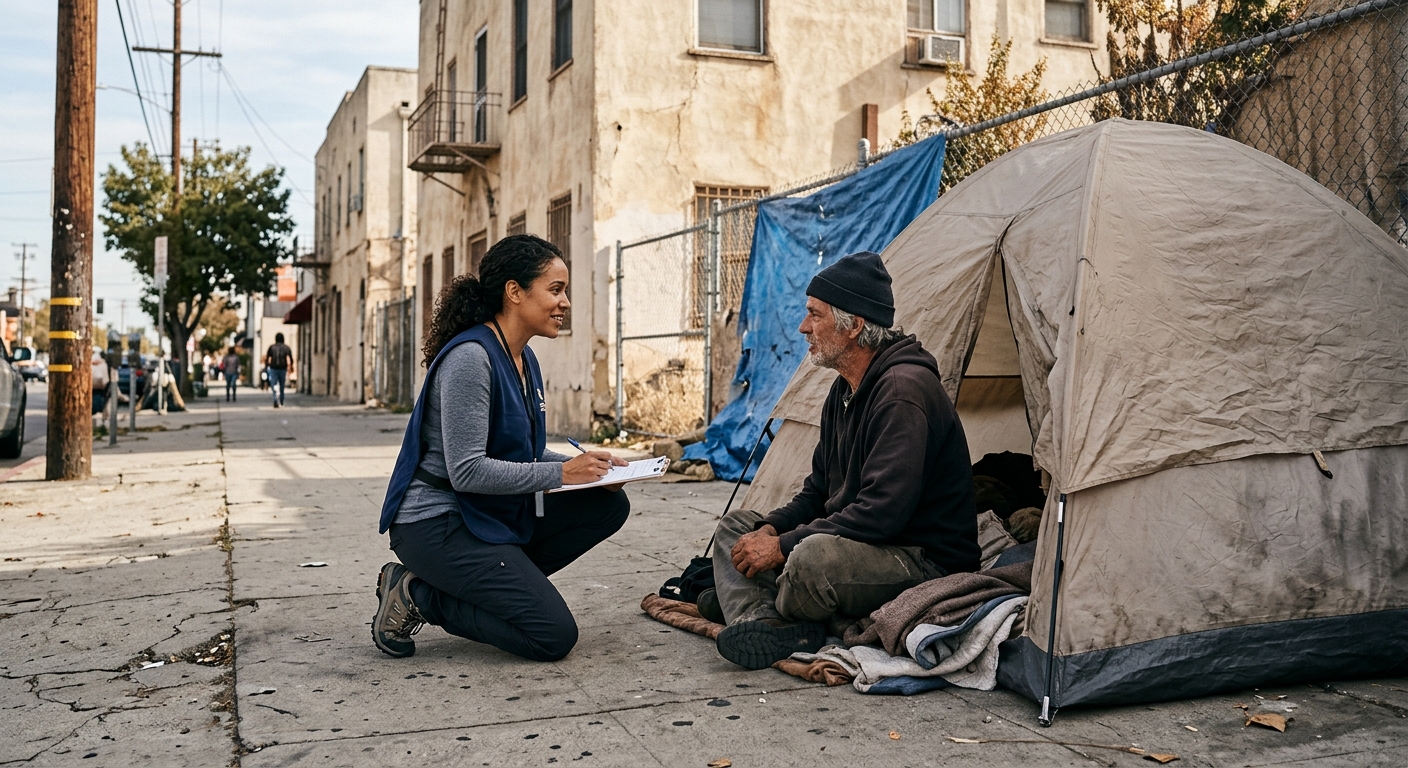
AI-generated illustration; not a photograph of the reported event.
- calendar_today November 7, 2026
Promises and Persistent Challenges
Over the last two decades, Los Angeles has seen a succession of mayors—Antonio Villaraigosa, Eric Garcetti, and Karen Bass—make bold claims about solving the city's homelessness crisis. Each administration pledged resources and devised plans, yet the number of people experiencing homelessness in Los Angeles remains stubbornly high, with more than 40,000 people currently unhoused in the city as of the latest count.
Shifting Leadership: Raman's Pledge
Nithya Raman, set to become the next mayor of Los Angeles, enters office amid both skepticism and hope. Raman was elected after a campaign in which she criticized outgoing Mayor Karen Bass’s approach to homelessness as too costly and ineffective. Despite her role in the previous administration, Raman has set ambitious goals, stating in a video on her campaign website: “When I’m mayor, we’ll cut tents and encampments in half by the Olympics, and bring everyone in tents and encampments indoors by the end of my first term.”
The Legacy of Grand Promises
The boldness of Raman’s pledges draws comparison to earlier vows by her predecessors. In 2006, city and county leaders announced a 10-year plan to end homelessness. In 2013, Garcetti promised to end chronic homelessness and later claimed the city could halve the problem in five years. In 2023, Bass aimed to end street homelessness during her term. Despite these commitments, homelessness persists as a complex issue, fed by housing costs, economic disparity, and untreated mental health and substance use disorders—factors often beyond direct mayoral control.
Program Results and New Proposals
While Mayor Bass’s Inside Safe program moved approximately 6,000 people into motels and other interim housing at a cost of $300 million, by late spring 41% had returned to homelessness. Raman has proposed ending Inside Safe in favor of short-term rental vouchers, asserting these will be less expensive and more effective. She also advocates for increased fiscal transparency: audits by City Controller Kenneth Mejia, closer examination of county-provided services, expanded use of Medi-Cal for street medicine teams, and greater investment in shared housing and case management. "No agency or program has been required to demonstrate results,” Raman’s homelessness strategy states. “No department or office has been put in charge of monitoring the spending."
Barriers to Progress and Experienced Leadership
Pushing new policy through City Hall is a formidable challenge, especially given Raman faces a council that previously endorsed Bass. However, Raman brings relevant experience: she has defeated two incumbents, has an urban planning background, and co-founded the SELAH Neighborhood Homeless Coalition. Her direct work with homeless communities, including chairing the City Council's homelessness committee, gives her practical insight.
Louis Abramson, a Hollywood resident, Rand researcher, and SELAH board chair, believes Raman’s “situational awareness” and tolerance for the political risks associated with increasing affordable housing will be key assets. Building relationships with clients has been central to the success in her council district—an approach supported by advocates and formerly homeless individuals alike.
Complex Paths to Recovery
The process of finding and sustaining stable housing is rarely linear. Social workers note that many can exit and re-enter homelessness, highlighting the importance of long-term case management and meaningful engagement. Programs like Chrysalis, where formerly homeless people find purpose through employment, demonstrate the deeper impact of sustained support beyond temporary housing. Advocates suggest tapping the untapped potential of homeless individuals as part of the city’s workforce, and increasing opportunities for volunteer engagement.
Ultimately, the stories of individuals matter as much as the statistics. Raman’s success will likely depend on both bold policy and genuine human connection—factors that could determine whether she can finally shift the course of Los Angeles’ longstanding homelessness crisis.
Source: latimes.com.
Recent Posts

Hot Categories

142
Business

74
Events
190
News

82
Sports

111
Technology
