
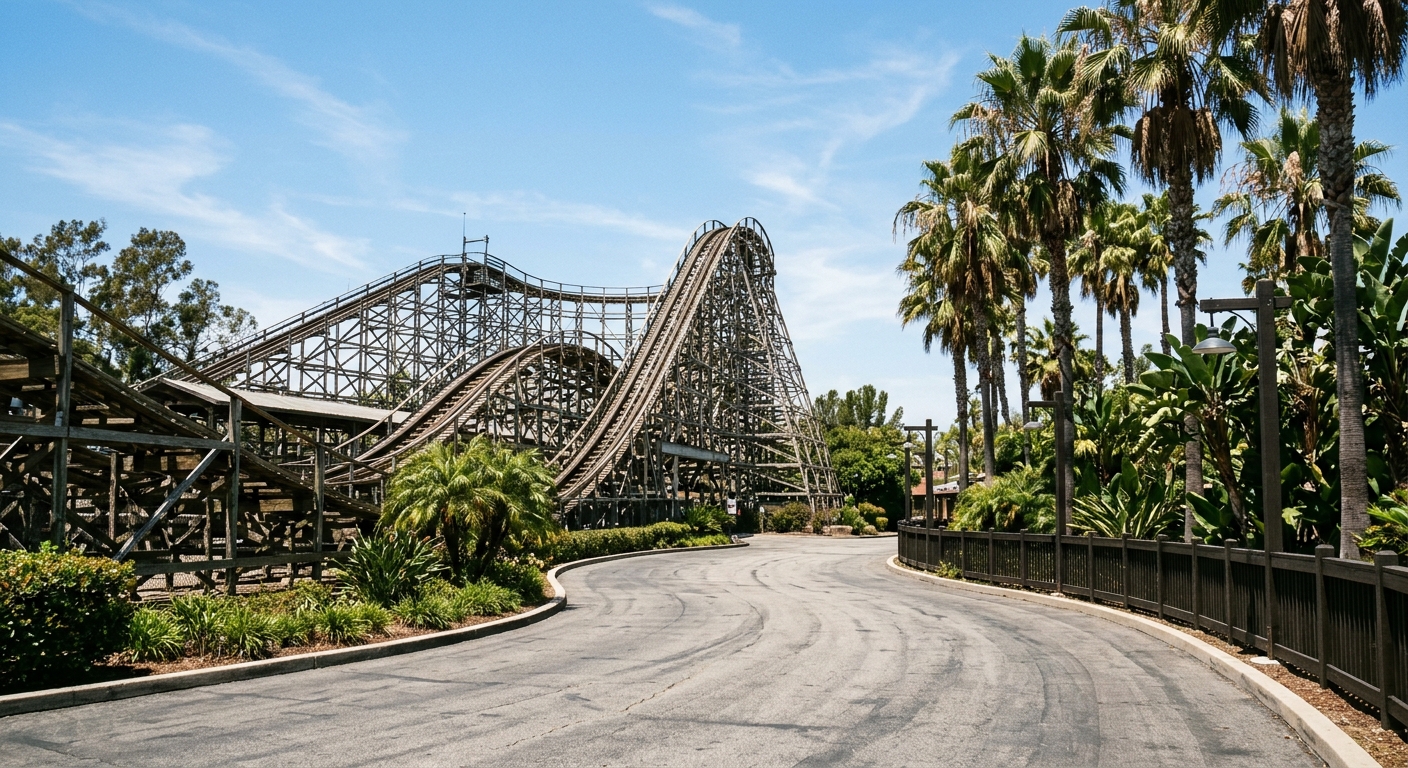
AI-generated illustration; not a photograph of the reported event.
- calendar_today November 7, 2026
The End of an Era for California’s Great America
Great America, a cherished amusement park in Santa Clara and a staple for generations of Northern Californians, has announced that it will close permanently after its upcoming season. The park’s last day of operation will be on Labor Day in 2027, bringing an end to 51 years of roller coasters, family outings, and local tradition. For many, the park has been Northern California’s answer to Disneyland, offering an accessible rite of passage for teenagers and families alike.
Closure Confirmed After Years of Uncertainty
The closure of Great America has been anticipated for some time. The uncertainty began when Cedar Fair sold the park’s 112-acre land to Prologis, a San Francisco-based real estate company, for $310 million in 2022. This sale was a significant profit over Cedar Fair’s prior purchase of the land from Santa Clara’s redevelopment agency for $150 million just three years earlier. Prologis agreed to lease the land back to the park until mid-2028, with an option to extend until 2033. However, following recent operational and financial challenges for Six Flags, the corporate owner, closure plans have accelerated.
Financial Challenges and Ownership Changes
Six Flags Entertainment Corp., which now owns Great America, has been navigating financial difficulties. These challenges intensified after the company’s merger with Cedar Fair, the former owner, and the closure of other parks under its portfolio. In 2025, Great America cut most live and seasonal entertainment, leading to the cancellation of its popular Halloween and Christmas-themed events. The departure of park vice president and general manager Barbara-Lea Granter symbolized a shift to a regional operating structure, and further uncertainty followed when Six Flags sold seven other parks and closed its Washington, D.C. location.
A Storied History in Northern California
Established by Marriott Corp. in 1976, Great America was conceived as a regional alternative to larger parks, launched during the nation’s bicentennial celebrations. Early themed areas like Orleans Place and 1920s-era Hometown Square reflected American historical motifs. Yet, the park did not initially meet Marriott's attendance expectations, drawing about 2 million annual visitors against a 3.5 million target, which prompted Marriott to sell. Over the decades, the park changed hands—transferring from the city of Santa Clara to Kings Entertainment Co., then to Paramount Communications in 1992, and finally to Cedar Fair in 2006.
Signature Attractions and Legacy
Visitors have long been drawn to unique attractions such as Carousel Columbia, a double-decker carousel considered the world's tallest, and Gold Striker, which Amusement Today ranks among the top 20 wooden roller coasters globally. Despite these highlights, the park struggled to meet initial financial ambitions and navigated several changes in ownership and management over its five-decade lifespan.
Industry Context: Ride Safety and Park Operations
The announcement of Great America’s closure comes amid heightened scrutiny on ride safety at Six Flags parks nationwide, particularly after a fatality at Six Flags Over Georgia and subsequent ride closures across the United States and Canada. In response, Six Flags president and CEO John Reilly confirmed the initiation of a comprehensive review of ride safety protocols, supported by third-party engineering and inspection specialists.
What’s Next for Bay Area Amusement Parks?
While the Santa Clara location is set to close for good, Six Flags’ sister park near Chicago, Six Flags Great America, remains open. The closing of the Santa Clara park marks the end of an era for Northern California amusement seekers and raises questions about the future landscape of regional entertainment. For now, locals and visitors have one final season to enjoy everything Great America has offered since 1976.
Source: latimes.com.
Recent Posts

Hot Categories

142
Business

74
Events

190
News
82
Sports
111
Technology

